The Medici-Longleat Josephus
Antiquitates Iudaicae; Contra Apionem I-II & De Bello Iudaico by Flavius Josephus, copied by Amantius
- Filippo di Matteo Torelli
Illuminated manuscript in Latin on vellum
Italy, Florence, c. 1450
392 x 275 mm
This work has been sold.
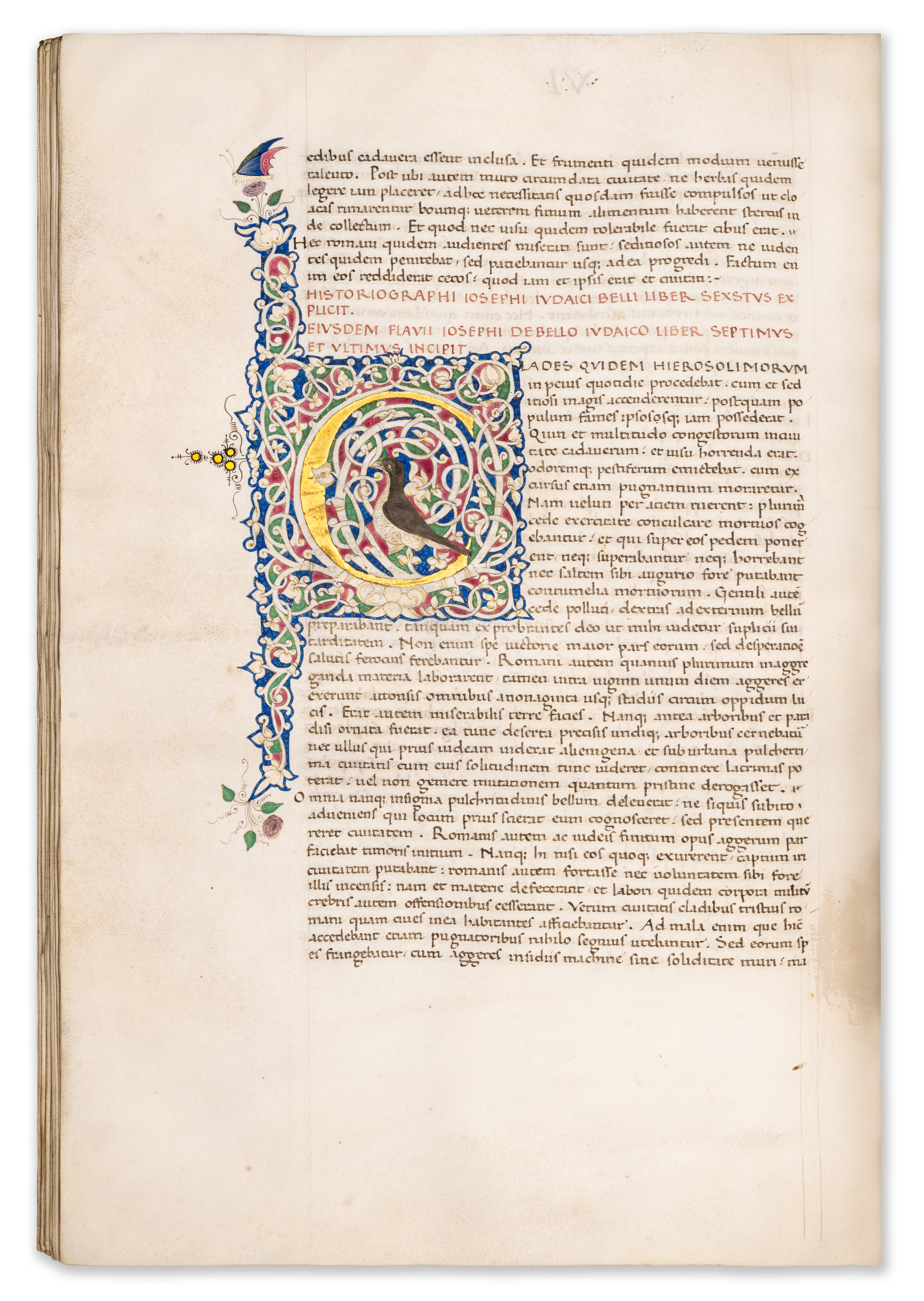
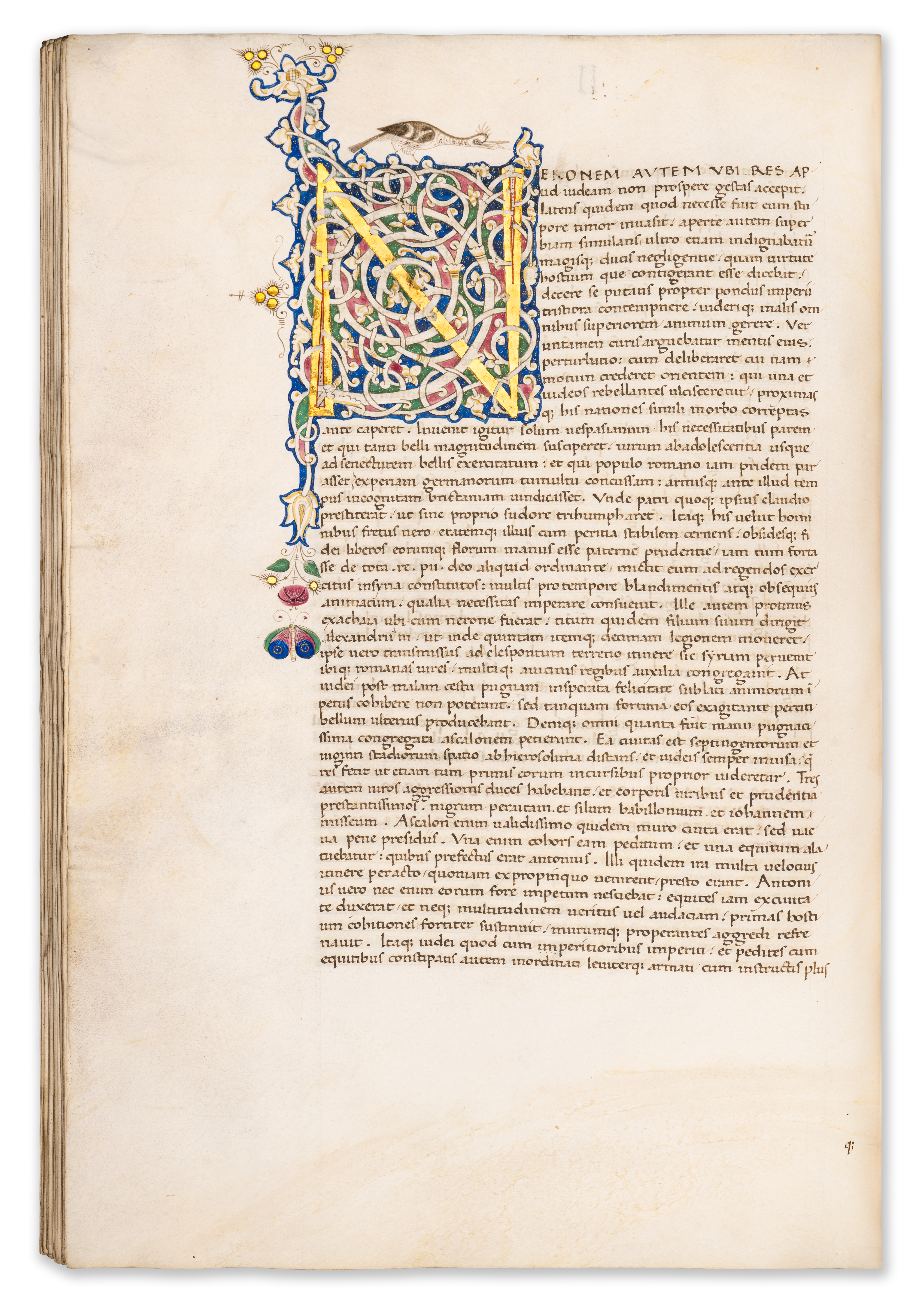
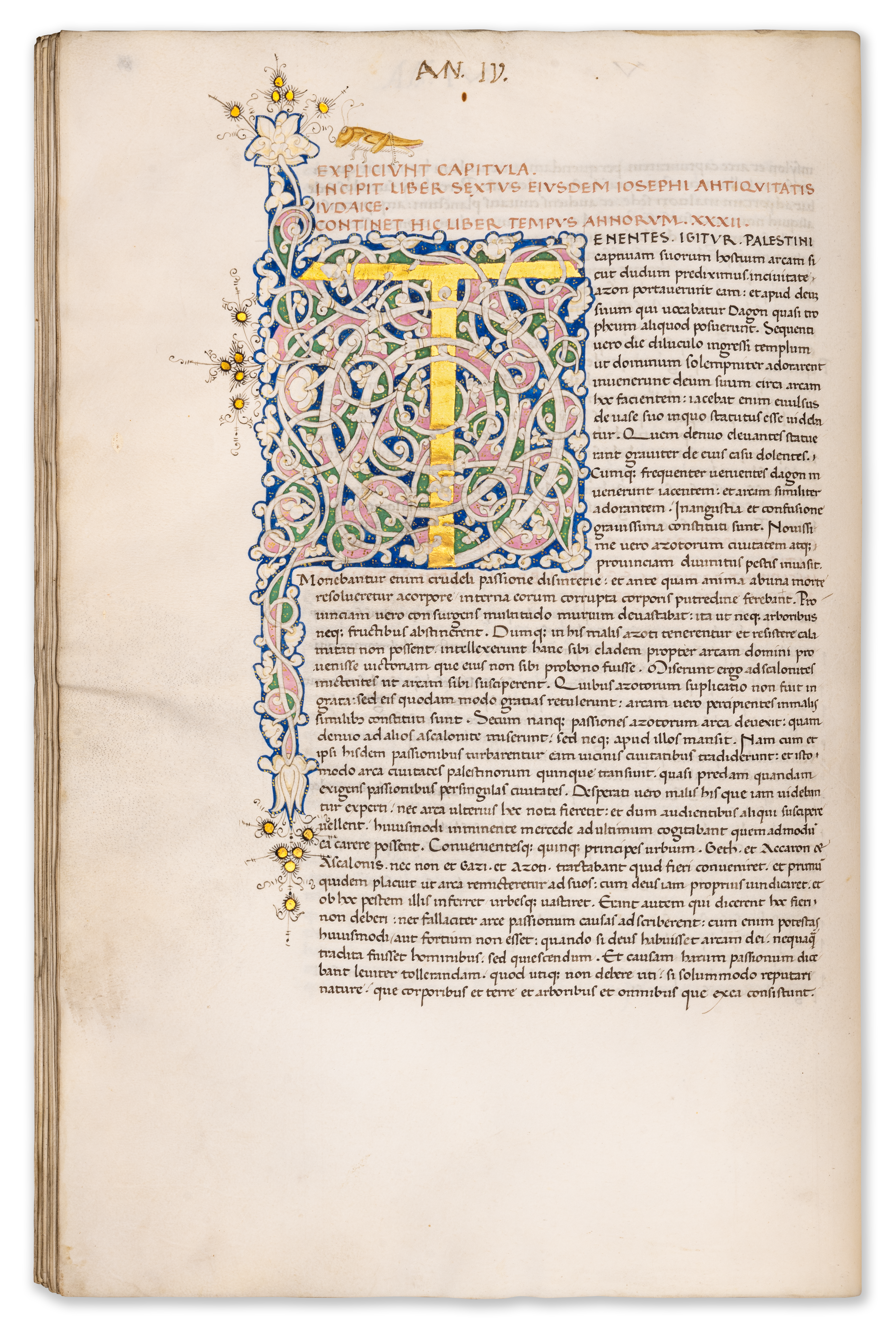
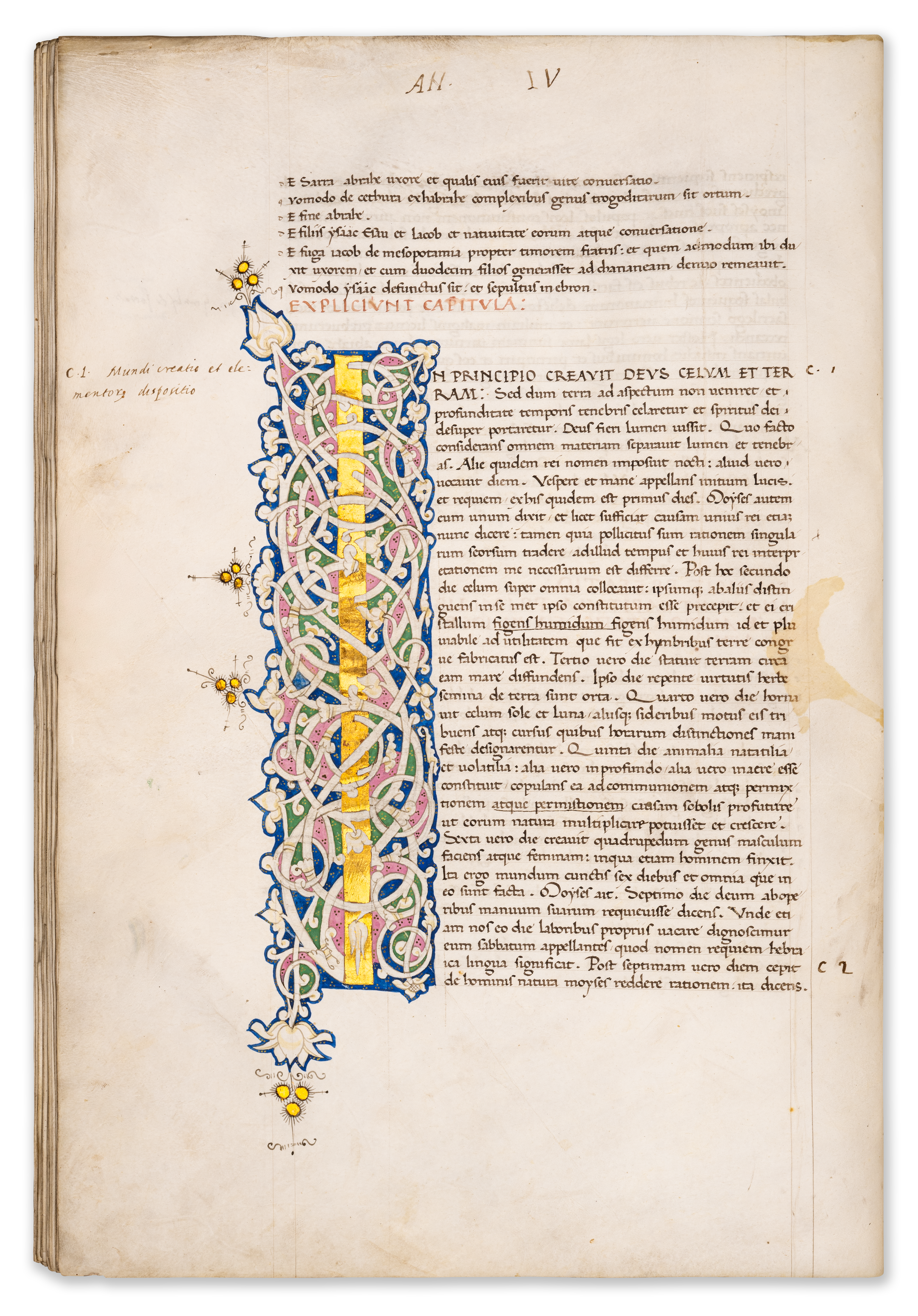
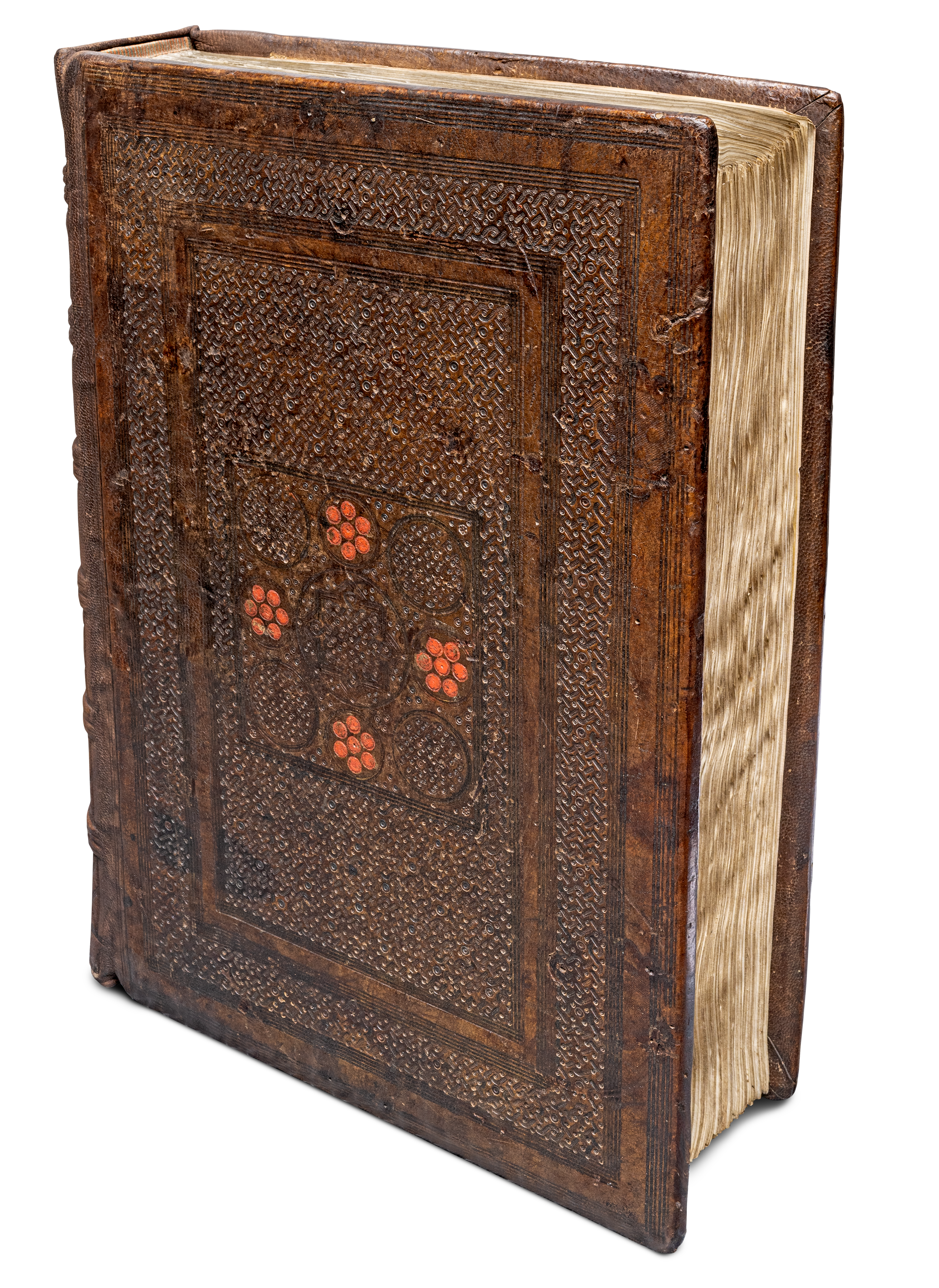
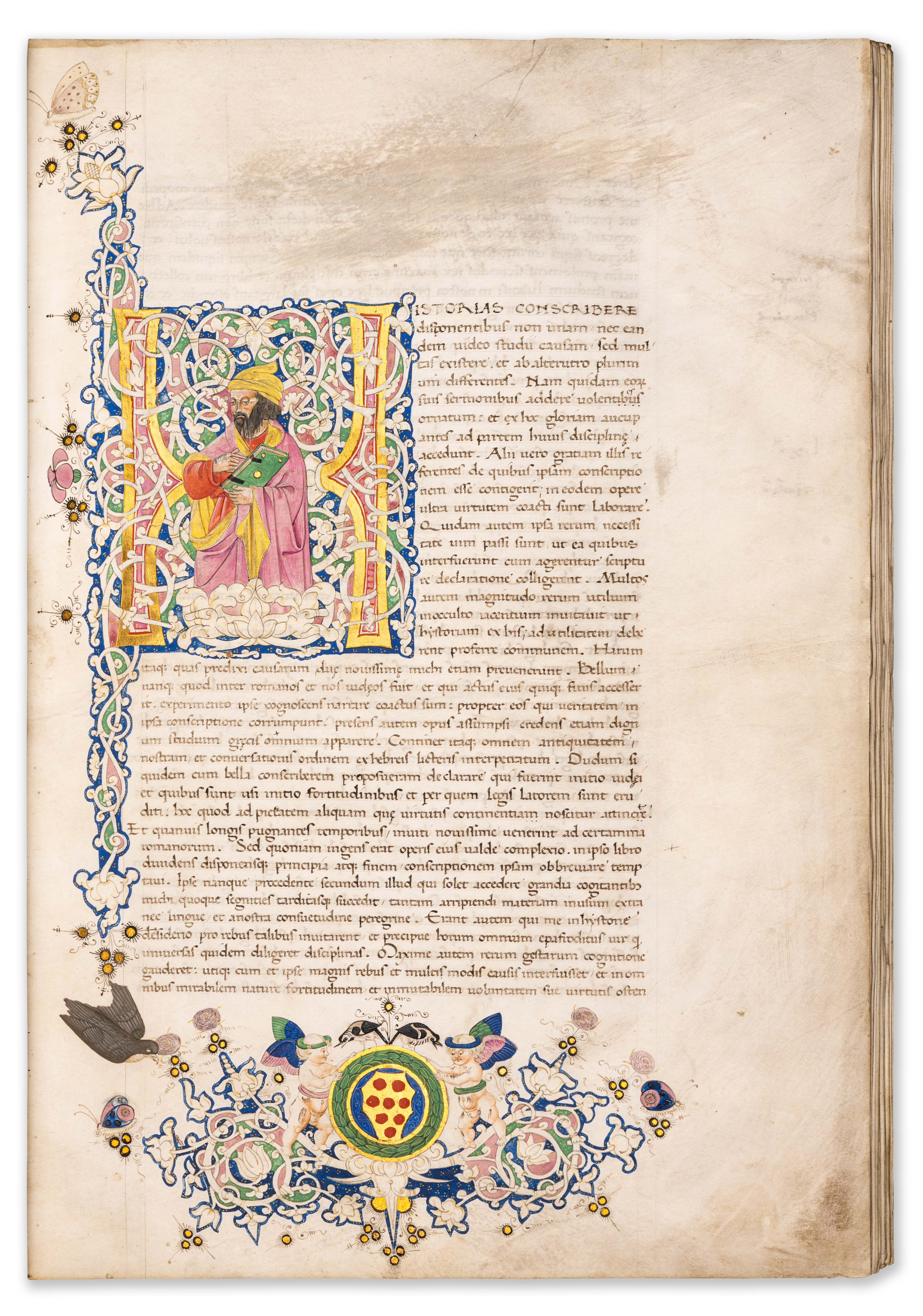
422 leaves. 30 very large white-vine illuminated initials, two of which historiated. Complete. Exceedingly rare binding: contemporary Florentine elaborately blind-tooled leather over wooden boards, with central square panel in middle of each board containing arrangement of circles, four of these at the points of a cross containing the Medici armorial device of seven balls gules. Outstanding condition.
A resplendent humanist book, commissioned at the height of the Italian Renaissance, most probably by one of its greatest and wealthiest bibliophiles: Cosimo di Giovanni de’ Medici, ‘il Vecchio’, founder of his banking dynasty and duke of Florence, and the first volume securely identified as from his library to appear on the open market since 1908.
The bibliophilic campaigns the grand and illustrious Cosimo di Giovanni de’ Medici, ‘il Vecchio’ (1389-1464), founder of the Renaissance banking clan who first seized political control over Florence, are well known. Florence was, ultimately, the epicentre of humanism, and the inspiration taken by its scribes and artists from early manuscripts set the direction of almost the entirety of the book-arts in the Italian Renaissance. Cosimo ‘il Vecchio’ was an avid book collector, and in addition to commissioning copies of works he made book-hunting expeditions in Europe.
The author of the texts preserved in this grand tome is Titus Flavius Josephus (37 CE.-100), born Yosef ben Matityahu. He was a 1st-century Romano-Jewish military leader and historian, born in Jerusalem (then part of Roman Judea). Josephus surrendered to Vespasian’s forces in 67 CE. at the siege of Yodfat, and was taken as slave and interpreter by Vespasian. On the latter’s rise to imperial office two years later, he was freed and took Roman citizenship and the emperor’s name, Flavius, later serving Vespasian’s son, Titus, as a freeman. During the tumultuous 1st century CE., he occupied a crucial position between the cultural worlds of the Jews and the Romans. As a contemporary of Jesus, his writings provide contextual information about the First Jewish-Roman War and revolt against Roman occupation, the context of the Dead Sea Scrolls, late Temple Judaism and the dawn of Christianity.
The illumination of this newly discovered manuscript can be attributed to the renowned Florentine artist Filippo di Matteo Torelli (1408/10–1468), based on similarities in decorative elements, palette, and composition. Torelli, a pupil of Michele di Giovanni Guarducci, was a leading master of border decoration and had a profound influence on the next generation of Florentine illuminators, including Francesco di Antonio del Chierico and Ricciardo di Nanni. The present manuscript features a large historiated initial ‘H’ with scrolling white vine, inhabited by a portrait of the Flavius Josephus holding a book, as well as numerous decorated initials.
This manuscript was acquired by Sir Thomas Thynne in the 16th century and belonged to the glorious library of Longleat House, seat of the Marquesses of Bath (their MS. 52).