

Bible Historiale by the workshop of the Rambures Master
by Guiart des Moulins
- Rambures Master Workshoop
Manuscript in French on paper
France, Picardy, Amiens, c. 1480-1485
382 x 278 mm
Price on request.
328 leaves. More than 60 large initials in gold over coloured grounds with white tracery, one large initial in colours over gold, the following line in display script, 51 large two-column miniatures, 2 large one-column miniatures, one with a two-sided border of spray with flowers and leaves. Complete. Contemporary blind-tooled calf binding over wooden boards. Slightly water-stained, upper margin slightly trimmed, miniatures in excellent condition.
In late medieval society Guiart’s book became one of the main sources of biblical knowledge for the wealthier laypersons.
Although the text continued to be read throughout the 15th century, not many rich illustrated versions made after 1470 exist, and there are only very few copies from the great period of Burgundian patronage.
The present illuminated Bible Historiale manuscript, one of the later examples of its kind, fits into a group of eight that originated in the region close to Aire-sur-la-Lys, where Guiart des Moulins originally lived. Those nine manuscripts are very similar in content and language (Komada 2000, p. 533). The setting of the text is arranged spaciously without fear for empty lines or spaces. Evidently the commissioner was interested in having a sumptuous codex, but he was open to experiment as it this book is on paper and illustrated with pen-and-wash drawings that demanded quite different technical skills from the artist than painting on vellum (Smeyers 1999, p. 347).
The present Bible Historiale dates from the time when the interest of the nobility in the choice of illustrated texts steadily had shifted from prose romances to chronicles and historical texts, ancient and modern (Los Angeles 2003, p. 226). The Bible Historiale was important not only for its place in the history of the Bible, but does not include the Gospels, or any New Testament narrative. It represents also as a text of ancient history, including, for example, the life of Alexander the Great.
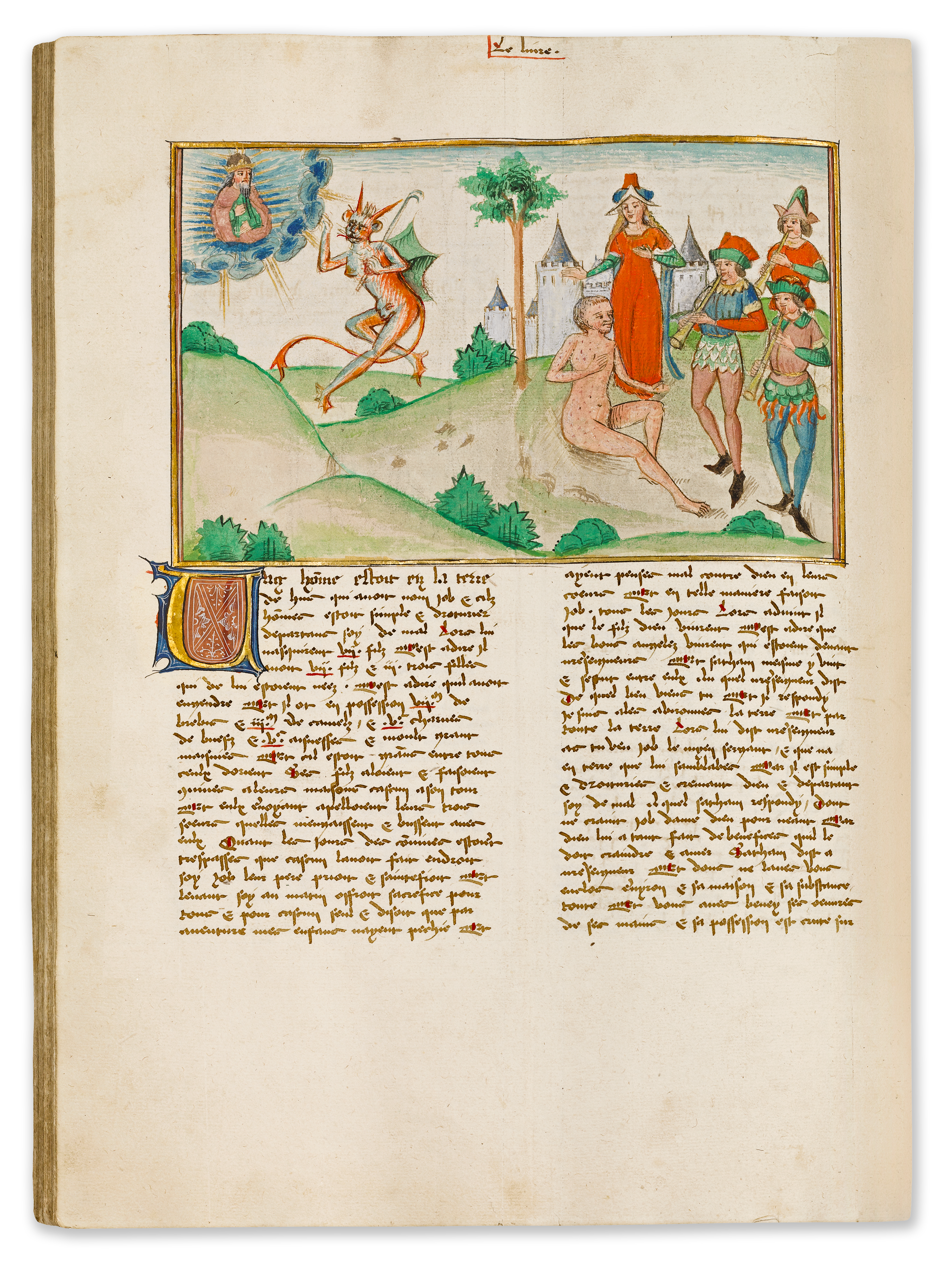
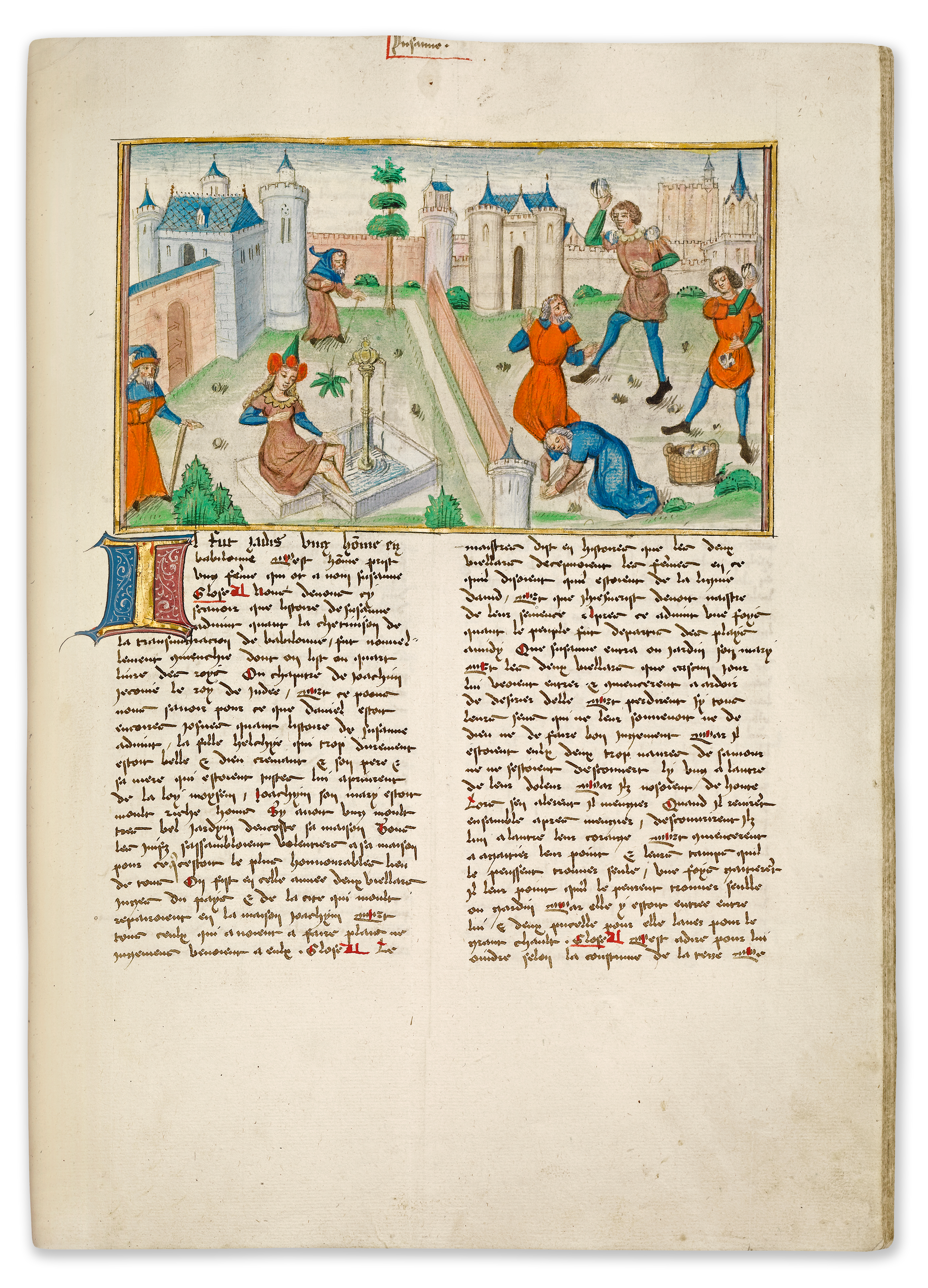
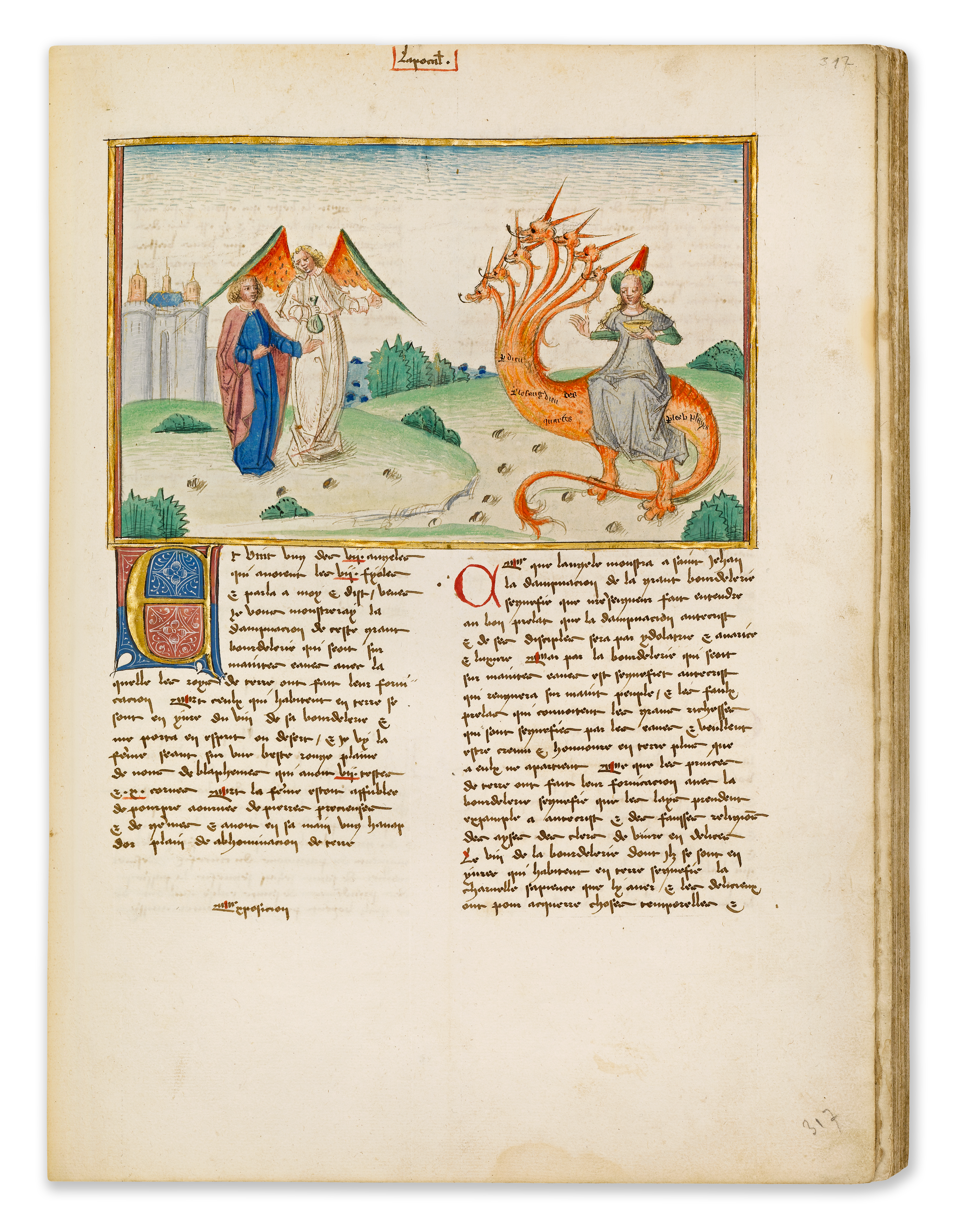
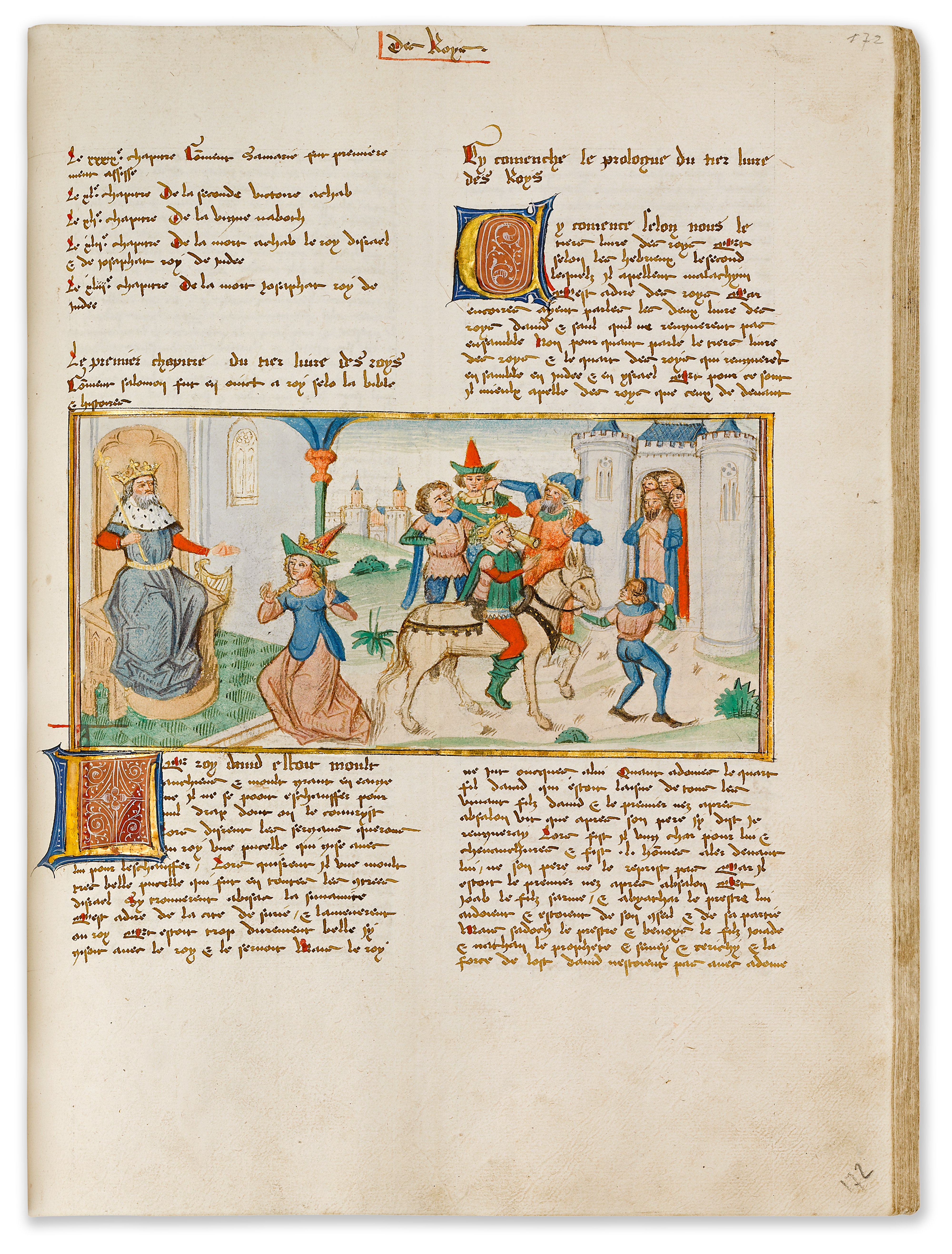
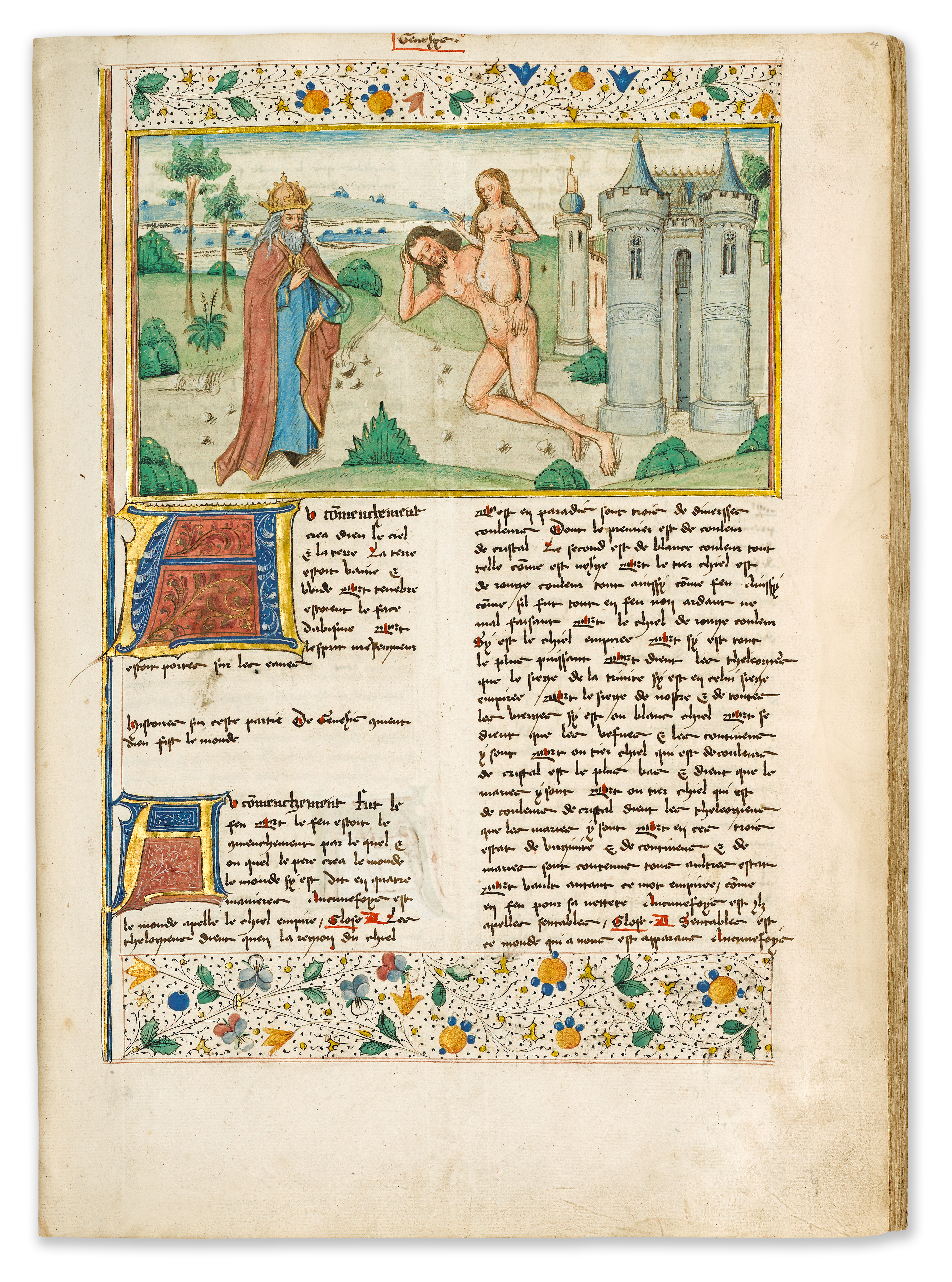
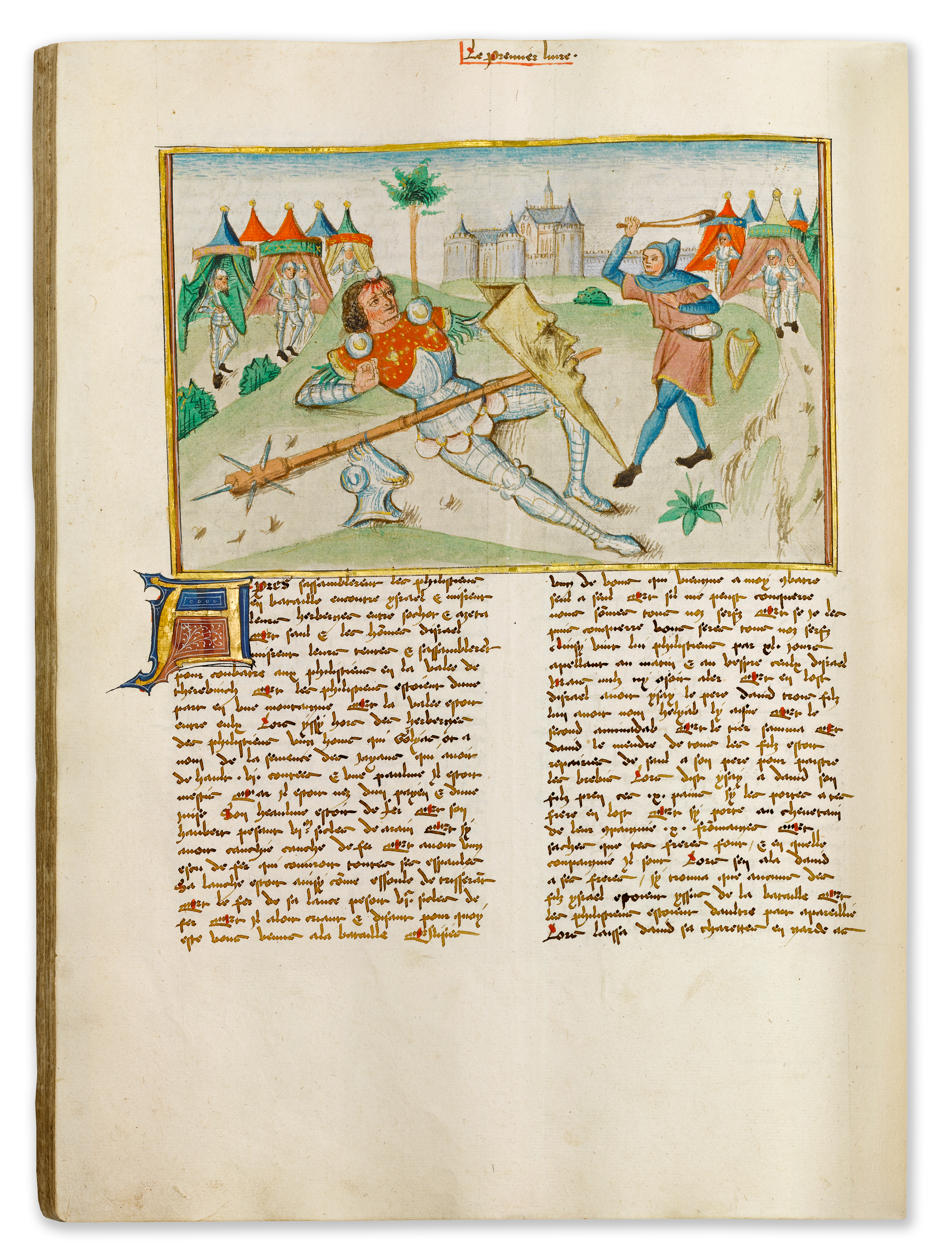
With 53 pen-and-wash drawings this large format manuscript is quite exceptional, and not many illustrated vernacular texts on paper of this size survive. The format of the illustrations allowed for the occasional inclusion of more than one scene. They are much larger (‘improved’) than those in the Bibles of the early 15th century, showing that the book kept its significance, or better, developed further in illustrative contents.