

St. Pantaleon Legendarium
Legendary: Lives of Saints Servatius, Leonardus, Medardus, Heribert, Adrian, Gorgonius, and other saints. Bern of Reichenau: Vita Sancti Udalrici
Manuscript in Latin on vellum.
Cologne, Abbey of St. Pantaleon, c. 1140-1180 (one added quire from around 1050)
225 x 150mm
Price on request.
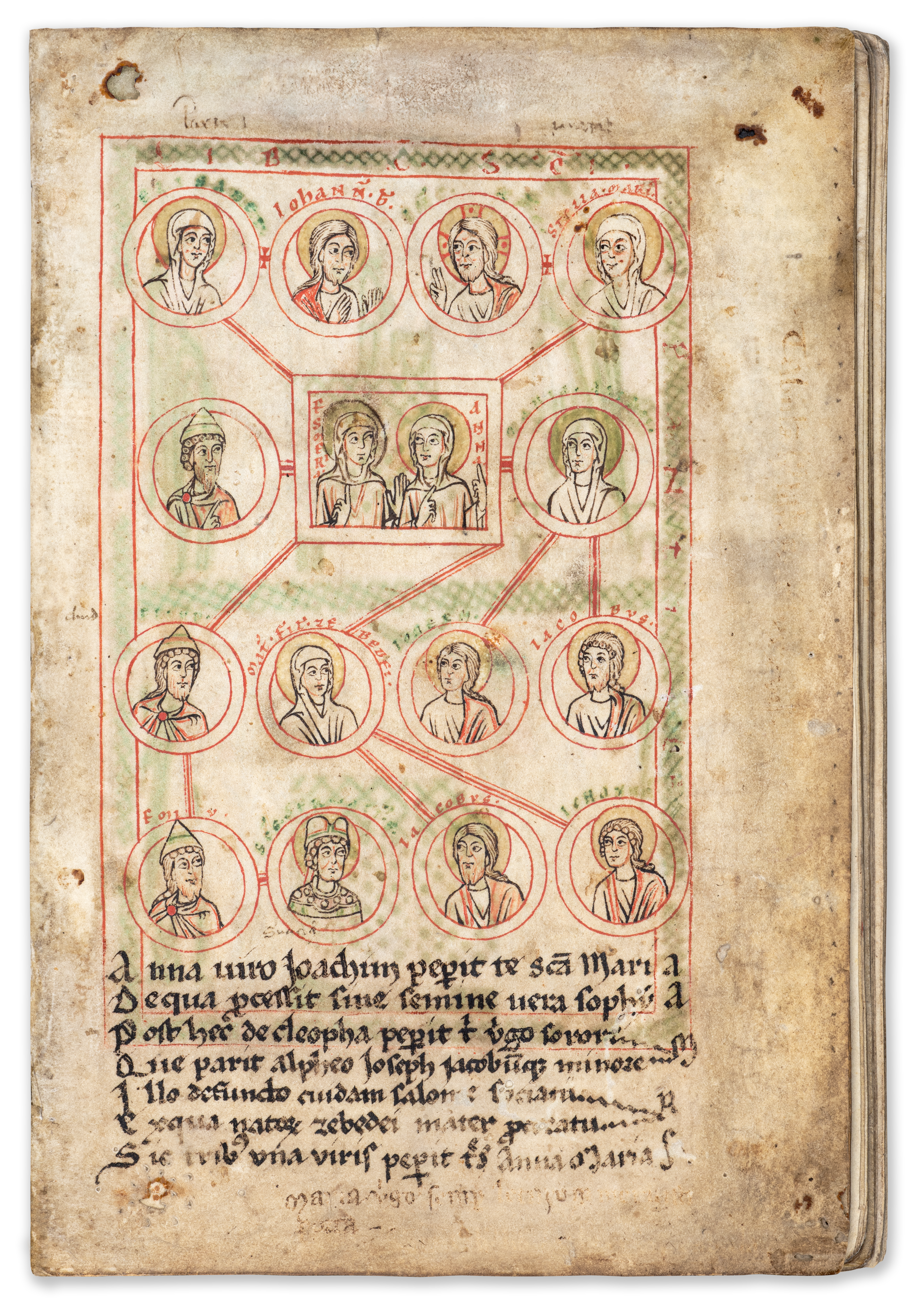
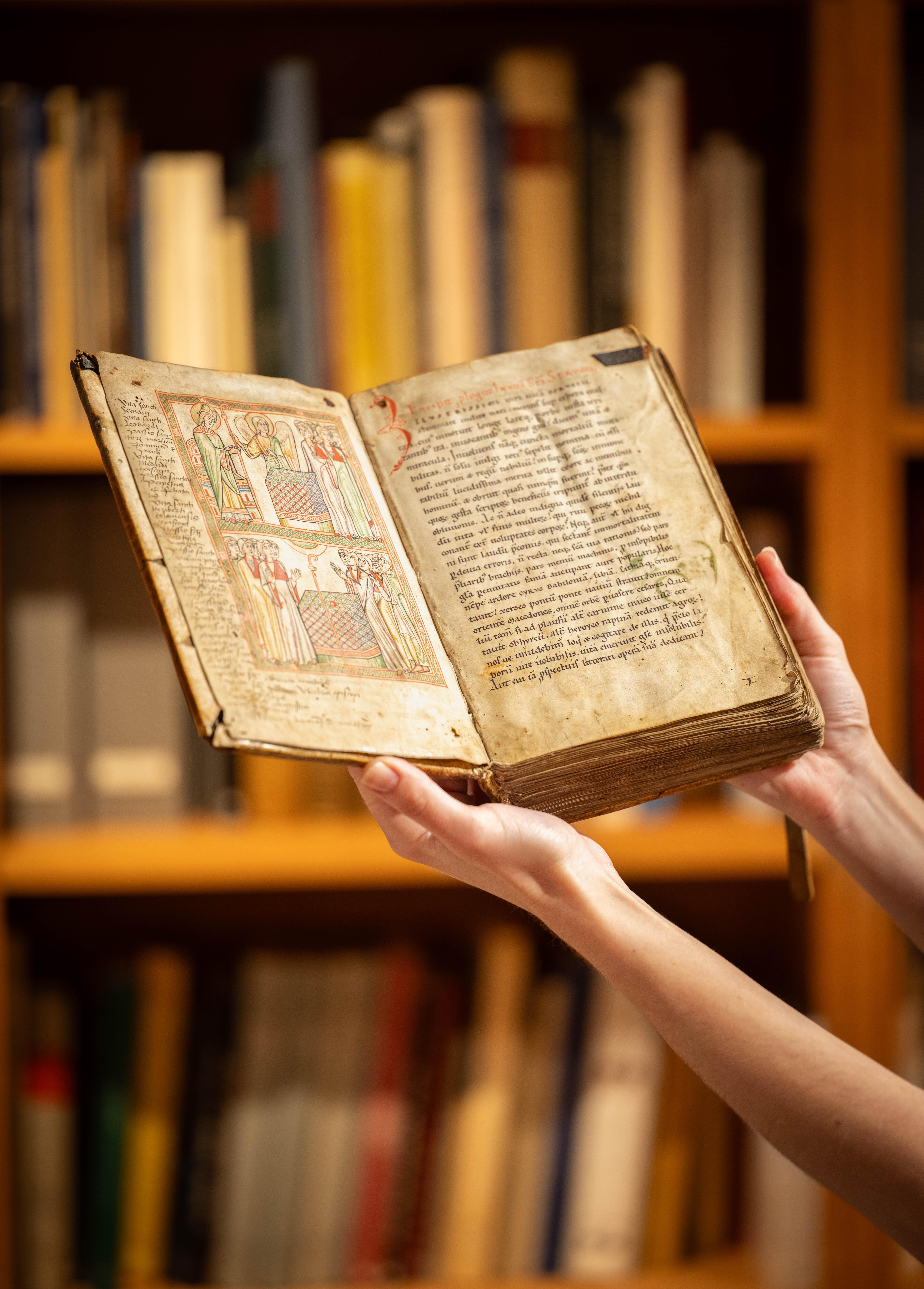
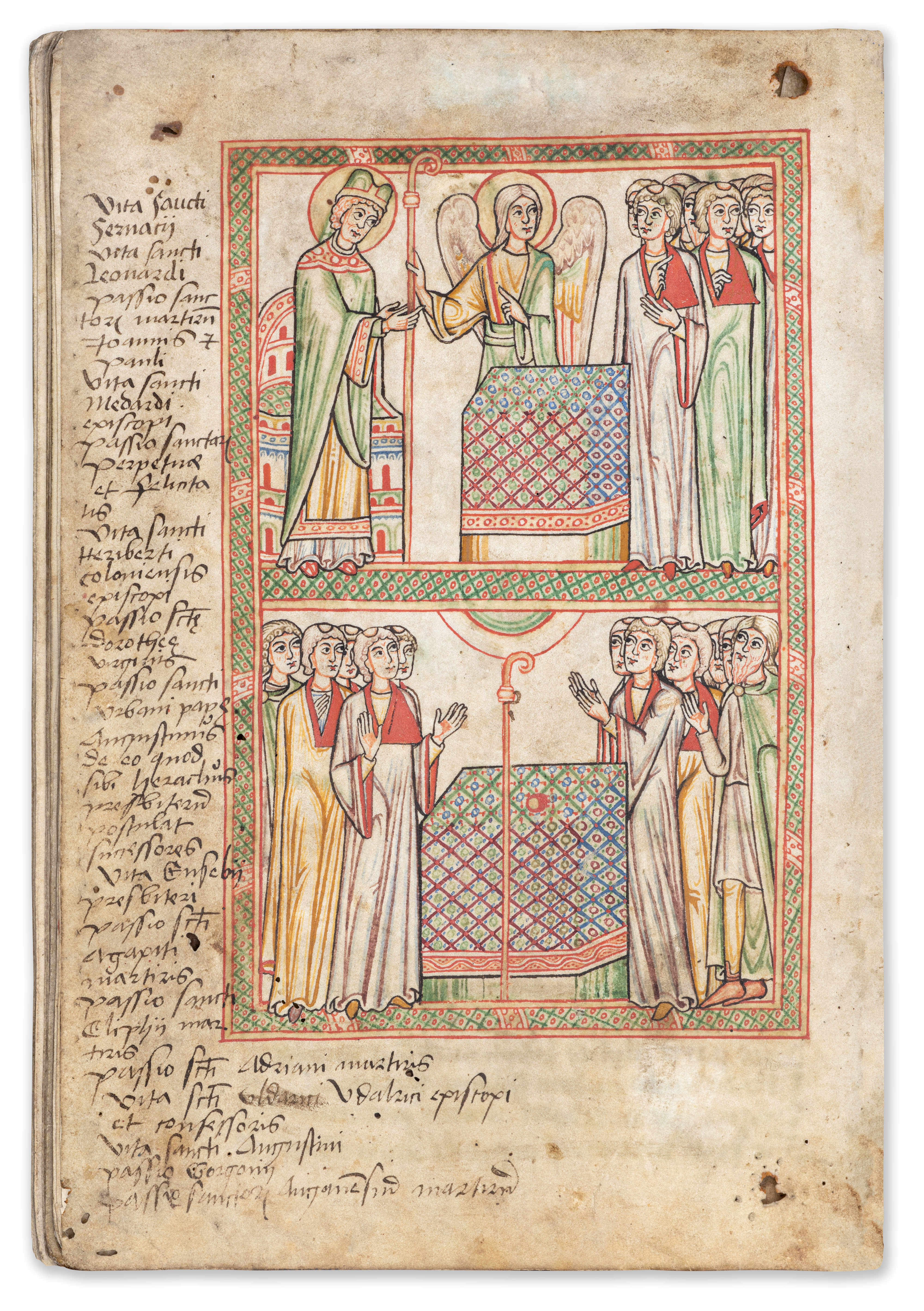
209 leaves. One full-page coloured pen illustration with scenes from the life of St. Servatius, full-page pen and ink diagram with fourteen roundels and a central rectangle enclosing portraits of saints and other figures, full-page initial of swirling green foliage on red-orange ground with standing figure of St. Gorgonius, large initial formed of ornamental panels and a winged biting dragon, touched in colour and on pale blue and green grounds, with two lines of ornamental red capitals. Early medieval binding (most probably late 13th century) of white leather, now discoloured to a tan hue, tooled with double and triple lines radiating out from central boss, over thick bevelled wooden boards, five iron bosses once on each board.
This is an assortment of eighteen legends of saints' lives; mostly accounts on saints that are important for the city of Cologne. The manuscript has been manufactured for and most likely in the scriptorium of St Pantaleon Abbey. It is a fact that this type of hagiographic collection, especially from such an early period, is extremely rare and hardly ever available on the market.
For some of the vitae, for example that of St Heribert of Cologne, we can assume that this is one of the earliest copies of his life story (if not the earliest). It is also extremely interesting to take a closer look at the dates of origin of the various sections of this manuscript, which reveal that parts from other manuscripts that possibly were already in the monastery’s library were incorporated here. The two elaborate coloured pen and ink drawings with scenes from the life of Saint Servatius are finely executed. In contrast to the filigree drawings for Saint Servatius, the full-page historiated initial for Saint Gorgonius is striking and brightly coloured. This manuscript is a very special find that has not yet been fully analysed, especially from an art historical perspective, and will provide further interesting insights into the knowledge of early German manuscripts from the Rhineland.
The most important saint in this hagiographic collection is doubtlessly Saint Servatius, to whom the first fifty-eight folia in this manuscript and the two illustrations at the beginning are dedicated.
For the canons of Maastricht, it was of the utmost importance to give their patron saint as much miraculous significance as possible and in this respect, they were keen to propagate a legend that identified Servatius as a member of the Holy Family, specifically through Esmeria, the sister of Mary’s mother Anna. The family tree on f. 1r provides information about this affiliation and at the same time takes up elements of Anna’s triple marriage (Trinubium Annae), a concept that was particularly popular in Germanic regions.
The popularity of the legend of the Bishop of Maastricht and his miracles naturally led to an increased influx of pilgrims, who brought money to the city and made the place of pilgrimage widely known. Between the 10th and 12th centuries, the new basilica was built in honour of Servatius to house the shrine and allow a growing number of pilgrims to visit.