

The Physiologus
Physiologus, in the Dicta Chrysostomi form. Other texts: Arator, Historia Apostolica; Williram von Ebersberg, Expositio in Cantica Canticorum
Manuscript in Latin on vellum
Germany, Erfurt, Saint-Peter’s Abbey, c. 1150-1180
c. 175 x 132 mm
Price on request.
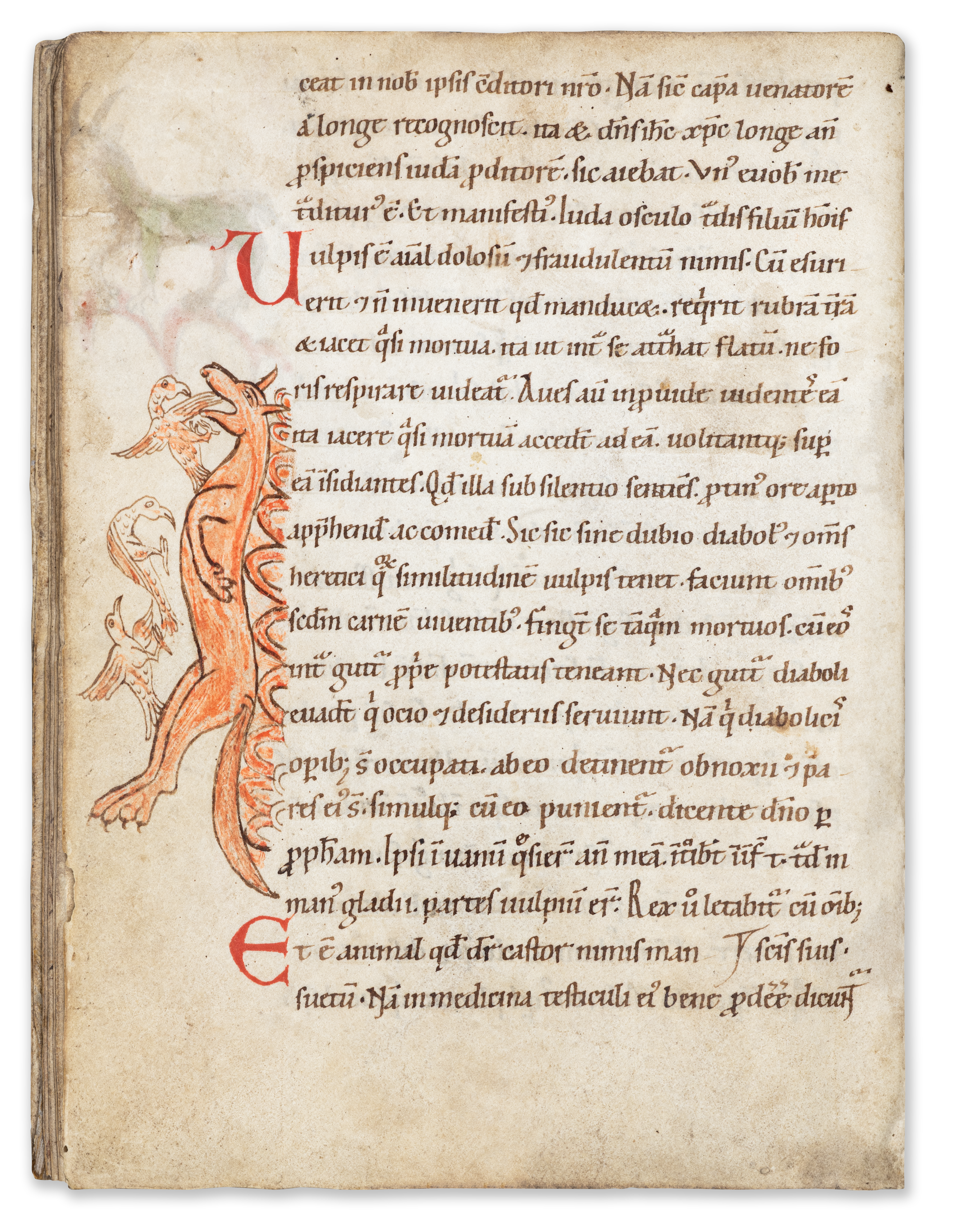
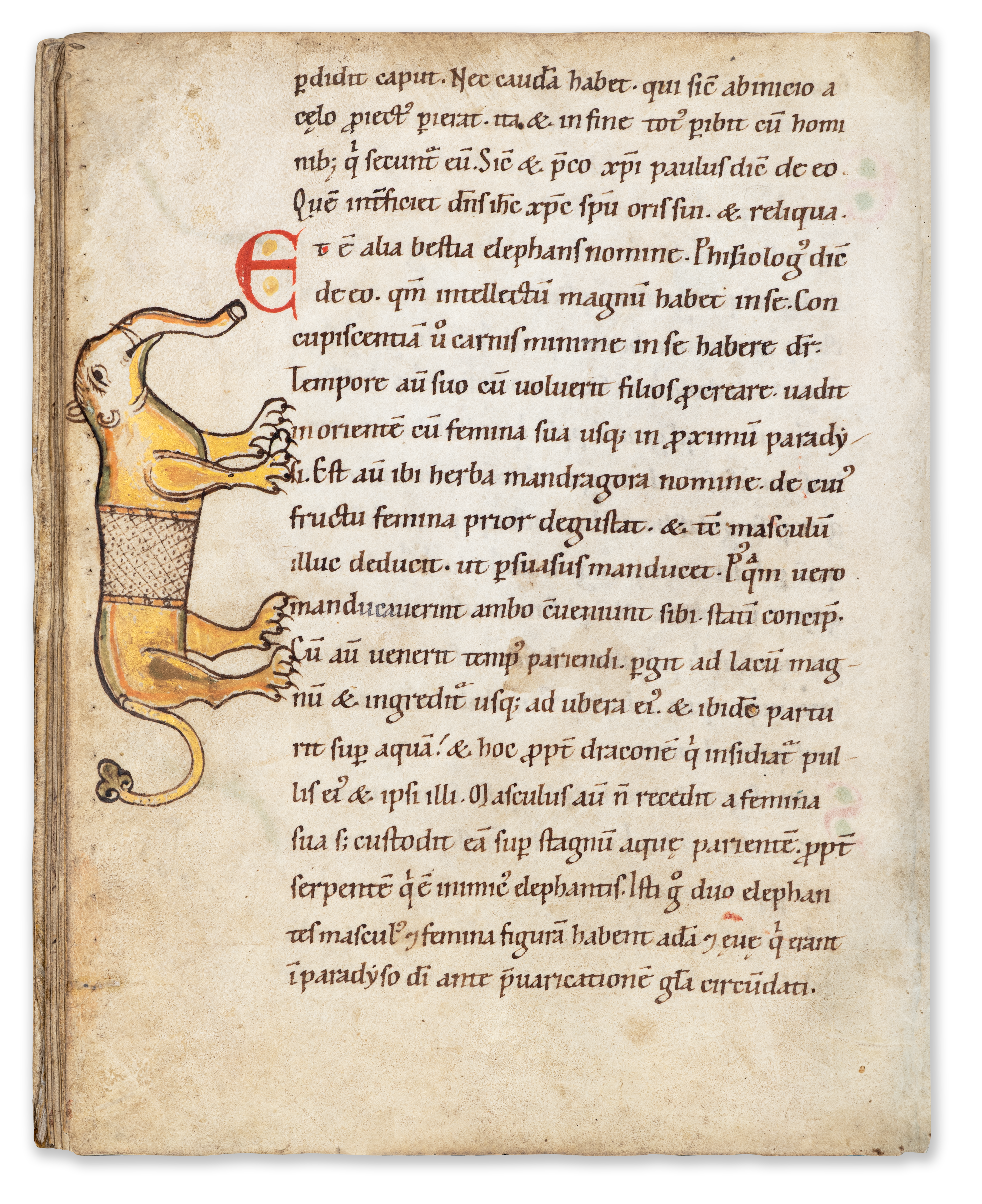
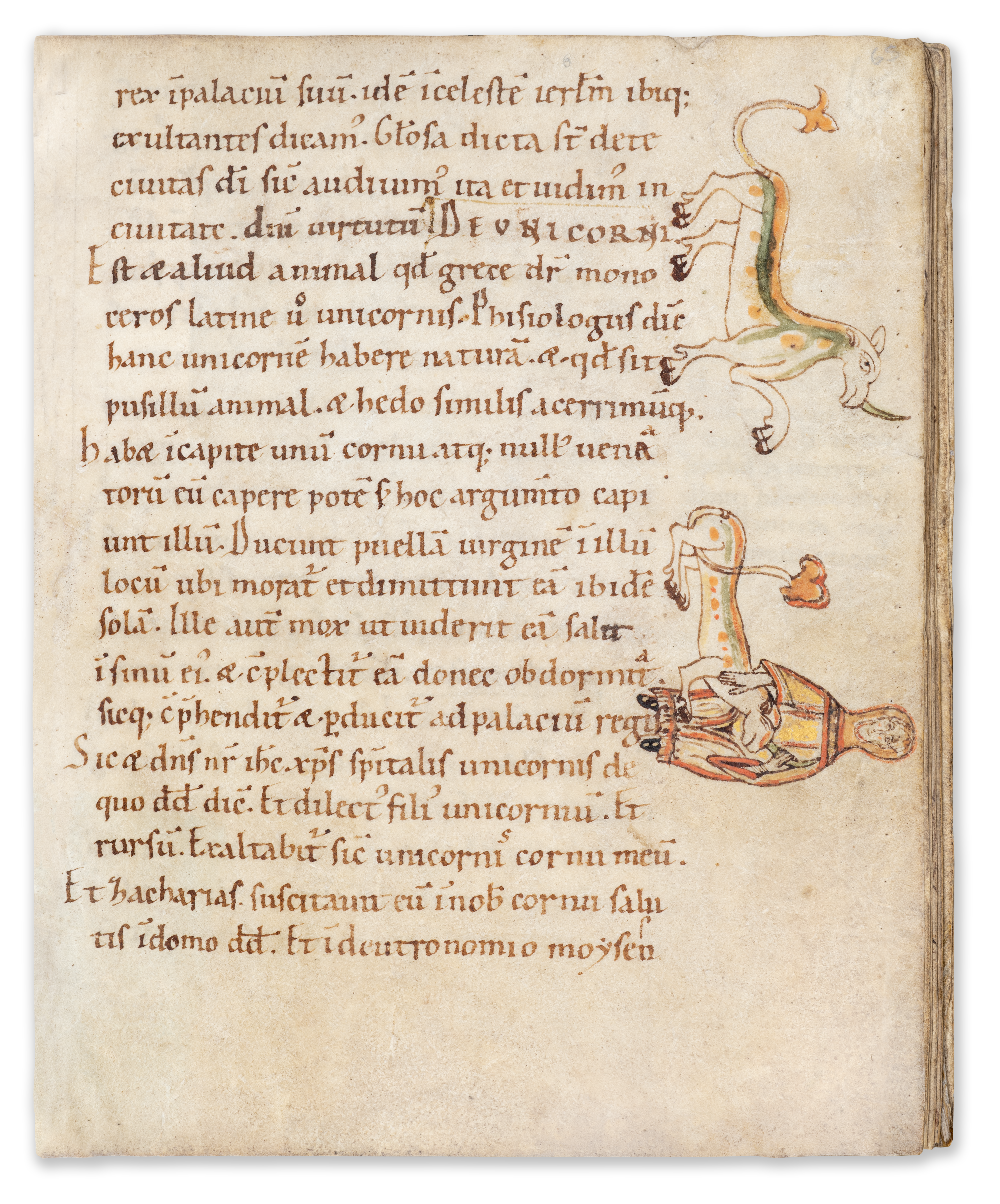
123 leaves. 30 drawings of animals in the margins, mostly coloured. Brown calf leather binding from the early 18th century, by the Bamberg bookbinder Zacharias Kling.
The Physiologus is an early Christian collection of stories about the nature and significance of real and fantastic creatures, presented as moral and allegorical exempla that interpret the natural world as a reflection of the divine creation. This manuscript is an exceptionally rare witness to the medieval Physiologus tradition.
This manuscripts’ origin in the Benedictine Abbey of Saint Peter and Paul in Erfurt, with a significant medieval scriptorium, further enhances its cultural significance. Copied in the second half of the 12th century, and with an extensive illustrated cycle, this is the last surviving medieval Physiologus manuscript remaining in private hands.
The Physiologus is an early Christian collection of stories about the nature and significance of real and fantastic creatures. This short text, probably dating from the second or third century and written in Alexandria, was widely popular from the beginning.
The text’s importance for the Christian world lies in its presentation of Nature as a symbolic language, allowing readers to discern the marvels of divine power. Its wide reception, attested by numerous versions and translations into vernacular languages, shows how successfully the author popularized Christian knowledge about nature. The author selected natural beasts, plants, and stones mentioned in the Bible in order to convey the Christian message. These miraculous stories entertained while teaching, providing a Christian counterpart to pagan natural histories at a time when Christians were still persecuted and competing with highly educated pagan intellectuals. In sum, the Physiologus helps readers recognize God in creation in a profoundly delightful and entertaining way.
Our manuscript was written at Saint Peter’s Abbey, Erfurt, possibly during the second half of the 12th century. The volume is of particular significance for its complete copy of the Physiologus in the so-called Dicta Chrysostomi recension, accompanied by thirty illustrations. This version of the text, traditionally attributed to John Chrysostom, represents a major step in the medieval reworking of the ancient Physiologus.