





A magnificent 13th-century Netherlandish Psalter for cultivating the vita apostolica preached by Saints Francis and Clare

In this blogpost, Sara Moure López (Universidade de Santiago de Compostela), examines our 'Franciscan Psalter', which includes a full-page miniature depicting Saint Francis and Saint Clare in a powerful and remarkable way.
Among Dr. Jörn Günther’s Rare Books there is an extraordinary well-preserved psalter from the second half of the 13th century, possibly illuminated in a workshop in Bruges. Some of the saints included in the calendar and litanies points to this urban center and also to the nearby city of Ghent. Furthermore, the study of the manuscript’s design and figurative programme places it within the considerable production of this type of private devotional book that was carried out in Netherlandish ateliers around 1250. However, as we shall see, among the images in this codex, there is one that sets it apart from the rest of the extant psalters of the period and allow us to refer to it as the ‘Franciscan’ Psalter.
Regarding its delicate imagery, this exquisite book, which mainly contains psalms from the Holy Scriptures, opens with a liturgical calendar from March to December, illustrating the different seasonal occupations for each month. The figures performing these agricultural activities are arranged against backgrounds that alternate between tan and blue, and sometimes break out of the golden frame in which they are placed, as in the case of the wheat harvest scene in August (Fig. 1). On the recto of the adjoining folio, dedicated to the month of September, a peasant is harvesting grapes (Fig. 2). These scenes bear a clear iconographic resemblance to the illustrations in the calendar cycle of another beautiful psalter, which was also illuminated around the same period in the Southern Netherlands and is another fabulous example of the widespread production and distribution of this type of religious book at that time.
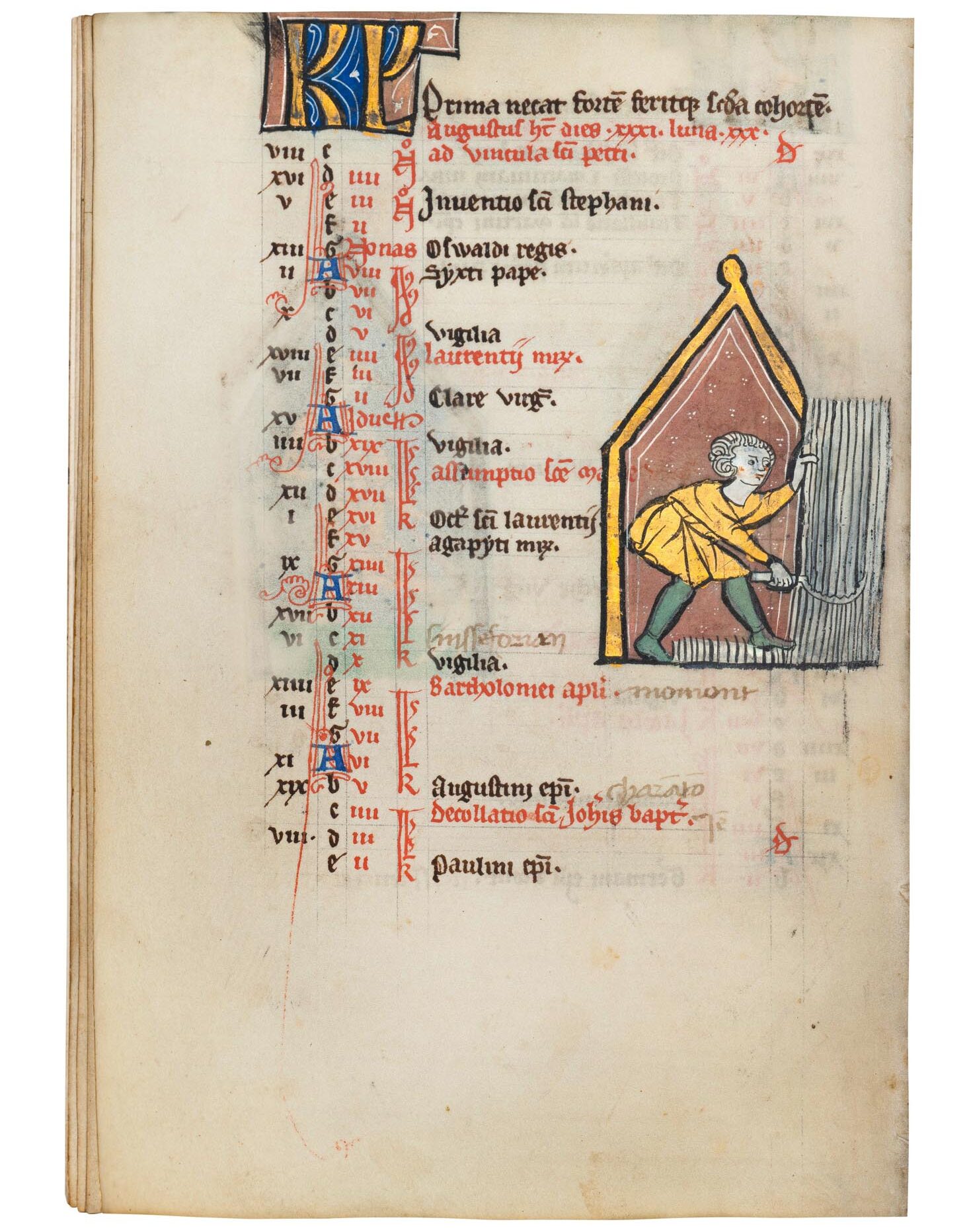
Fig. 1 Franciscan Psalter, use of Ghent. Manuscript in Latin on vellum, possibly illuminated in the workshop of the Franciscan Master of Bruges. Flanders, Bruges, c. 1255-1260, f. 5v, August.
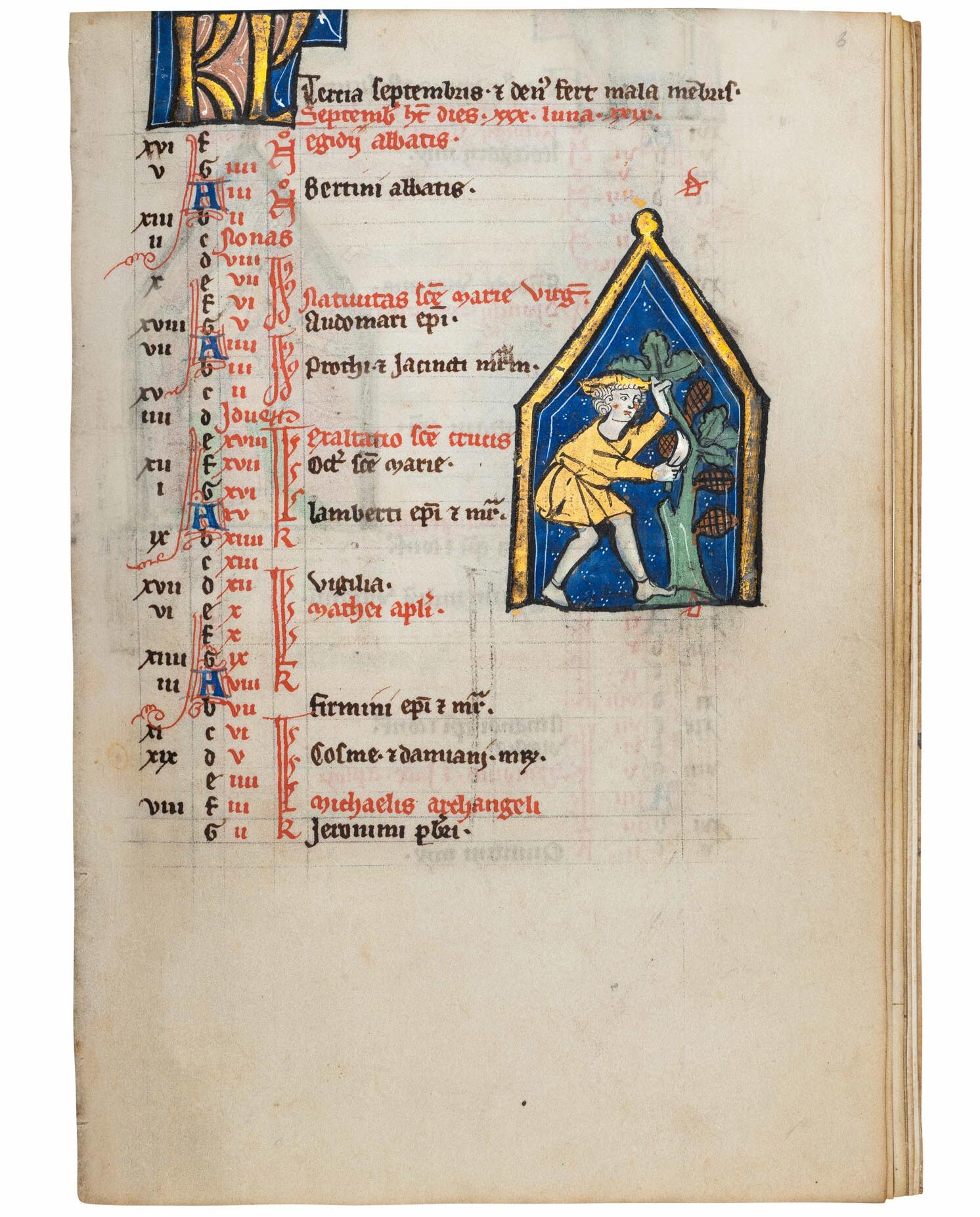
Fig. 2 Franciscan Psalter, use of Ghent. Manuscript in Latin on vellum, possibly illuminated in the workshop of the Franciscan Master of Bruges. Flanders, Bruges, c. 1255-1260, f. 6r, September.

Fig 3 and 4 Psalter. Manuscript in Latin on vellum, illuminated by the Circle of the Franciscan Master. Southern Netherlands, Bruges/Ghent, c. 1255–1265, ff. 8v-9r, August and September.
In between the calendar and the psalms, both manuscripts feature a series of extraordinary full-page miniatures on highly burnished gold ground depicting different scenes from the life of Christ, such as the Nativity and the Crucifixion (Figs. 5, 6, 7, 8). In addition, these two psalters contain nine historiated initials on a gold background that serve as an introduction to Psalms 26, 38, 51, 52, 68, 80, 97, 101, and 109. These historiated initials depict nimbed young men, generally beardless, in a seated position. Depending on the manuscript, these figures may appear in different poses, carrying scrolls without inscriptions or holding a book (Fig. 9).
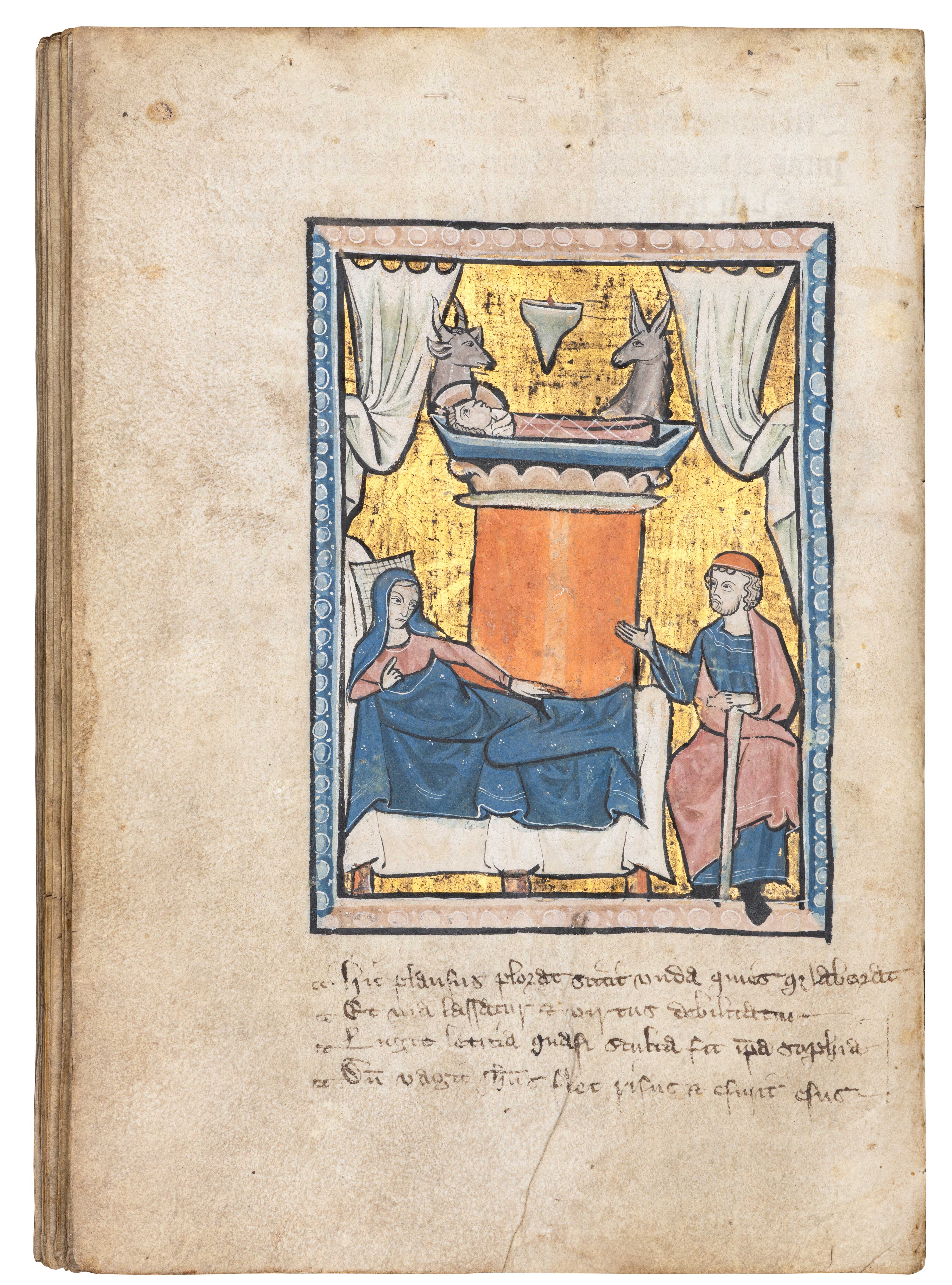
Fig. 5 Psalter. Manuscript in Latin on vellum, illuminated by the Circle of the Franciscan Master. Southern Netherlands, Bruges/Ghent, c. 1255–1265, f. 11v, Nativity.
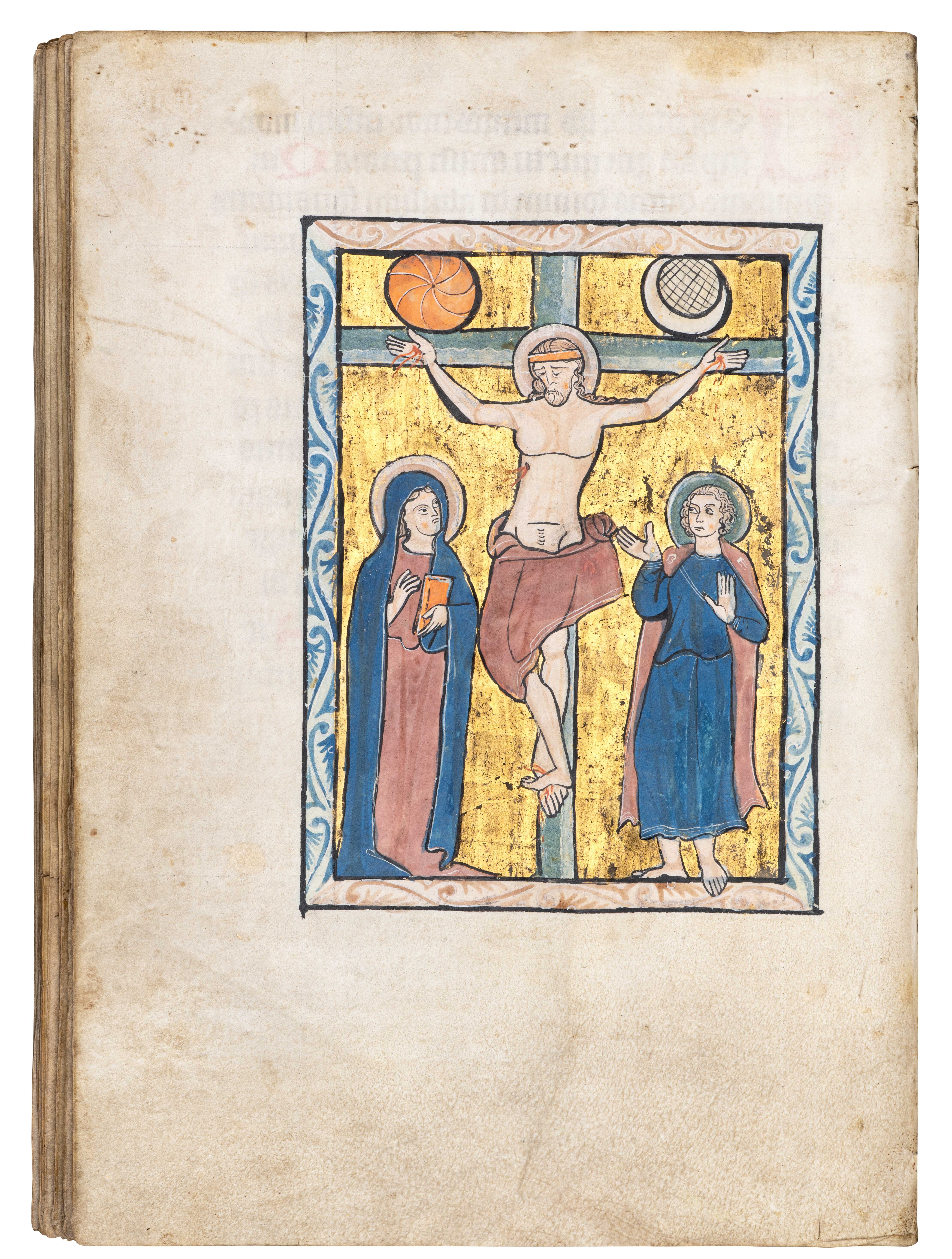
Fig. 6 Psalter. Manuscript in Latin on vellum, illuminated by the Circle of the Franciscan Master Southern Netherlands, Bruges/Ghent, c. 1255–1265, f. 12v, Crucifixion.
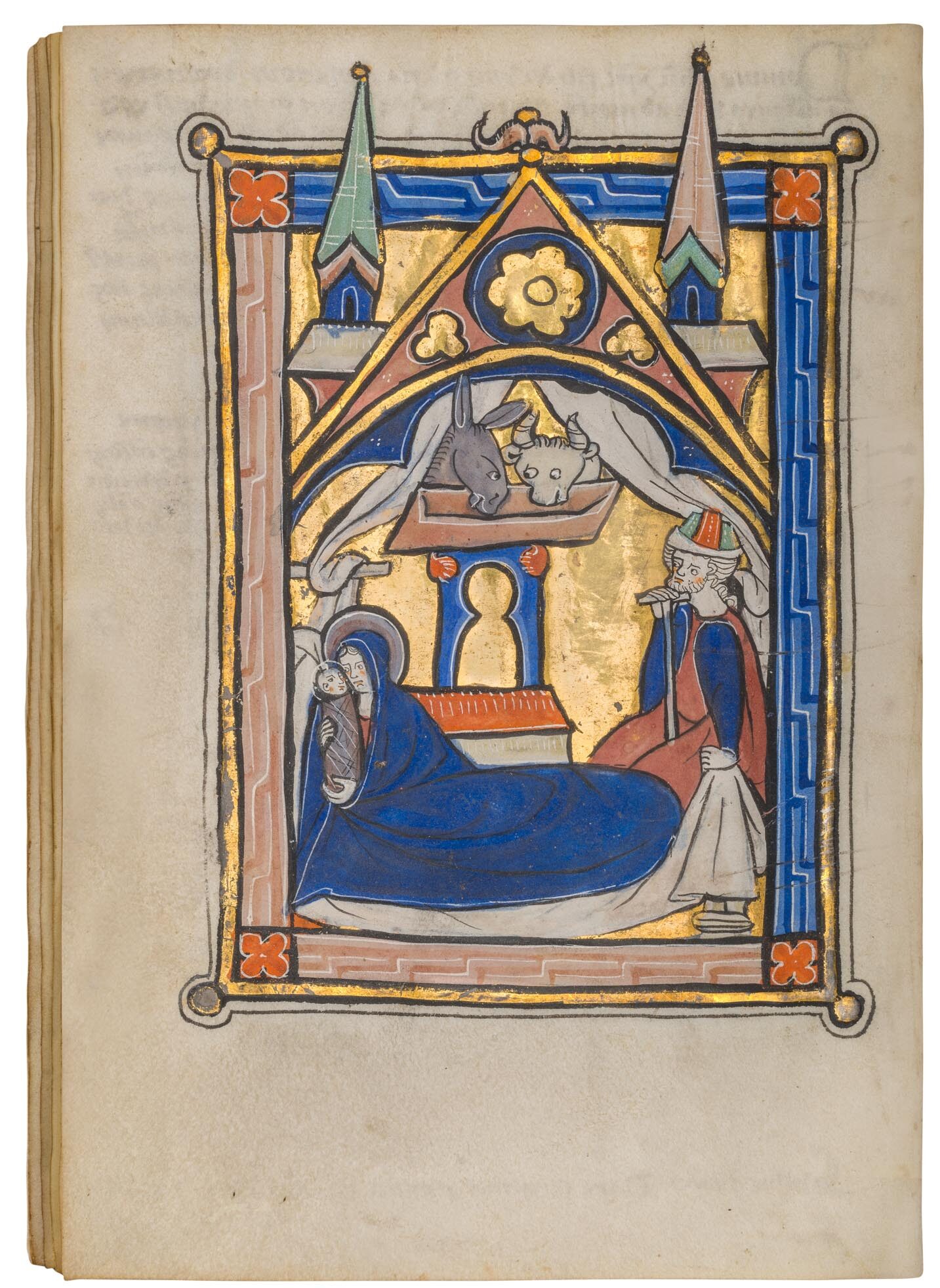
Fig. 7 Franciscan Psalter, use of Ghent. Manuscript in Latin on vellum, possibly illuminated in the workshop of the Franciscan Master of Bruges. Flanders, Bruges, c. 1255-1260, f. 10v, Nativity.
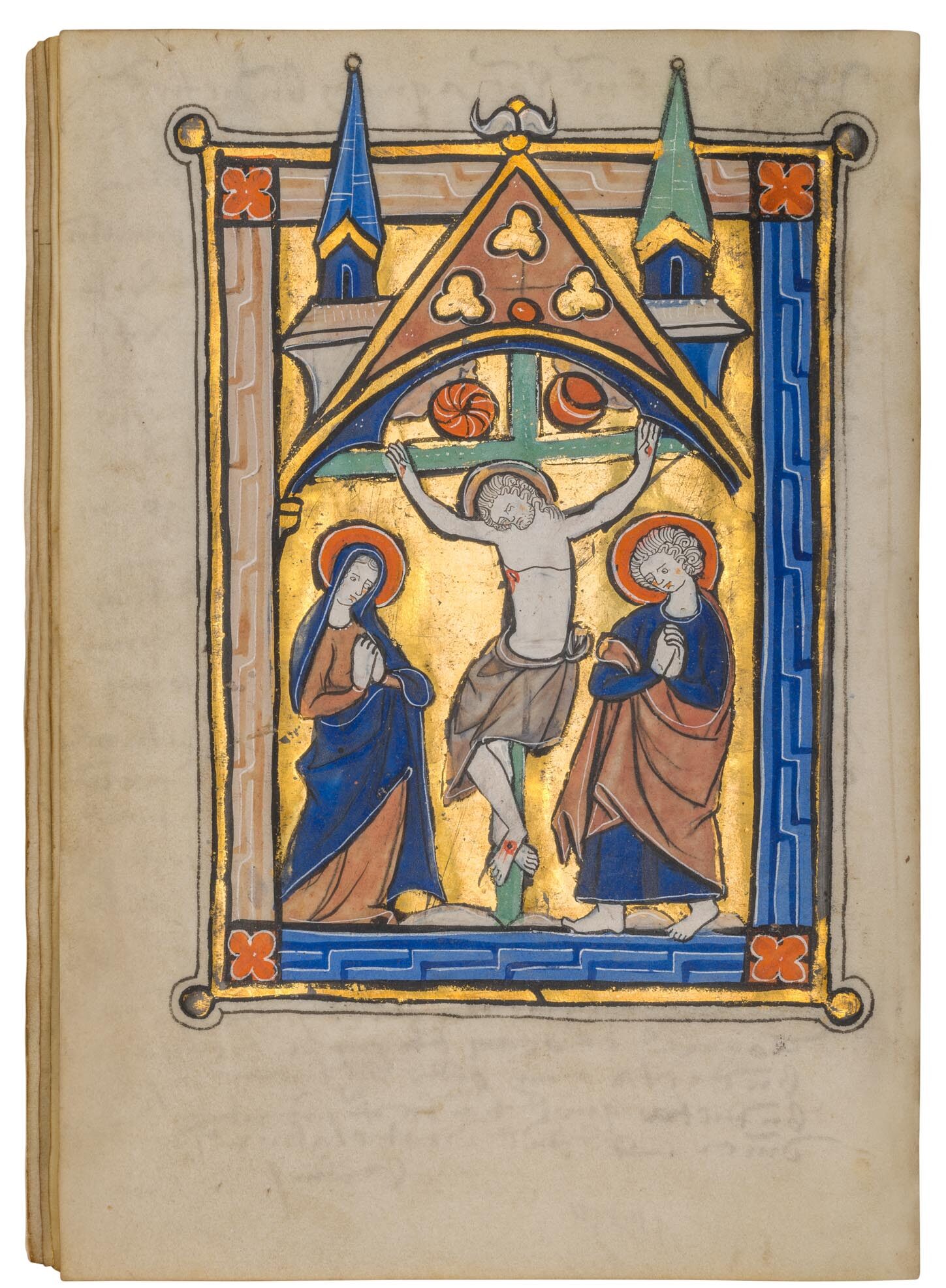
Fig. 8 Franciscan Psalter, use of Ghent. Manuscript in Latin on vellum, possibly illuminated in the workshop of the Franciscan Master of Bruges. Flanders, Bruges, c. 1255-1260, f. 12v, Crucifixion.
In the case of the initial D that opens the Franciscan Psalter cycle, the figure inside holds a key and can be identify as the apostle Saint Peter (Fig. 10). The iconography of these historiated initials allows us to link these manuscripts to the so-called apostle psalters, a group of codices with similar ornamentation produced in Netherlandish ateliers during the 13th century. According to Lilian Randall’s study, historical and artistic evidence places Liège as the initial centre that favoured the development of the apostolic movement and apostle psalters. However, towards the middle of the 13th century, the production of these books experienced a great boost in the Bruges area. This output could be a response to the demand generated by the expansion of the Beguine movement. In this sense, and considering that some of these psalters contain evidence that they were intended for a female owner, Randall has suggested that Beguines, who were particularly interested in the principles of vita apostolica, might have been the main recipients of these books.
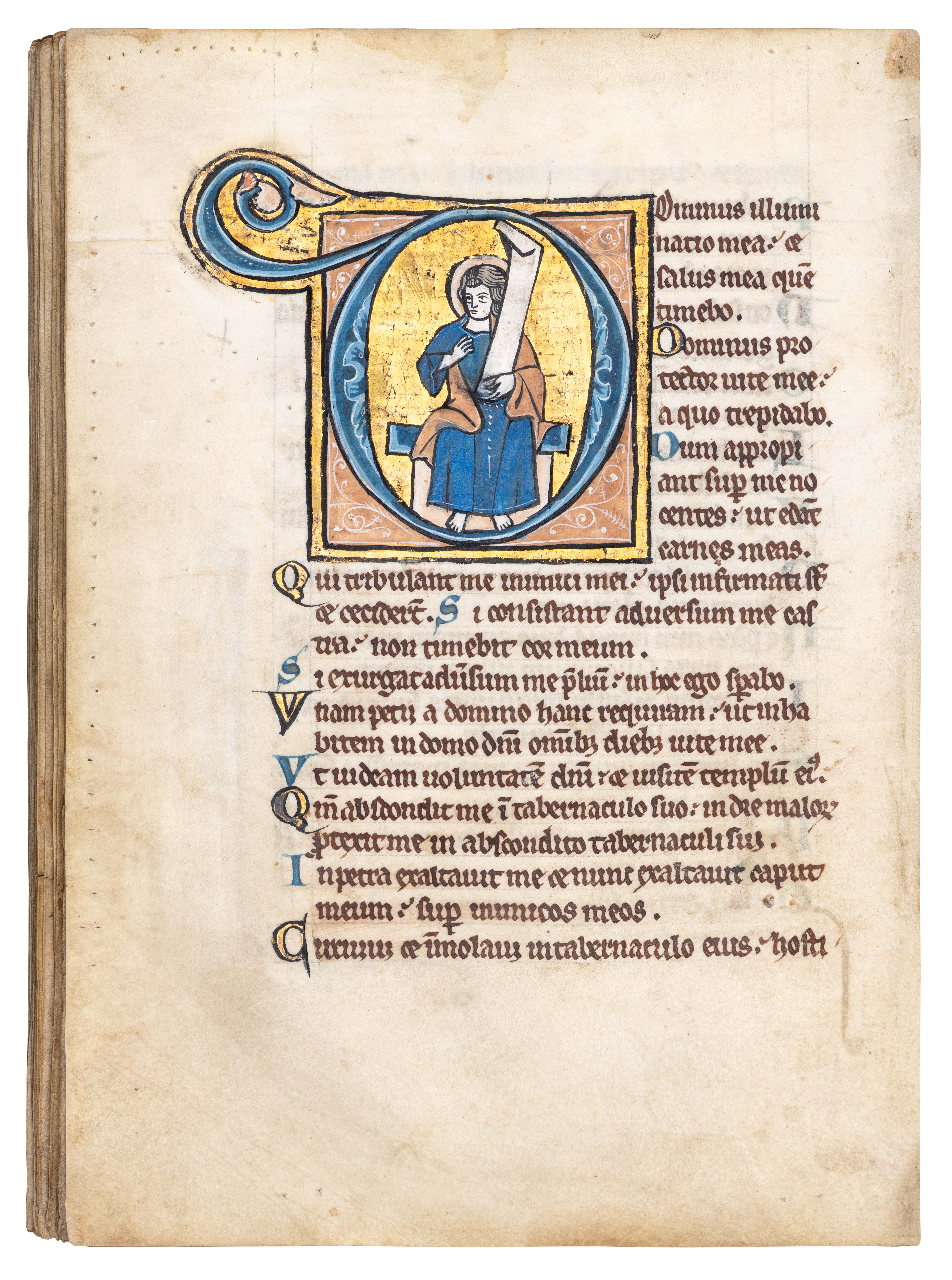
Fig. 9 Psalter. Manuscript in Latin on vellum, illuminated by the Circle of the Franciscan Master. Southern Netherlands, Bruges/Ghent, c. 1255–1265, f. 31v, Historiated Initial D(ominus illuminatio mea Ps. 26): beardless saint. sitting on a bench, holding an empty scroll
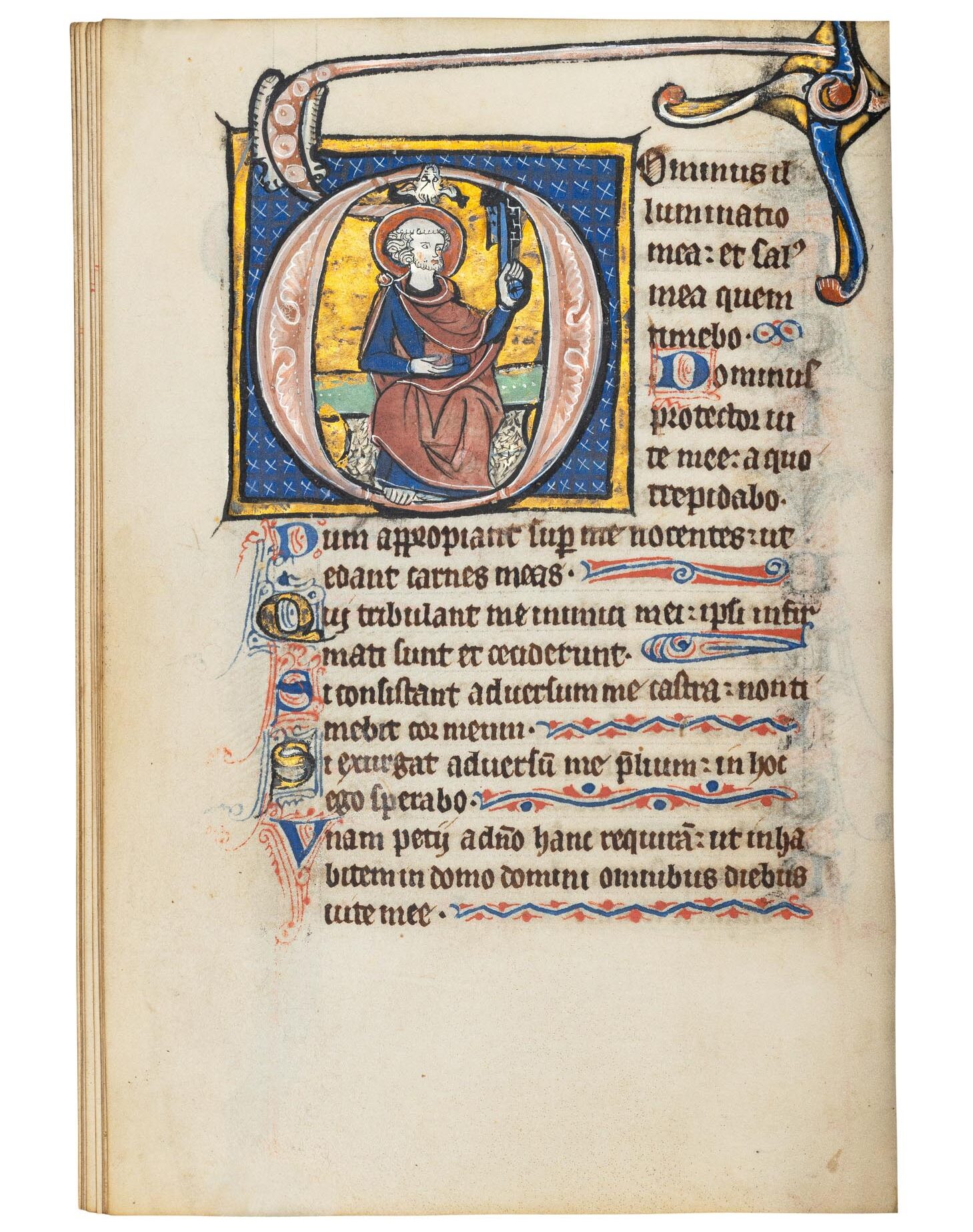
Fig. 10 Franciscan Psalter, use of Ghent. Manuscript in Latin on vellum, possibly illuminated in the workshop of the Franciscan Master of Bruges. Flanders, Bruges, c. 1255-1260, f. 34v, Historiated initial D(ominus illuminatio mea, Ps. 26). The cycle opens with a figure holding a key, who can be identified as Saint Peter.
The history of the Beguines presents an important aspect to bear in mind. Although initially Cistercian foundations were their gathering place, by the mid-13th century the preaching friars, who then embodied the apostolic values, became their main spiritual advisors. This issue is extremely interesting considering that some of these psalters include explicitly mendicant iconography. MS VITR/23/9 in the Biblioteca Nacional, Madrid, MS M 106, in the Morgan Library, New York, and MS 604, in the Bibliothèque de l’Arsenal, Paris, are among the works that Kerstin Carlvant has most recently attributed to the so-called Franciscan Master of Bruges and his assistants. These manuscripts contain depictions of the founders of these orders. Taking as an example the miniature of St. Francis and St. Dominic in the Paris psalter (Fig. 11), it is possible to appreciate a greater visual emphasis on the first, whose left hand extends beyond the margin of an image that commemorates his imitation of Christ by prominently displaying the stigmata. This focus on the Franciscan order is reinforced by another image depicting a female haloed figure who has been identified as Clare of Assisi (Fig. 12). The Franciscan saint, wearing the distinctive knotted cord, turns towards a woman kneeling in supplication under an aedicule. In Carlvant’s opinion, the inclusion of these images in the pictorial repertoires of these manuscripts suggests that they were commissioned under the Franciscan influence, that seems to have prompted a remarkable production of psalters in the Bruges area around 1260, at a time when the order was already well established in the city. As a symbol of this consolidation, it is worth noting that the Franciscan convent in Bruges had already been moved years earlier from its original location to a new, more central site within the parish of Onze-Lieve-Vrouw.
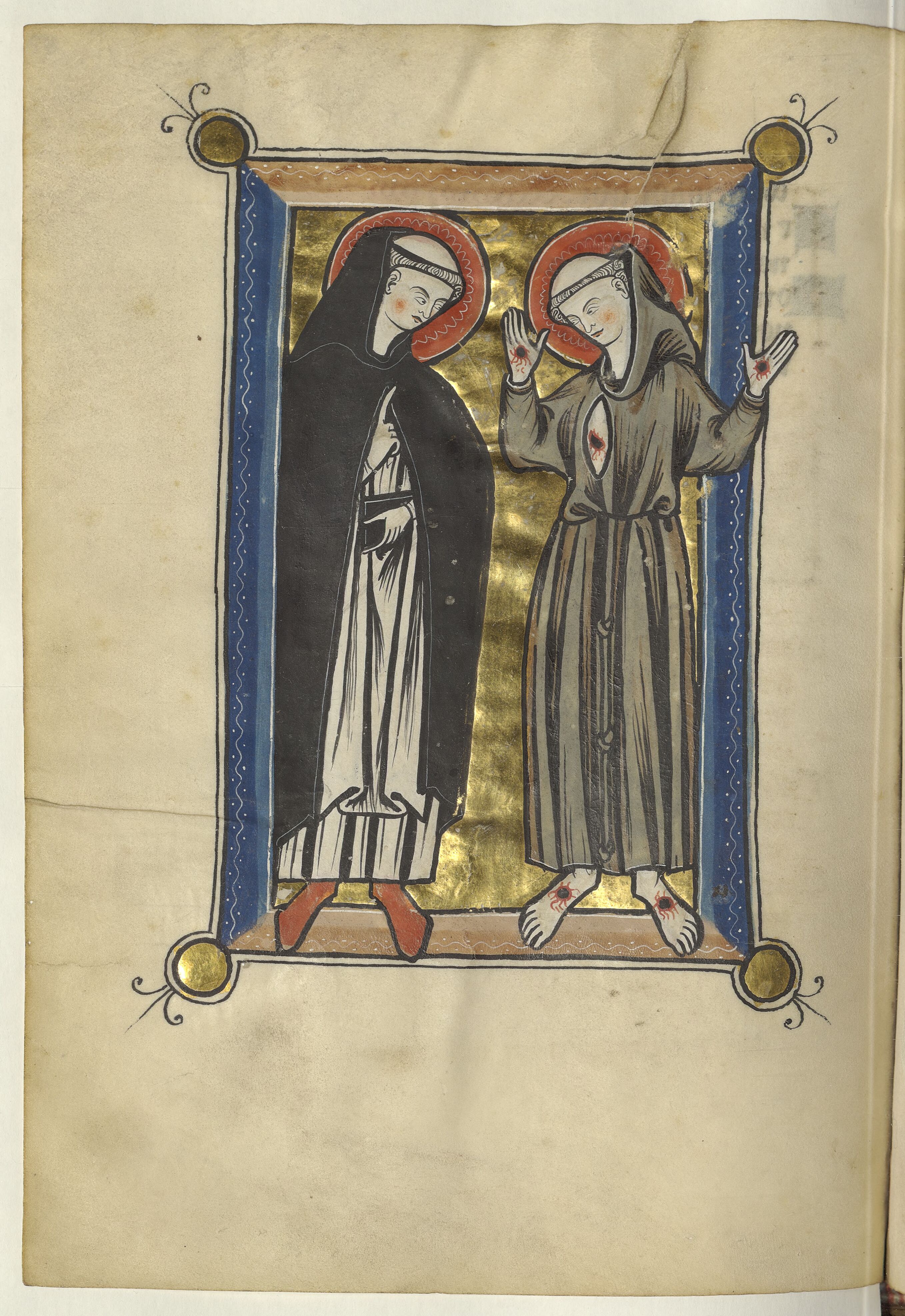
Fig. 11. Paris, Bibliothèque de l’Arsenal, MS 604, f. 82v. Photo: Bibliothèque Nationale de France.
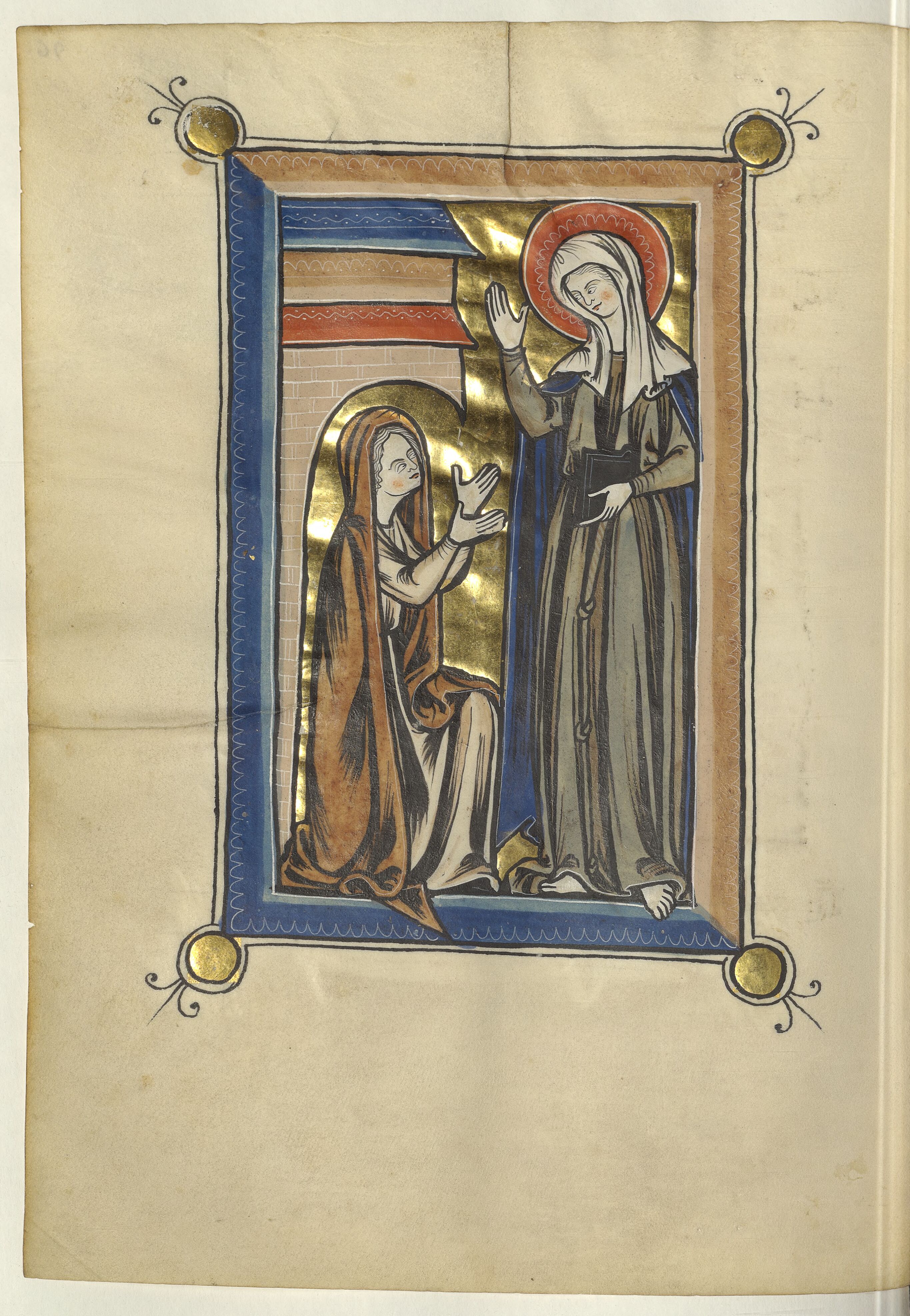
Fig. 12. Paris, Bibliothèque de l’Arsenal, MS 604, f. 96v. Photo: Bibliothèque Nationale de France.
Our Franciscan Psalter reflects in a special way the enthusiasm and devotion of the Friars Minor in Bruges with an extraordinary image that differs from the iconography discussed above and that seems to make it unique among the psalters surviving from that period. Preceding the Christological miniatures, on folio 8v, Saints Francis and Clare are depicted in the same full-page illustration (Fig. 13). Standed under an aedicule, both founders, wearing the Franciscan habit that highlight the miniaturist’s mastery of shading through colour, hold a book in one hand and extend the other in a preaching attitude. The image is particularly charming as the recipients of their words are the birds perched on the branches of the tree between the two saints. All this takes place under the watchful gaze of a third tiny figure who appears behind Saint Francis’ habit and who can attest to what is happening. Since this scene evokes one of the most popular miracles in Francis’s life, recounted in the hagiography written by Friar Celano shortly after his canonisation, what is particularly interesting is the decision to include Saint Clare as an equal protagonist of this moment. In this regard, it is worth noting that Saint Clare is not depicted listening to Saint Francis, but rather her attitude is also one of active preaching, and she is even slightly taller than the male saint. The prominence of Saint Clare, canonised in 1255, invites us to imagine that this psalter could have been commissioned by a woman close to the Poor Clares, and it is even conceivable that it might have been used by a nun of this congregation.
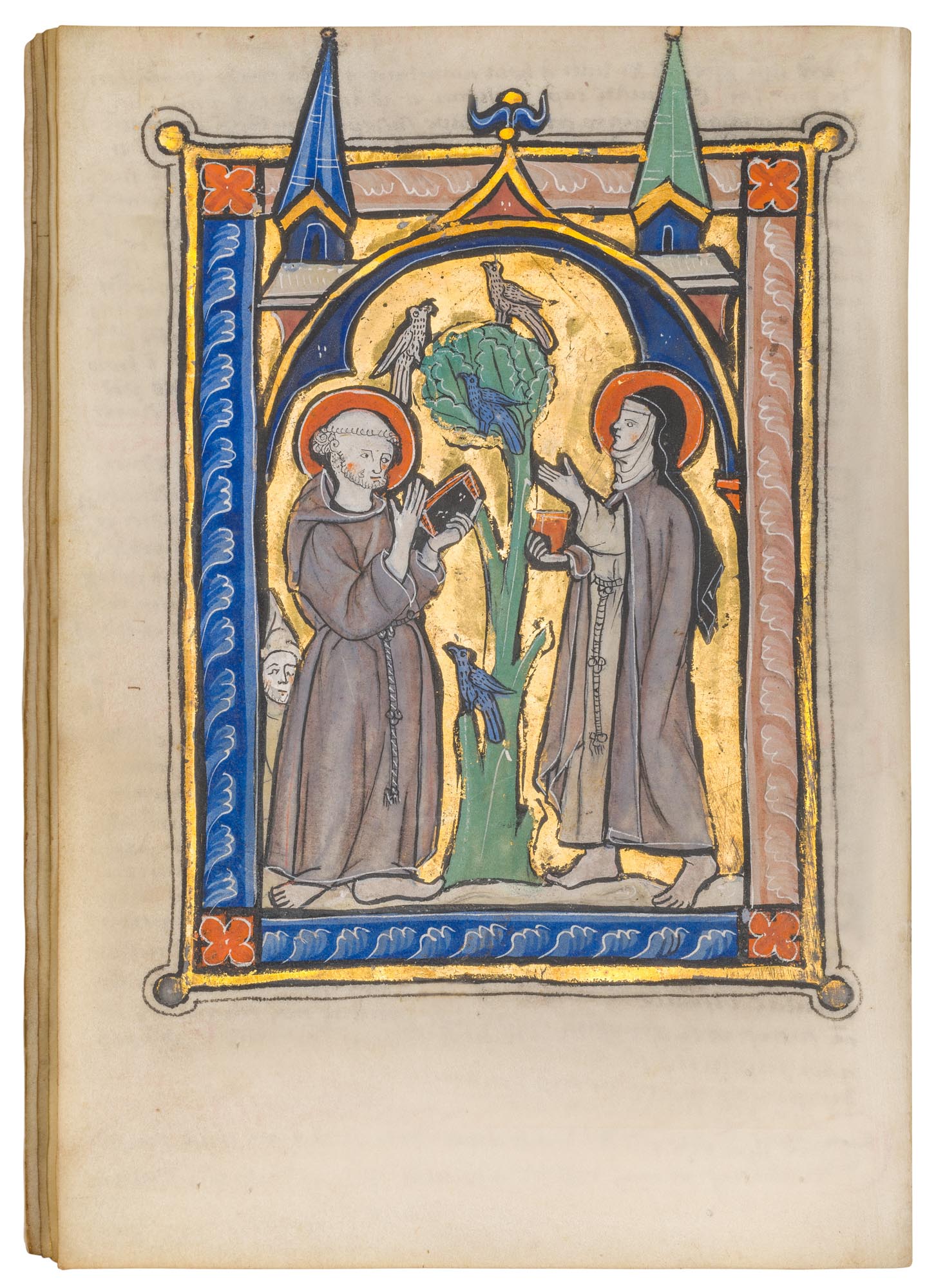
Fig. 13 Franciscan Psalter, use of Ghent. Manuscript in Latin on vellum, possibly illuminated in the workshop of the Franciscan Master of Bruges. Flanders, Bruges, c. 1255-1260, f. 8v, Saint Francis and Saint Clare
What is certain is that the person for whom this manuscript was originally intended would have found in St Francis and St Clare a valuable spiritual guide for entering into the vita apostolica and interpreting the psalms contained in this psalter. At the same time, and taking a broader perspective, this copy exquisitely highlights the consolidation of the Order of Friars Minor and, most significantly, of their sisters Clarissas. However, this psalter not only reflects the spiritual landscape of Flanders in the second half of the 13th century, but the various later textual additions and a coat of arms in the lower margin of f. 13r attest to its use and enduring value for the different hands through which this copy has passed until it reached the heart of Basel (Fig. 14). How fortunate are the hands that can hold it once again and learn more about its fascinating history!
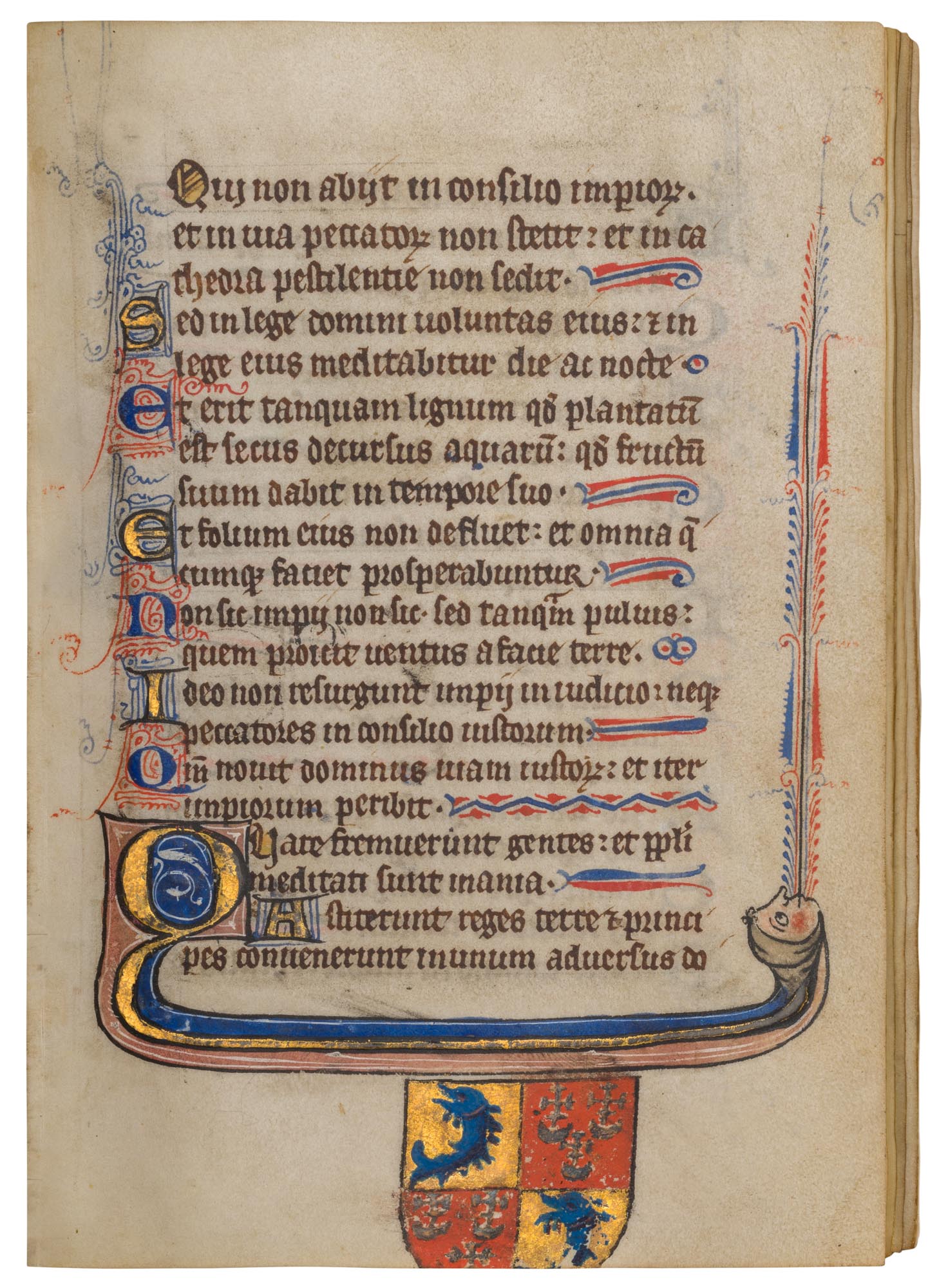
Fig. 14 Franciscan Psalter, use of Ghent. Manuscript in Latin on vellum, possibly illuminated in the workshop of the Franciscan Master of Bruges. Flanders, Bruges, c. 1255-1260, f. 13r, 15th-century coat of arms is in the lower margin.
Notes
Büttner, F. O. (ed.). The Illuminated Psalter: studies in the content, purpose and placement of its images. Turnhout 2004.
Carlvant, Kerstin. Manuscript Painting in the Thirteenth-Century Flanders. Bruges 2012.
Randall, Lilian M.C. “Flemish Psalters in the Apostolic Tradition.” In Gatherings in Honor of Dorothy E. Miner. Baltimore 1974, pp. 172-88.