


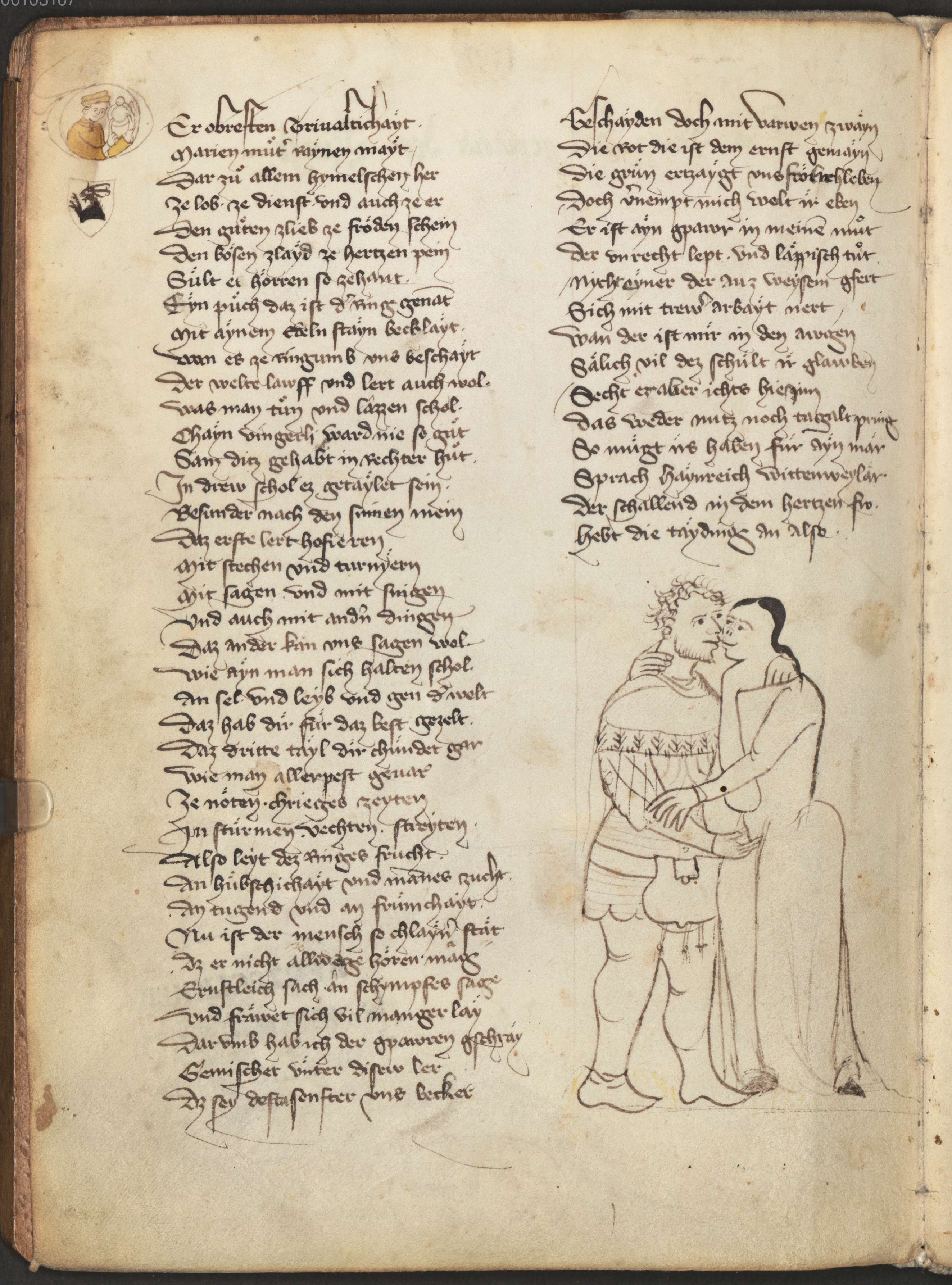
Der Ring
by Heinrich Wittenwiler
Germany, Swabia, c. 1410
260 x 185 mm
This work is now in the collection of the Bayerische Staatsbibliothek in Munich (BSB Cgm 9300).
57 leaves.
"Der Ring" ("the Ring") by the Constance jurist Heinrich Wittenwiler is not only the sole work he left behind (ca. 1410), but one of the most surprising narratives of the German late Middle Ages.
The comical-didactic epic (9,699 verses) tells of the love and wedding between the foolish Bertschi Triefnas and the ugly Metzli Rürenzumpf from Lappenhausen, of the wrongdoings of the rustic couple of lovers and of its friends and foes in the village. The war with a neighbouring village that develops out of a brawl between the wedding guests turns into an apocalyptical battle, in which witches, giants and heroes of the courtly epic intervene. Only Bertschi survives – he renounces the world and retires to the Black Forest.
The title “The Ring” announces the aspiration of the work as a description of the world, “broken in the model of the village and disintegrating in disparate levels of meaning” (Thomas Cramer). The disintegration is visually clarified by the red and green section initials that emphasise funny and earnest parts and with the help of which the author plays a confusing game.
“Der Ring” is only preserved in this carefully copied parchment codex in Alemannic-Bavarian language.