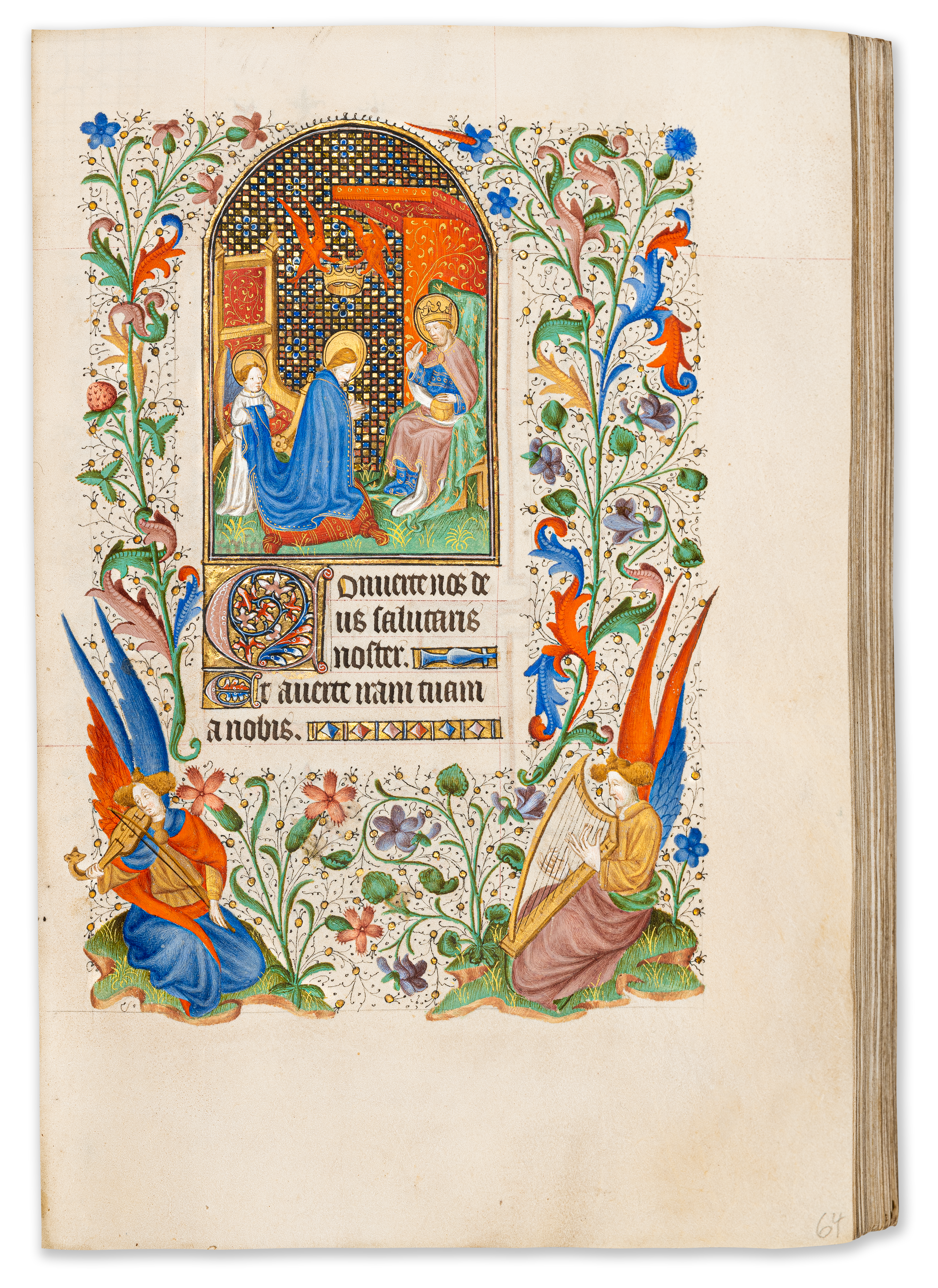


Homo Ludens – The Playing Human
How the human instinct for play enlivens medieval manuscripts
Do you remember losing yourself completely in play as a child? Playing pirates in a treehouse, or “family” in your nursery? Kicking a ball or skipping rope? Do you recall the sheer excitement and joy of climbing trees in the woods or observing tadpoles and frogs by a pond? We encounter the world through play. And even if we now lament that children spend too much time in front of screens and too little outdoors, the human instinct for play has remained remarkably constant, persistent, and powerful across the centuries.
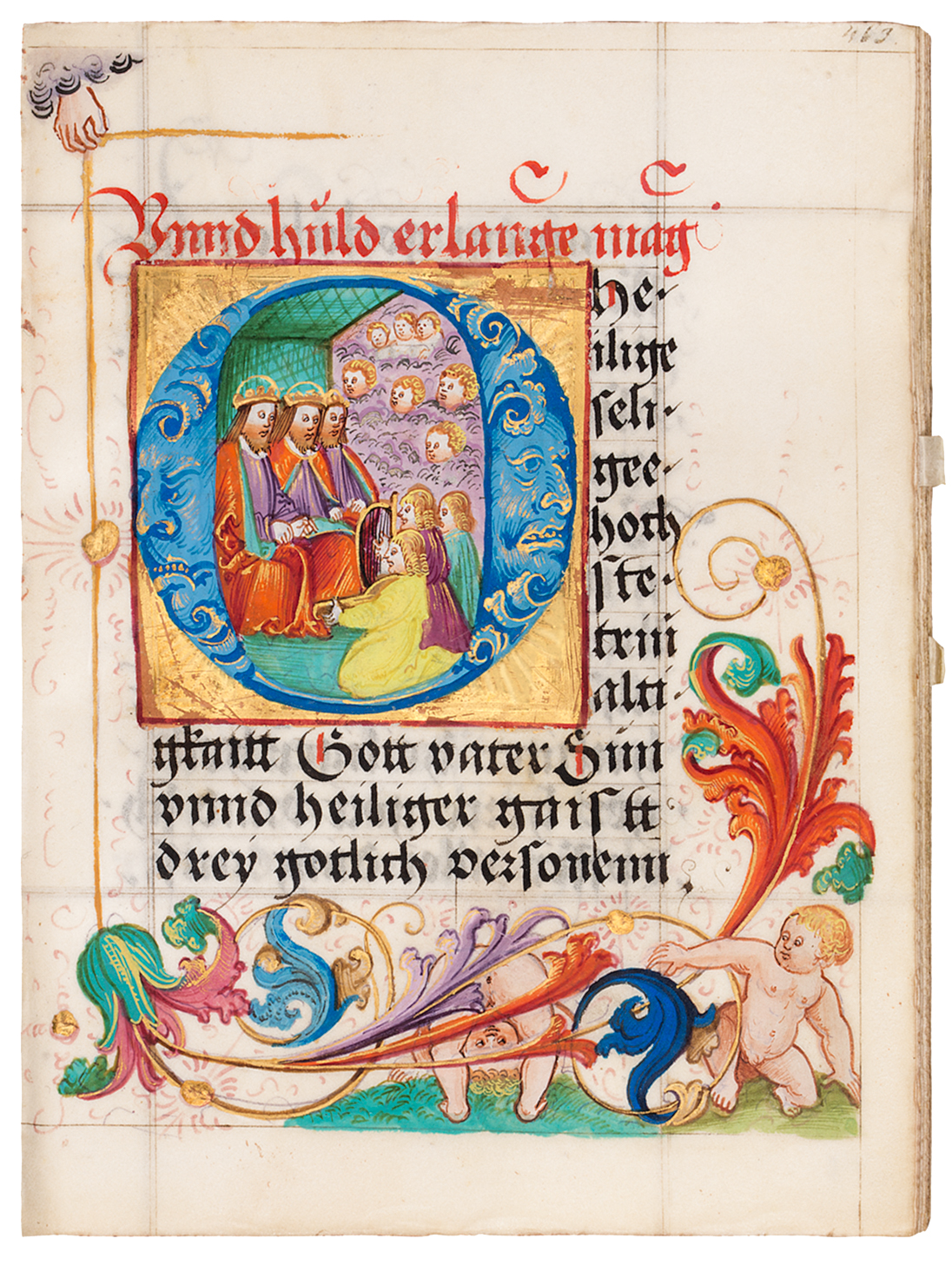
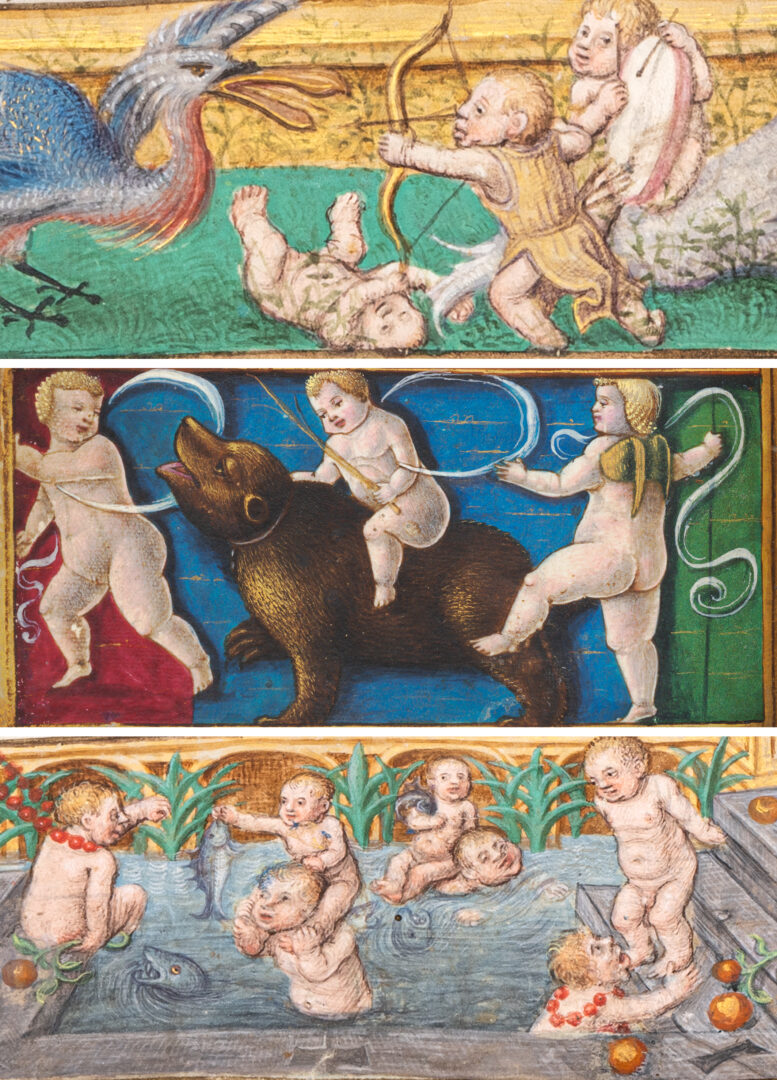
Playing children or putti. Prayerbook for Wolfgang and Helene Hofmann, Nuremberg 1513-1514; formally JGRB, today BSB Cgm 9601.
Yet humans are not alone in this. Animals, too, explore their abilities and limits through play—tumbling, wrestling, chasing—acquiring experience in ways that are both instinctive and essential. And this playful impulse does not disappear with adulthood; it merely changes its form.
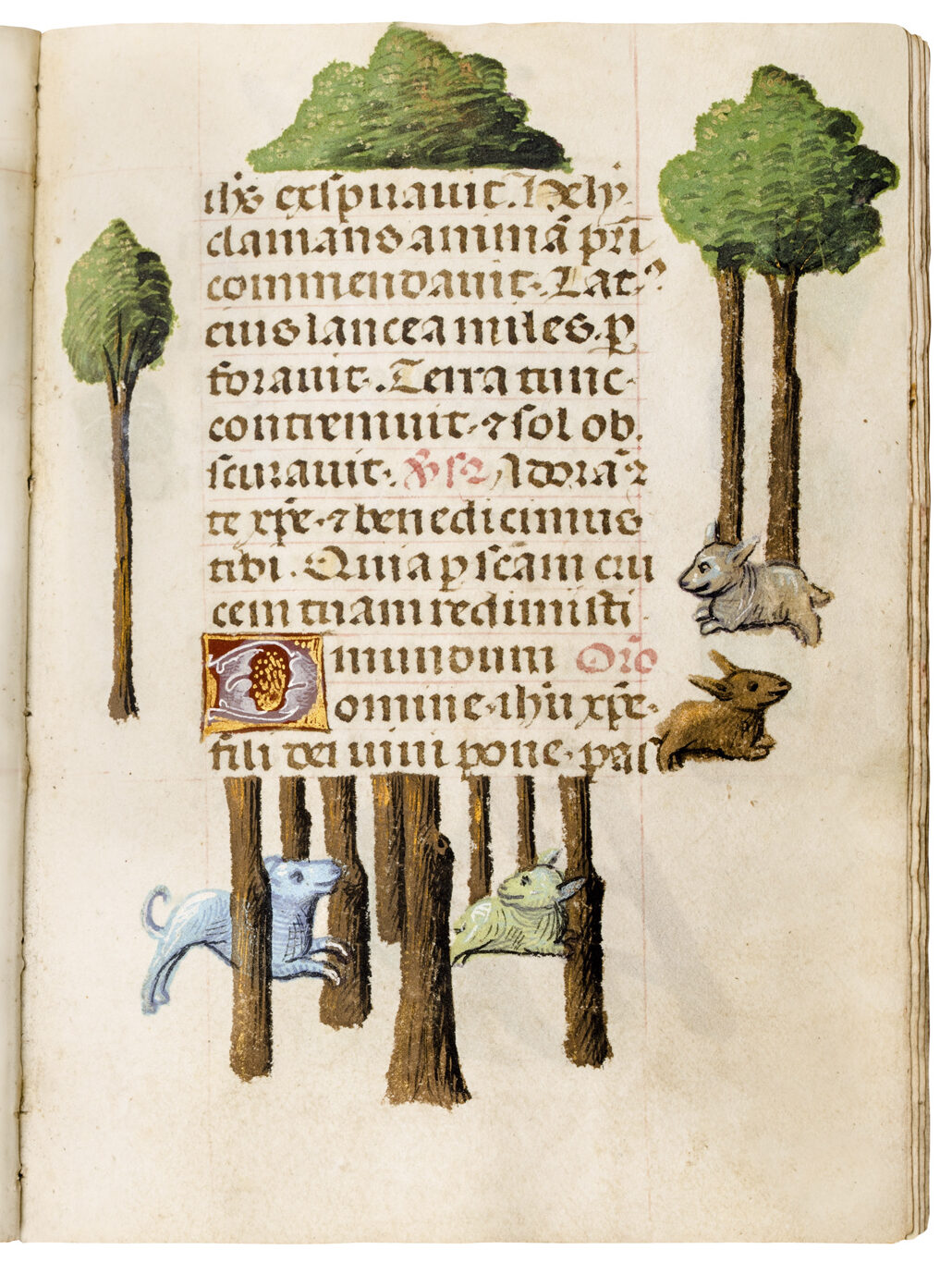
Play or hunt? Smiling rabbits and a dog scampering amongst the trees in the ‘Marginalia’ Hours, Bruges, c. 1500-1510; formally JGRB, today private collection.
Games are often dismissed as idle pastimes. From an evolutionary perspective, however, play is anything but trivial—it is a vital, even indispensable form of training. From basic motor skills to complex strategies, play rehearses everything we need in life: balance, speed, coordination, as well as fundamental social behaviours—negotiating conflict, asserting one’s position, establishing or challenging hierarchies, working in teams, and making independent decisions.
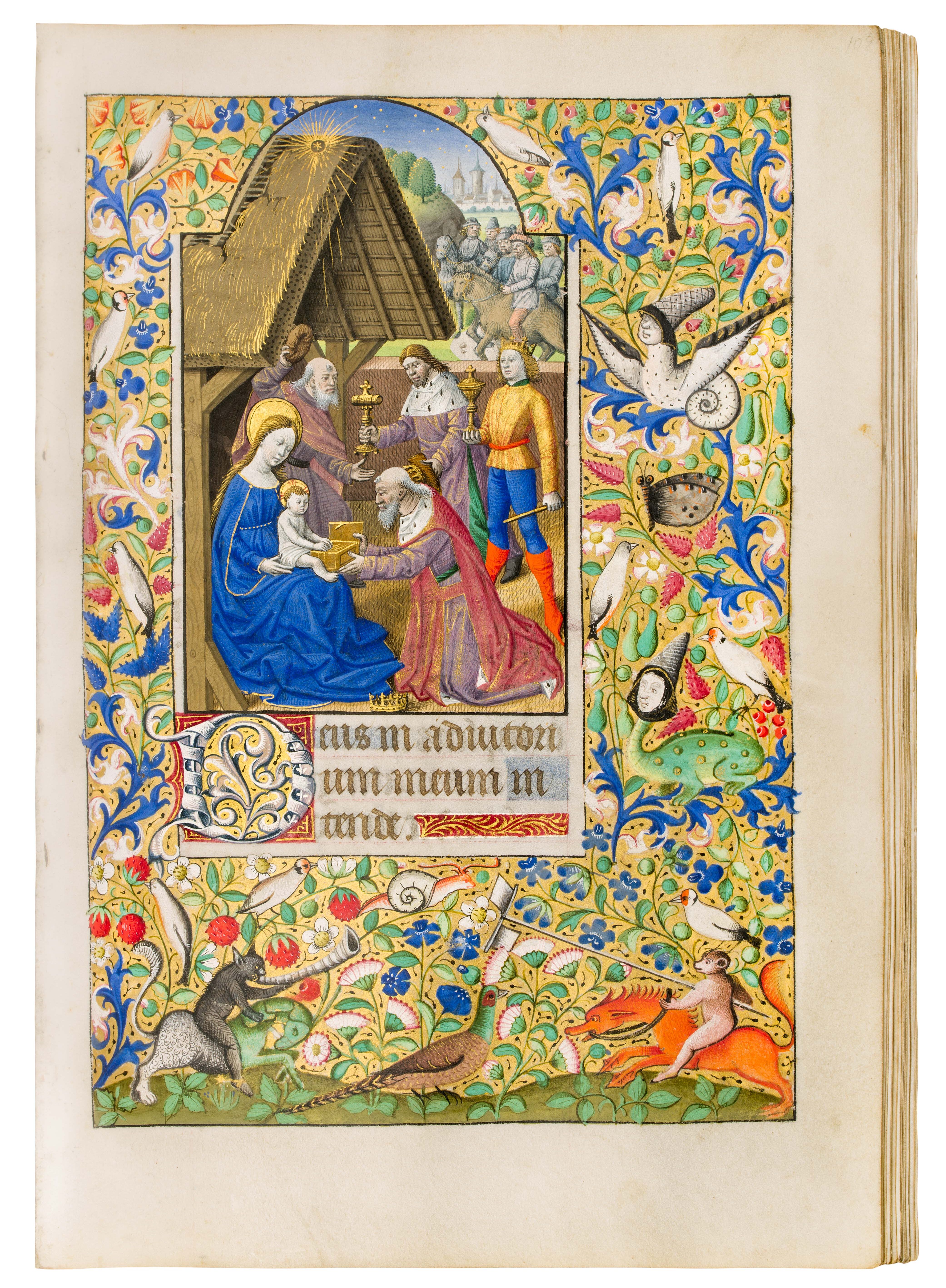
A cat and monkey fighting with toy weapons, marginal scene from the Spitzer-Hachette Hours, Paris, c. 1480-1490; formerly JGRB, today private collection.
The Dutch cultural historian Johan Huizinga went so far as to argue that play is a fundamental condition of culture itself. In his book Homo Ludens (1938), he describes play as a free yet rule-bound activity that creates its own temporary world—a world that underlies and shapes such diverse domains as law, warfare, and art.
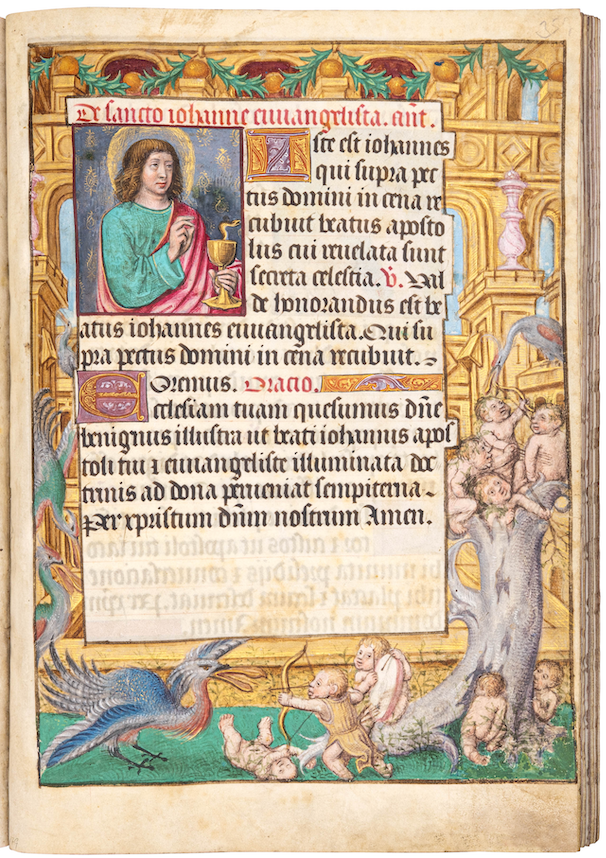
Children hunting with bow and arrow, marginal scene from a Book of Hours for a Dominican monastery, Bruges or Ghent, 1510–1520; available at Dr. Jörn Günther Rare Books.
Given that play is such a deeply rooted, inherently pleasurable form of behaviour, it is hardly surprising that images of people (and animals) at play found their way into art. Perhaps the most famous example is Pieter Bruegel the Elder’s Children’s Games of 1560, now in the Kunsthistorisches Museum in Vienna. It reveals an almost encyclopaedic array of more than eighty distinct activities, ranging from simple bodily exercises to complex rule-based games.
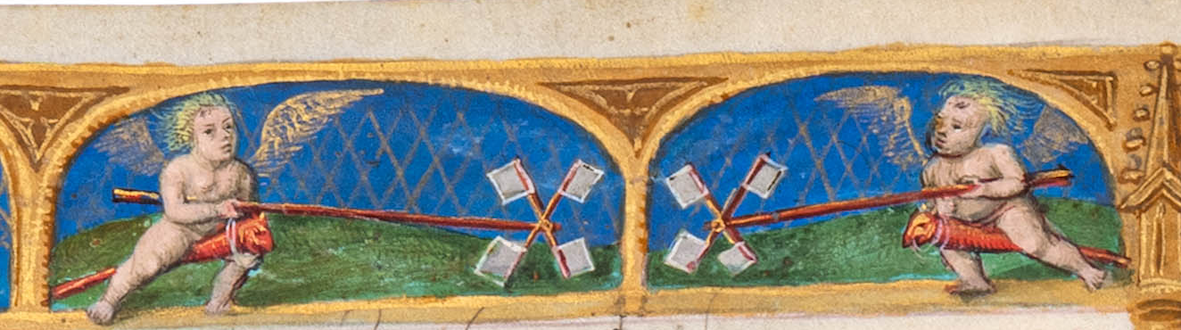
Children’s tournament on hobby horses with windmill weapons, Dominican Hours (see above).
Yet in the period that concerns us here—the Middle Ages and the early modern era—the depiction of such seemingly mundane activities was only rarely the subject of large-scale painting or sculpture. In manuscript illumination, however, the theme appears more frequently, particularly in the margins. These borders traditionally offered a space in which the ridiculous, the indecorous, or even the frankly vulgar could unfold without censure. The margins functioned, in a sense, as a zone of licence—a place where figures could play, jest, mock, and even behave outrageously, beyond the constraints that governed the main image.
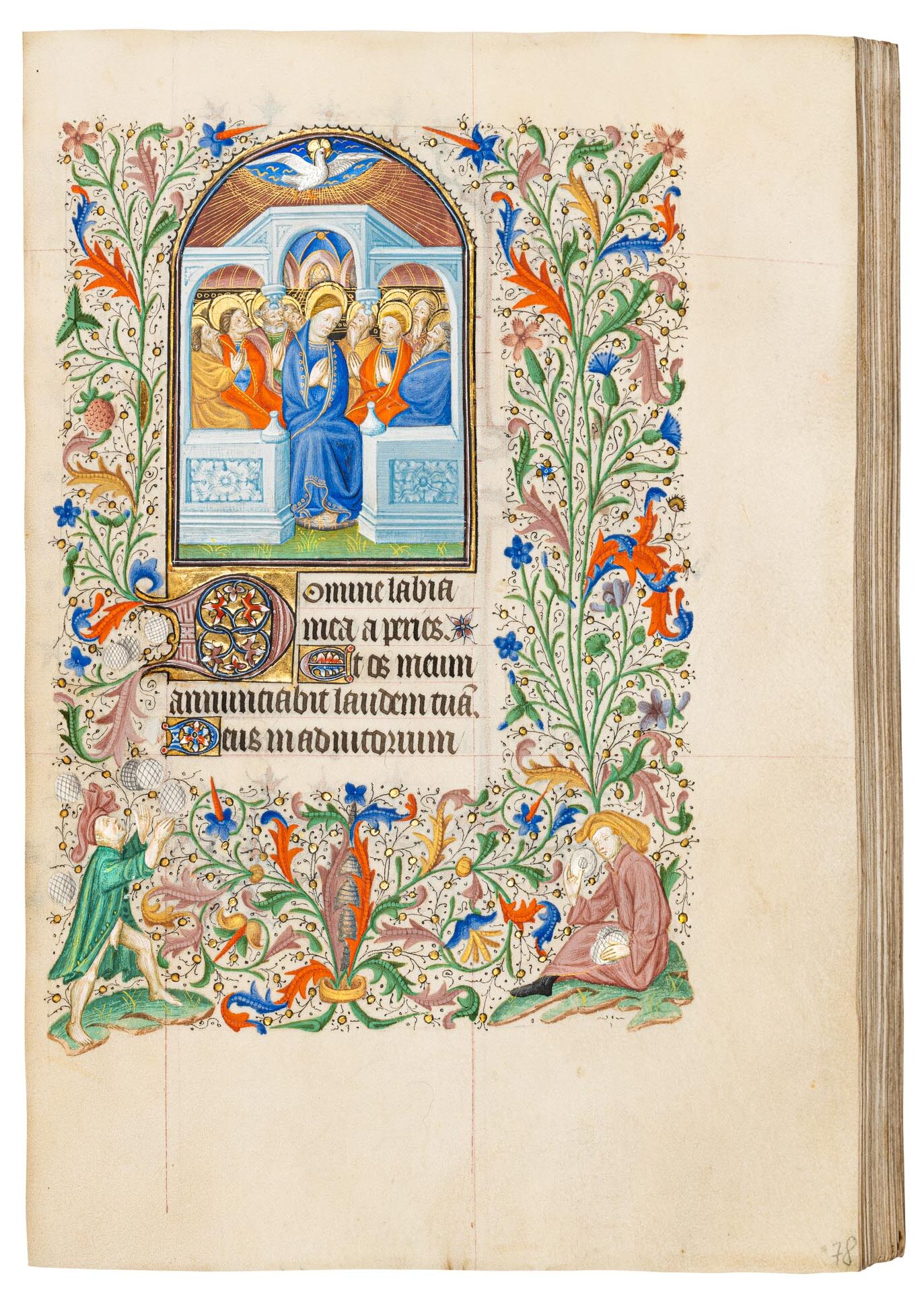
Two men playing ball, one of them with nudist tendencies, border scene from the Catherine Hours, Paris, c. 1420-1425, available at Dr. Jörn Günther Rare Books.
There are, in fact, depictions of seemingly petty pastimes devoted to playful amusement that may nevertheless carry considerable symbolic or religious meaning in relation to the main image. Lilian Randall demonstrated this in her study on the Book of Hours made for the French queen Jeanne d’Évreux, now in the Metropolitan Museum of Art, The Cloisters (acc. no. 54.1.2).
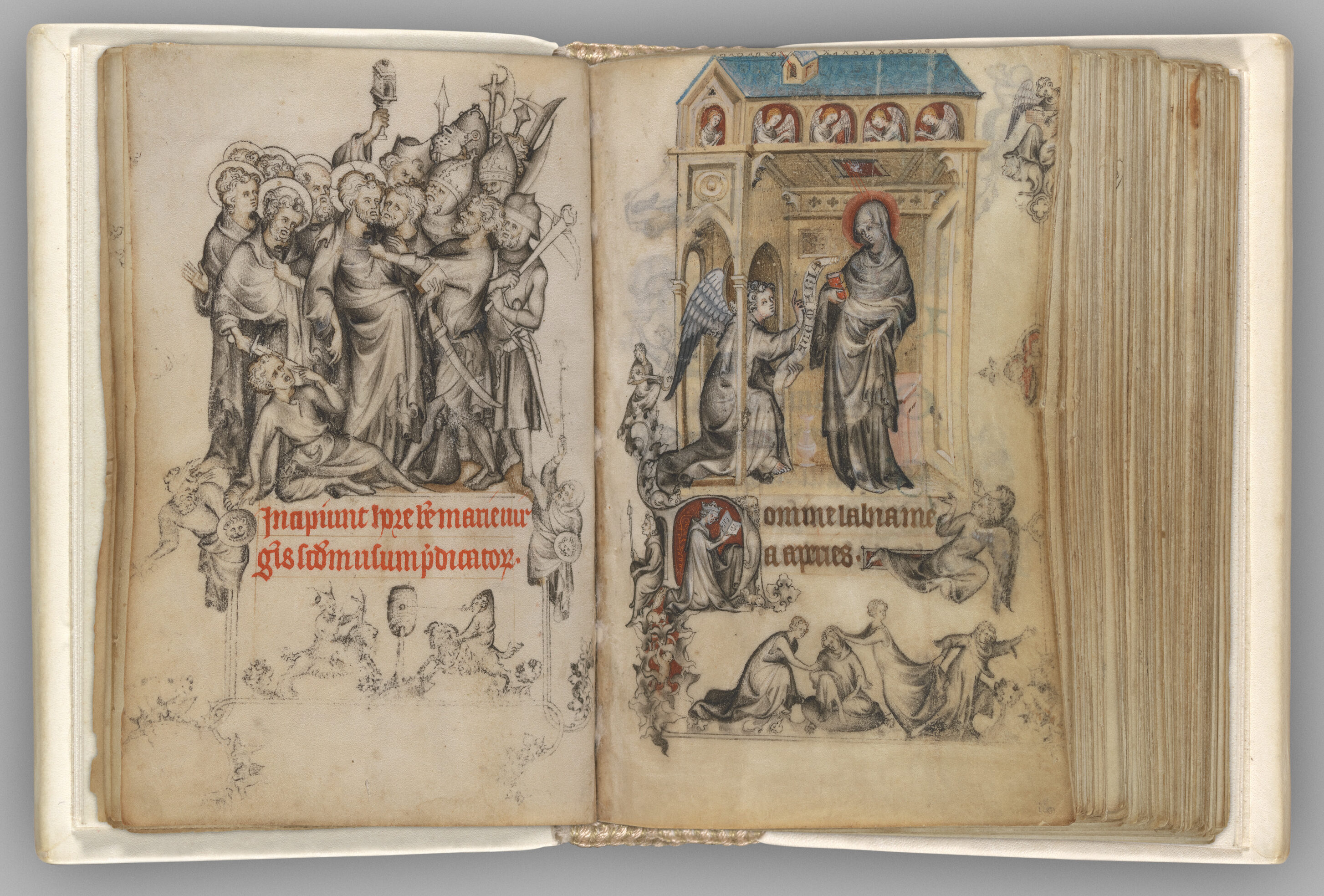
Book of Hours for Jeanne d’Evreux, New York, Metropolitan Museum.
The double-page opening on ff. 15v–16r shows the Arrest of Christ, marked by Judas’s treacherous kiss , opposite the Annunciation to the Virgin.
In the bas-de-page beneath the Annunciation, a group of young people engage in what appears to be a parlour game: one figure sits on the ground while the others tease him, prompting him to give chase. On a superficial level, this scene may simply reflect the kinds of courtly amusements enjoyed by the queen, who is herself depicted in the initial above.
Yet, as Randall has shown, such games of mockery—attested in a variety of forms—were often inspired by scenes of the Mocking of Christ, widely enacted in contemporary Passion- and Mystery plays. The playful vignette beneath the Annunciation thus operates on more than one level: it offers light diversion for the reader, while simultaneously anticipating the suffering of the unborn child, foreshadowed on the facing page by the arrest of the Saviour.
The exploration of such hidden or layered meanings remains a deeply compelling field of study. Newly discovered manuscripts and emerging textual evidence continue to illuminate the rich and multi-faceted significance of these adored marginal images.
And occasionally one comes across rather odd illustrations in the borders of devotional books that make us wonder whether they’re meant to be a game, dead serious, or a hidden message. Perhaps you can think of something. Any suggestions?
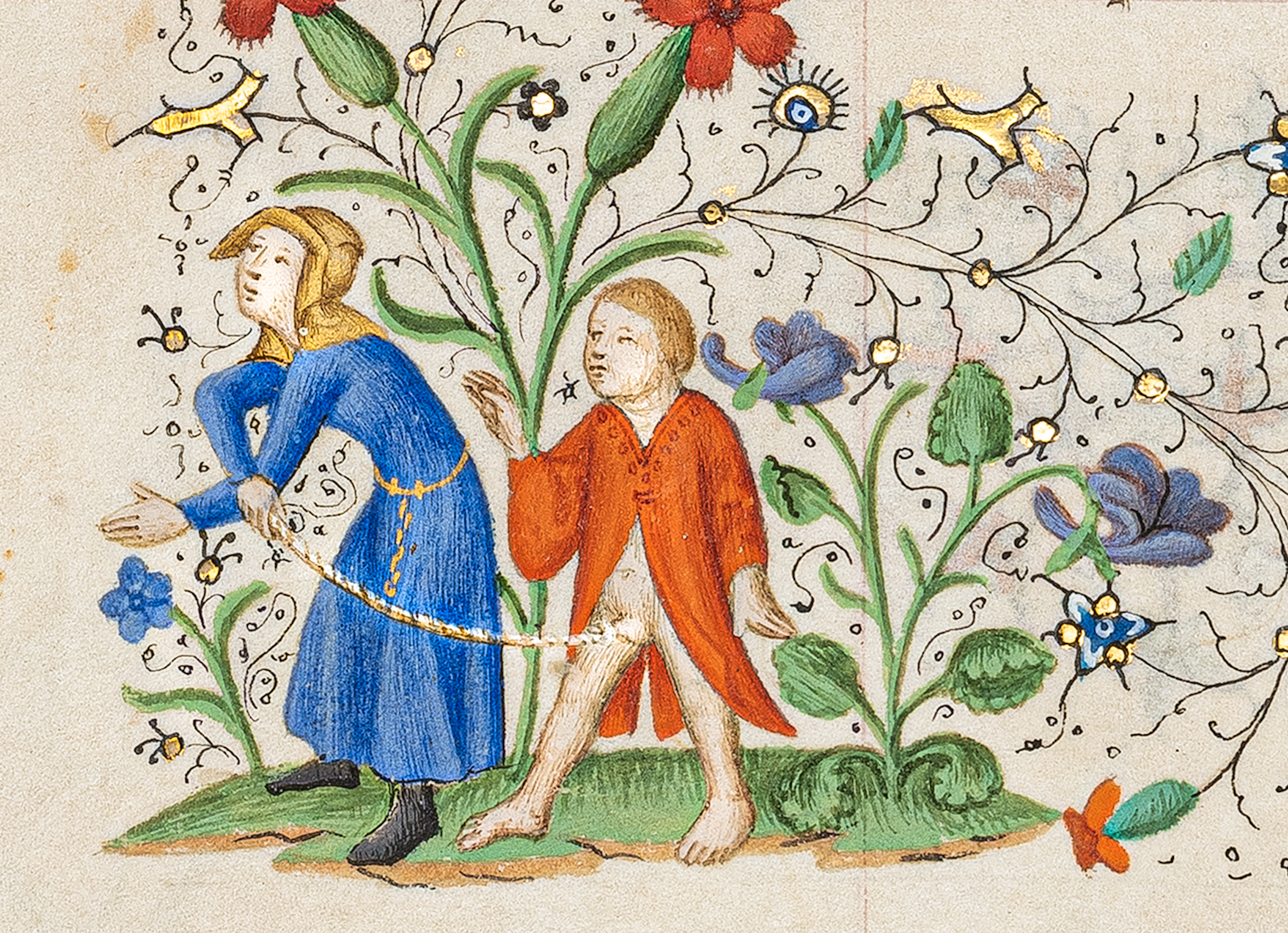
Detail from the Catherine Hours, Paris, c. 1420-1425, available at Dr. Jörn Günther Rare Books.
References
Johan Huizinga, Homo Ludens: A Study of the Play-Element in Culture, New York 1950 (available online on archive.org)
Randall, Lilian M. C. , ‘Games and the Passion in Pucelle’s Hours of Jean d’Évreux’. In: Speculum, vol. 47 (1972) pp. 246-257 (available online on JSTOR).