

The Boccardi Hours
Use of Rome
- Giovanni di Giuliano Boccardi (Boccardino Vecchio)
- Stefano Tommaso Lunetti
Manuscript in Latin on vellum
Italy, Florence, c. 1500
170 x 110 mm
240'000,- CHF (excl. VAT)
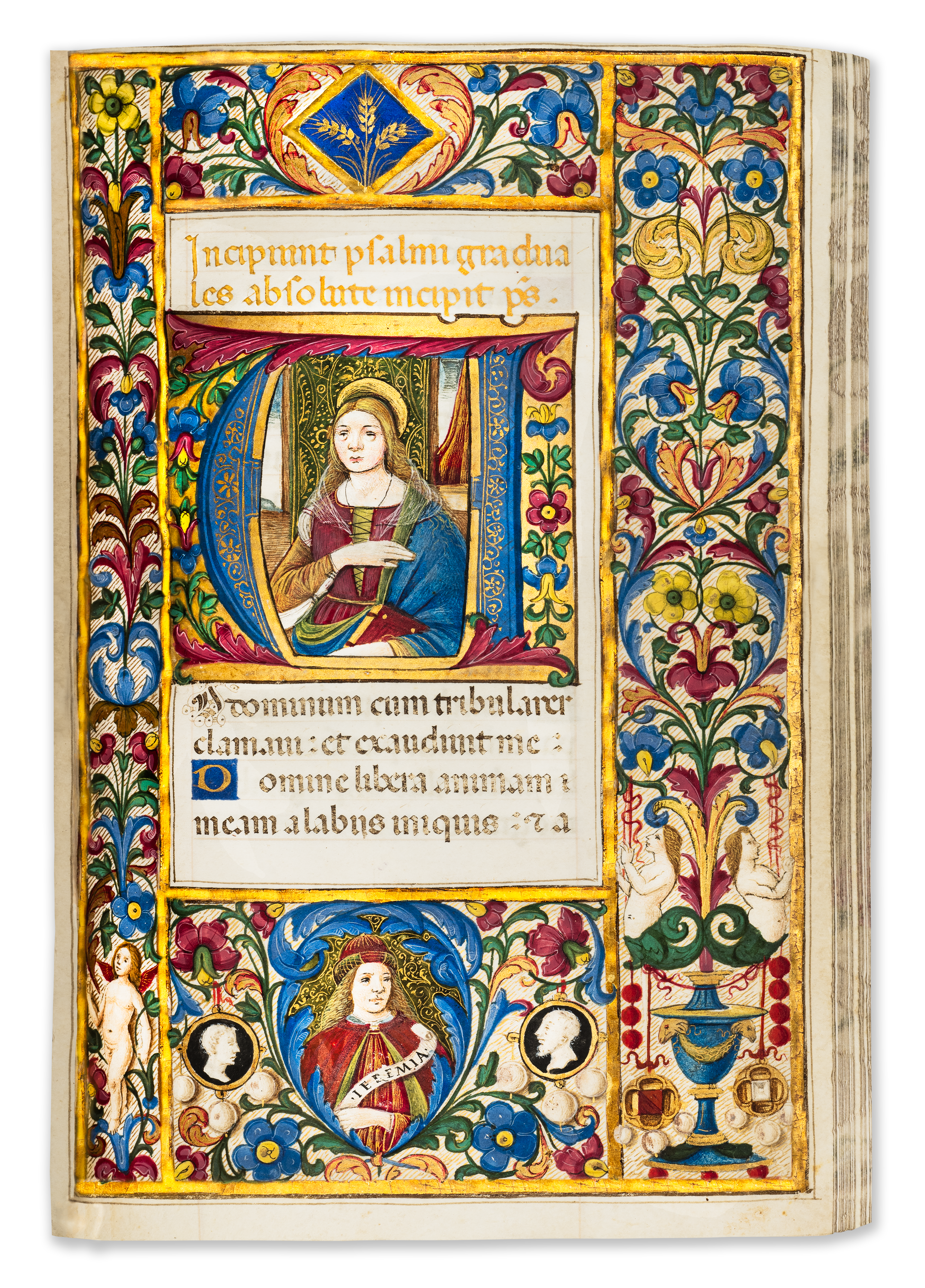
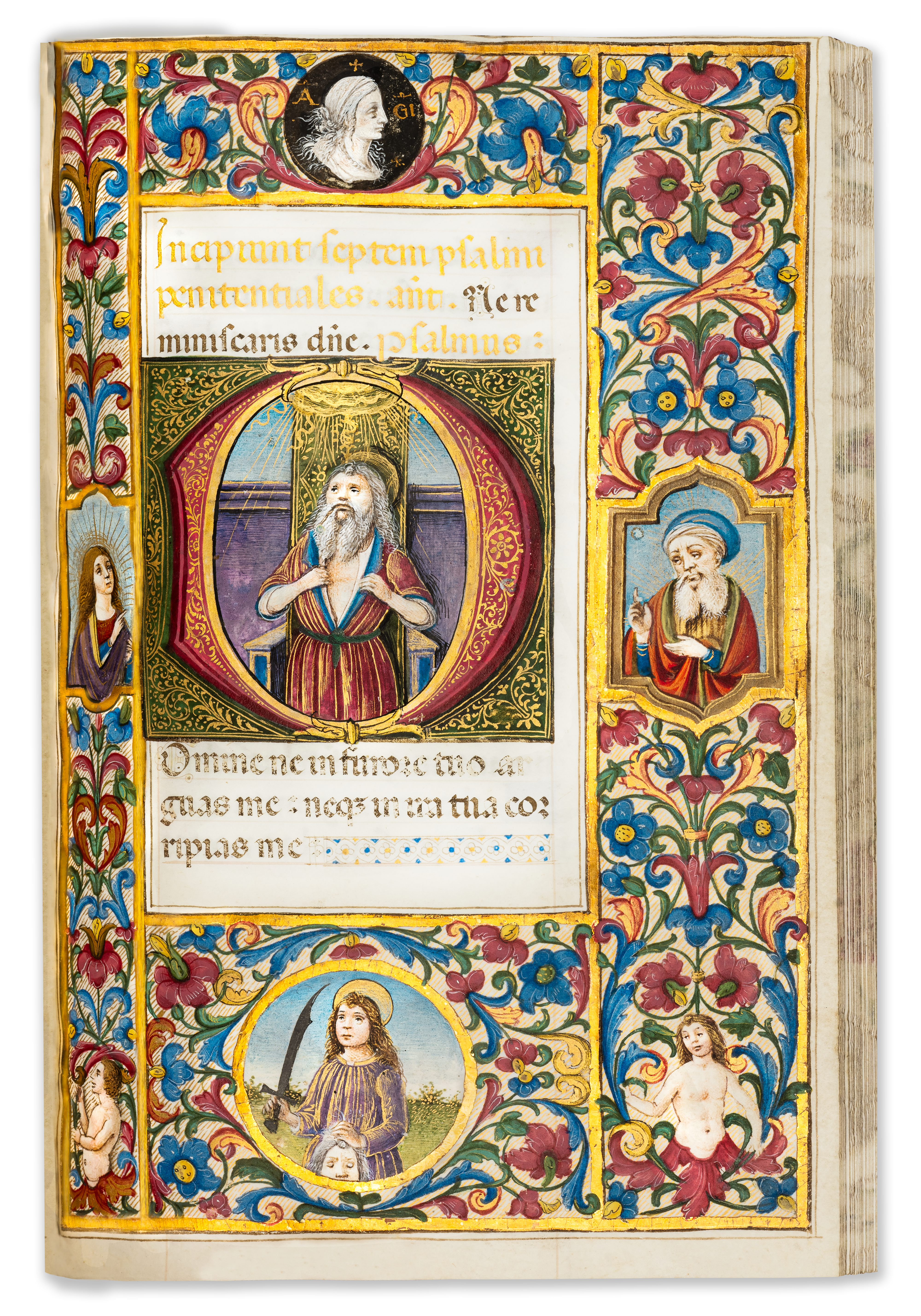
199 leaves. 1 large miniature in full borders, 4 large historiated initials surrounded by full borders. Complete. 17th-century reddish-brown morocco binding over wooden boards, with gilt stamping and silver painting. Gauffered and painted edges with floral designs.
This Book of Hours is an excellent specimen for Renaissance book art in Florence. The two artists responsible in this work can be traced in collaboration with other celebrated illuminators like Attavante degli Attavanti, Monte di Giovanni del Fora, and his brother Gherardo.
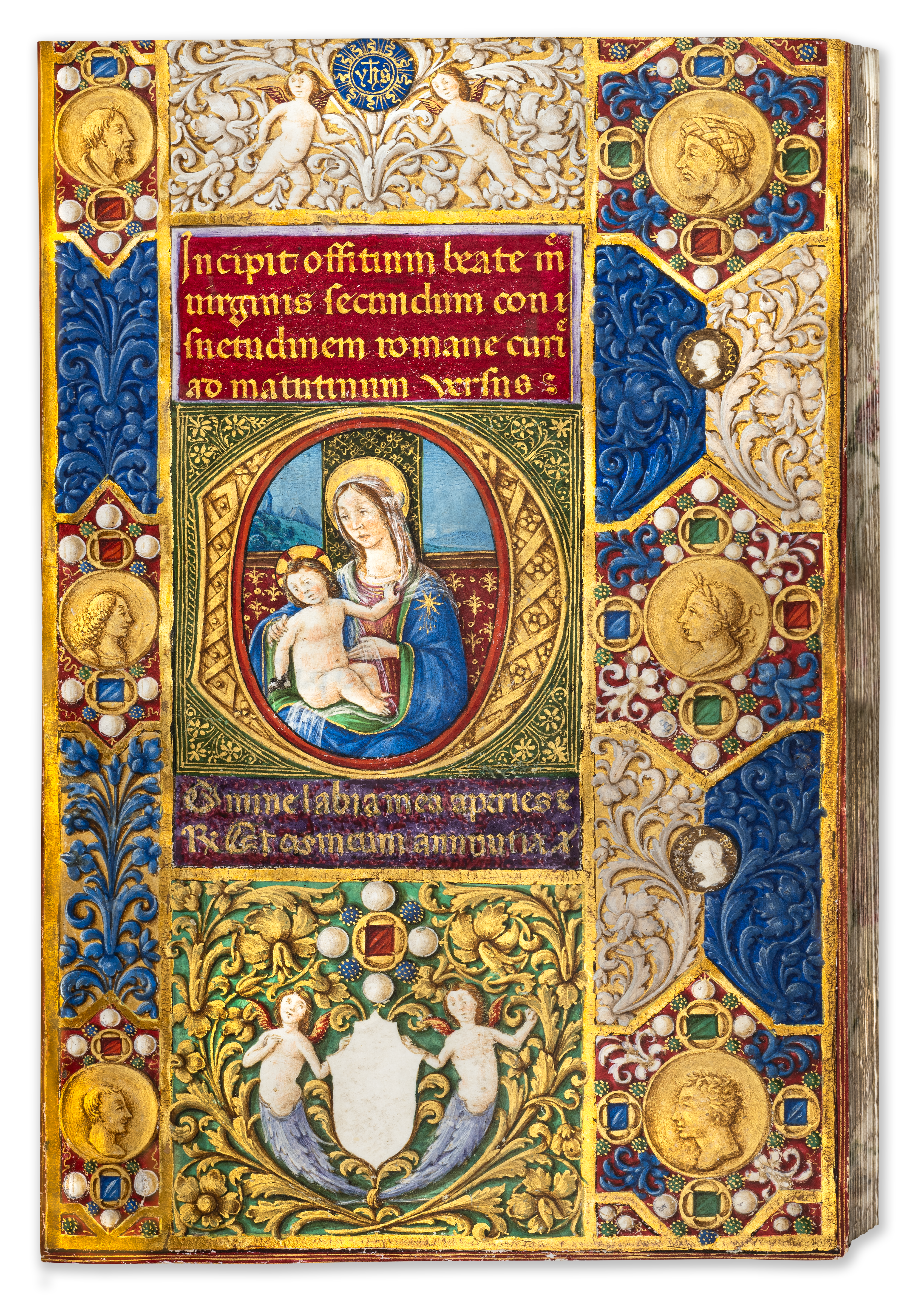
Like the aforementioned illuminators, Boccardino Vecchio and Tommaso Lunetti worked for high-ranking bibliophiles of the Renaissance, such as the Hungarian king Matthias Corvinius or members of the Medici family. The patron, for whom this manuscript was made, is unknown to us, a coat of arms in the bas-de-page on f. 14r, that could have revealed his or her identity, has been left empty.
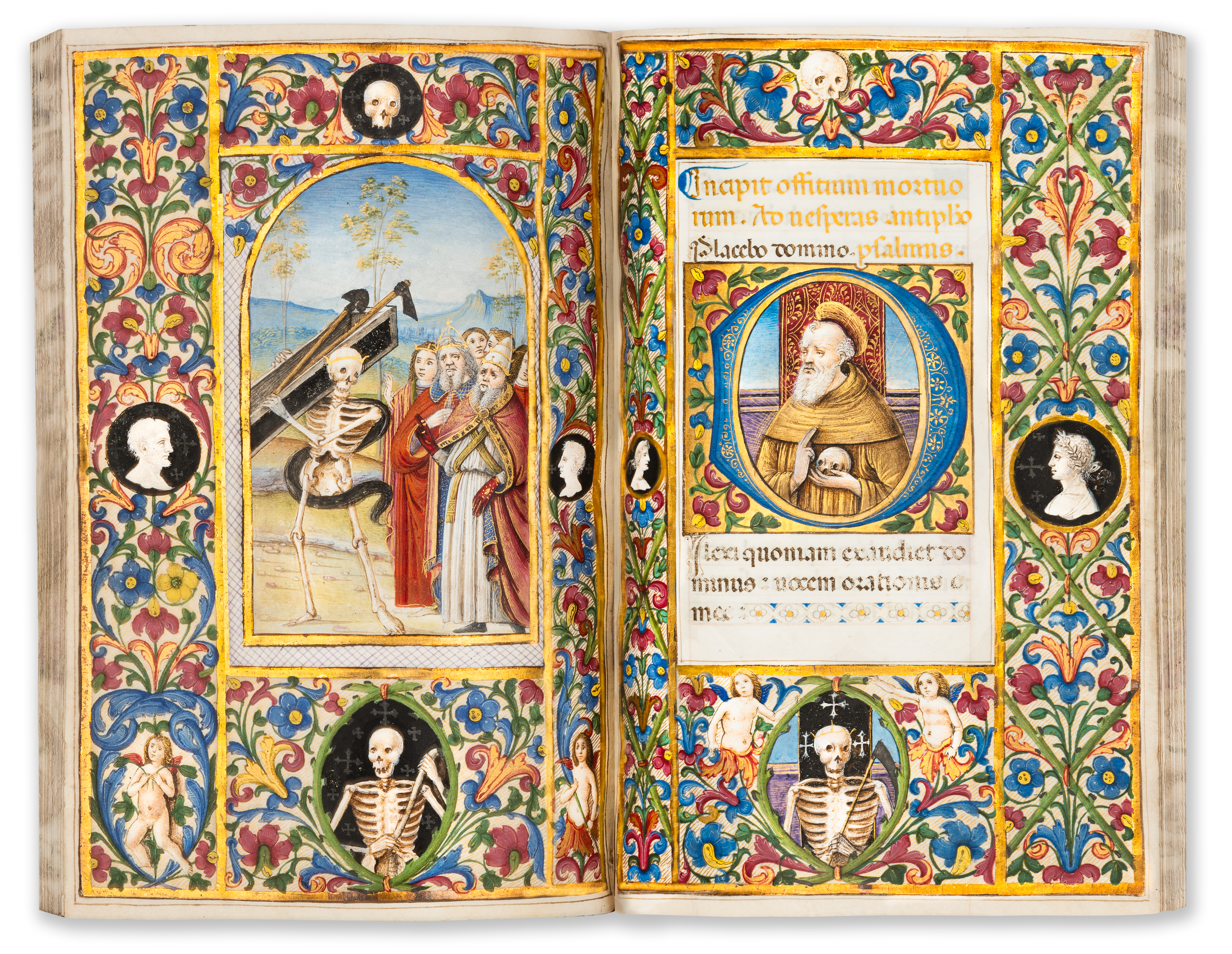
A full-page miniature with the personification of Death with high cleric and worldly dignitaries may – perhaps spontaneously – have been inserted to lend the Office of the Dead a special emphasis by a double illustration. This could hint to the fact that the earlier patron died, while the book was still being produced. Could it be that his or her descendants may have decided that the manuscript should be perceived like an epitaph to commemorate the deceased?
The miniature shows a skeleton draped in a black shroud and carrying a coffin on its shoulder. In the casket, it has stored a shovel and a hoe. Behind the personified Death, representatives of the high ecclesiastical and secular estates are lined up: a pope, an emperor, a king etc. The foliate borders contain roundels with busts and a skull on black ground. In the bas-de-page, again, a grinning Death shows his intention to kill indiscriminately by presenting his scythe. Surprisingly, the chance to present the composition like a diptych was not taken, interrupted by an inserted blank page. It is possible that further miniatures were originally planned here. In any case, an initial D follows on f. 139r with a monk holding a skull in one hand and blessing with the other. Here the margins are decorated by a similar floral decoration with busts and a skull.
This manuscript is a very fine and exquisitely preserved example of Florentine book illumination around 1500.