

Leviticus
with Glossa Ordinaria
Manuscript in Latin on vellum
France, (north, or Paris), mid-12th century
300 × 205 mm
380'000,- CHF (excl. VAT)
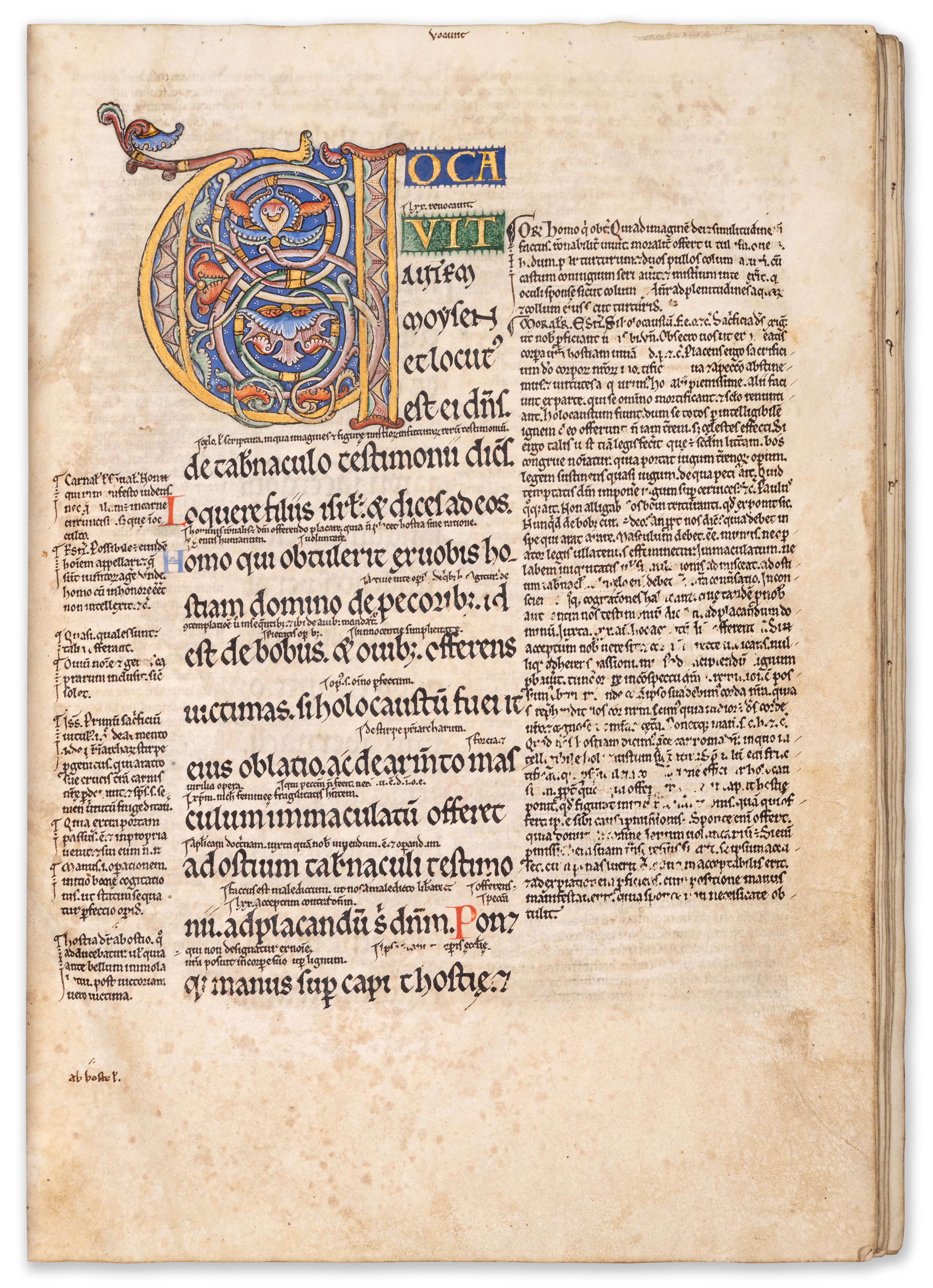
69 leaves. The start of the main text illuminated with an extremely fine initial with coiling foliage in gold and colours, the first word in gold on panels of blue and green. Complete. 19th-century dark purple leather binding over pasteboards.
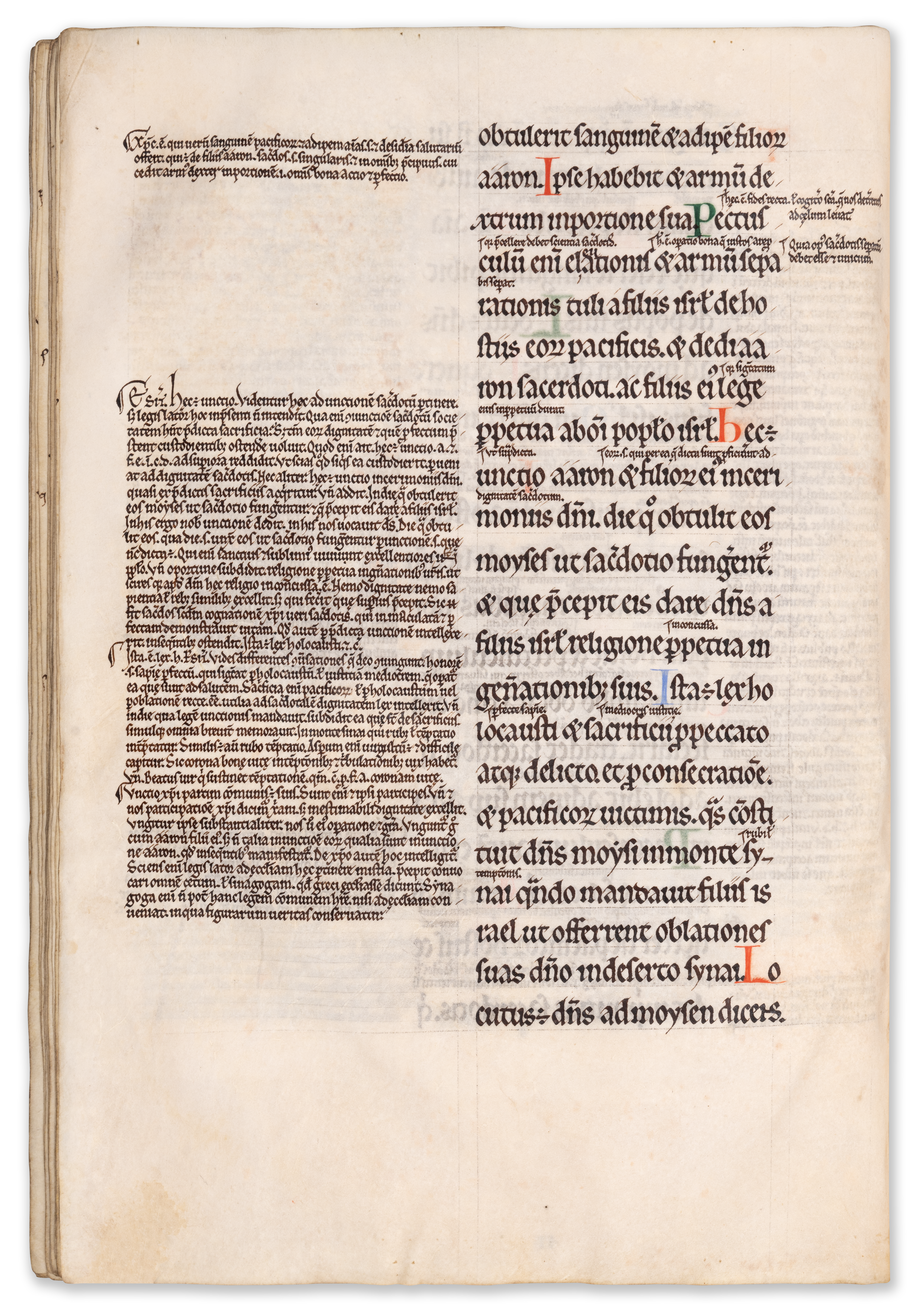
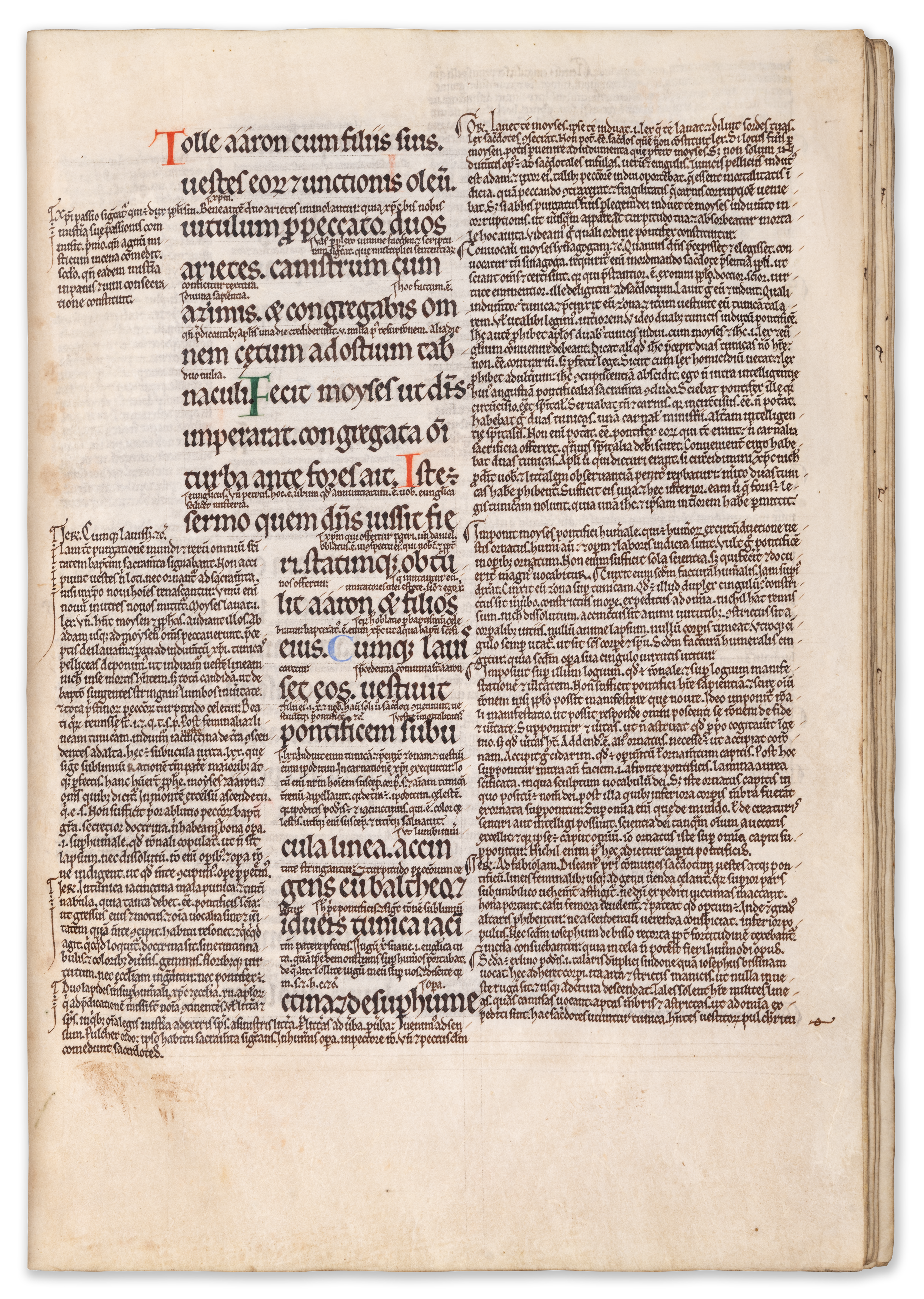
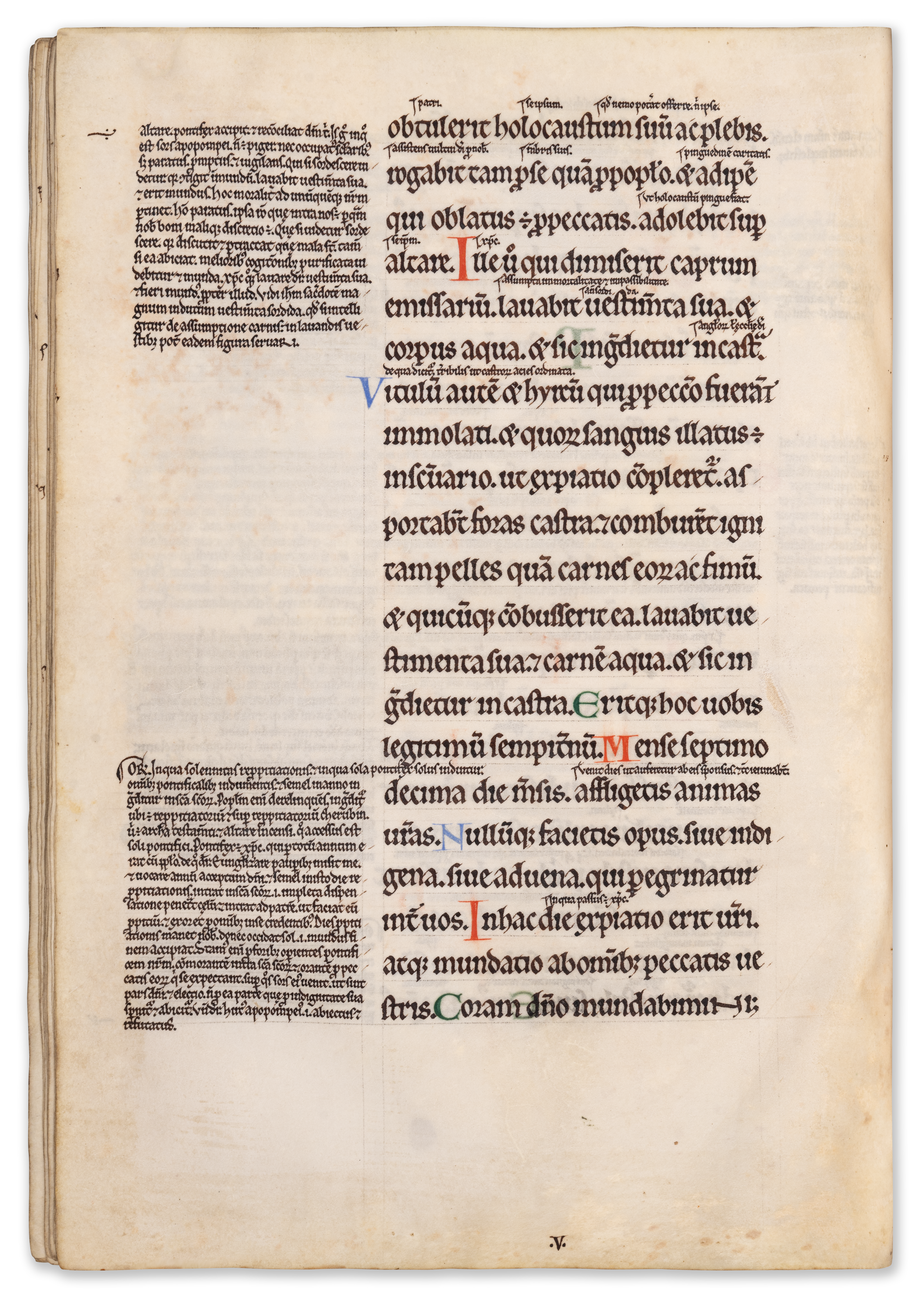
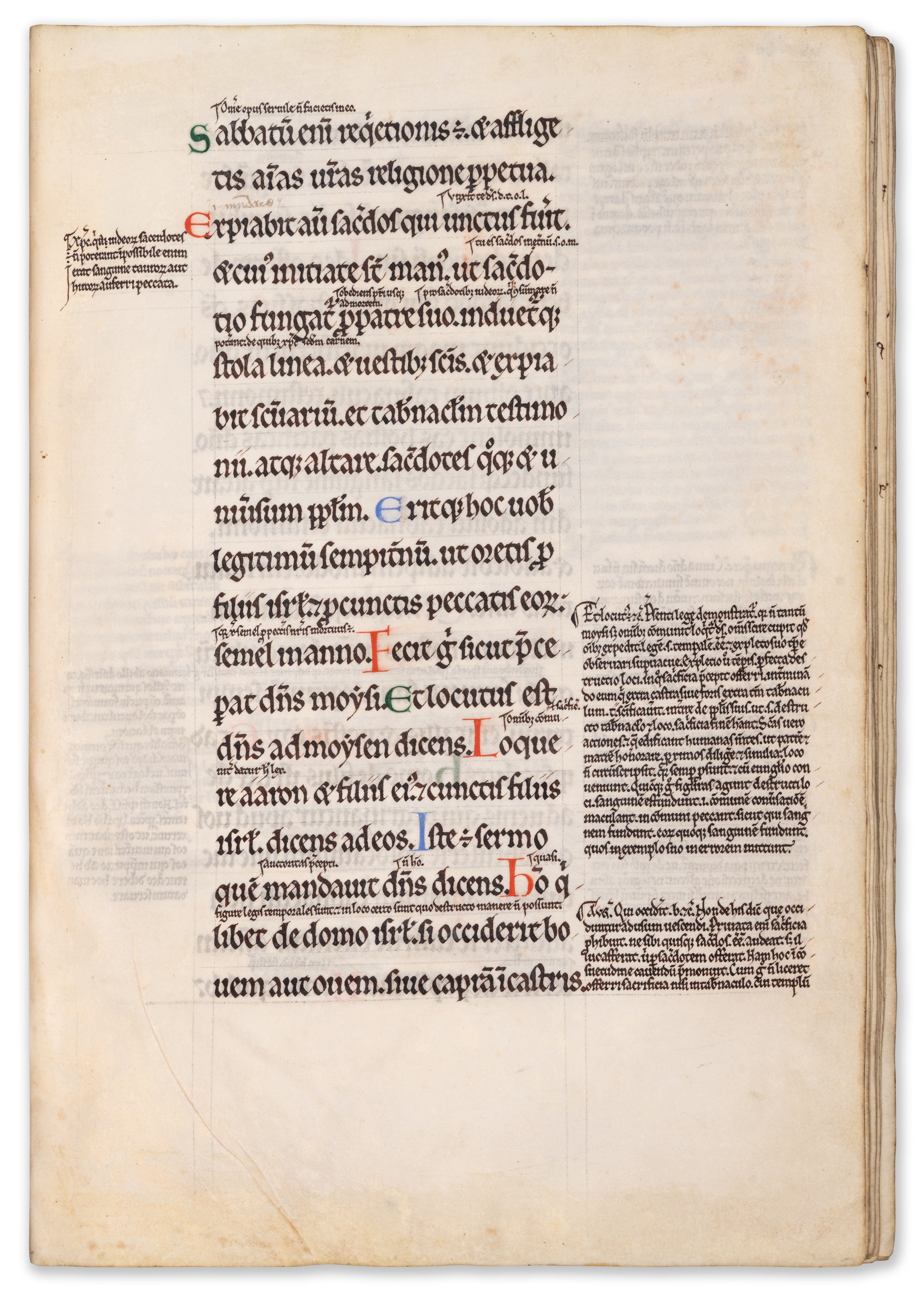
This is a fine Biblical manuscript, opening with a complex and glittering initial, from the earliest decades of the novel and innovative format of setting out the Bible and its glosses as developed in Laon in the first four decades of the 12th century.
The development of the Glossed Bible was, perhaps, the greatest theological achievement of the contemporary book-arts. Copies of parts of the Bible with their texts glossed by explanatory extracts from patristic texts had long existed as study tools in the urban schools that emerged across Europe in the 11th century, but at the dawn of the 12th century a group of scholars around Anselm of Laon (d. 1117) and his brother Ralph, assembled what came to be a standard set of excerpts from the exegetical works of the Fathers on the Psalms, the Pauline Epistles, and the Gospel of John. Followers of theirs would then add further Biblical books to this endeavour, and the arrangement of the gloss on the Pentateuch, including Leviticus, is attributed to Gilbert the Universal (d. 1134), and is thought to have been completed between c. 1110 (when Gilbert moved from Laon to Autun) and 1128, when he became bishop of London.
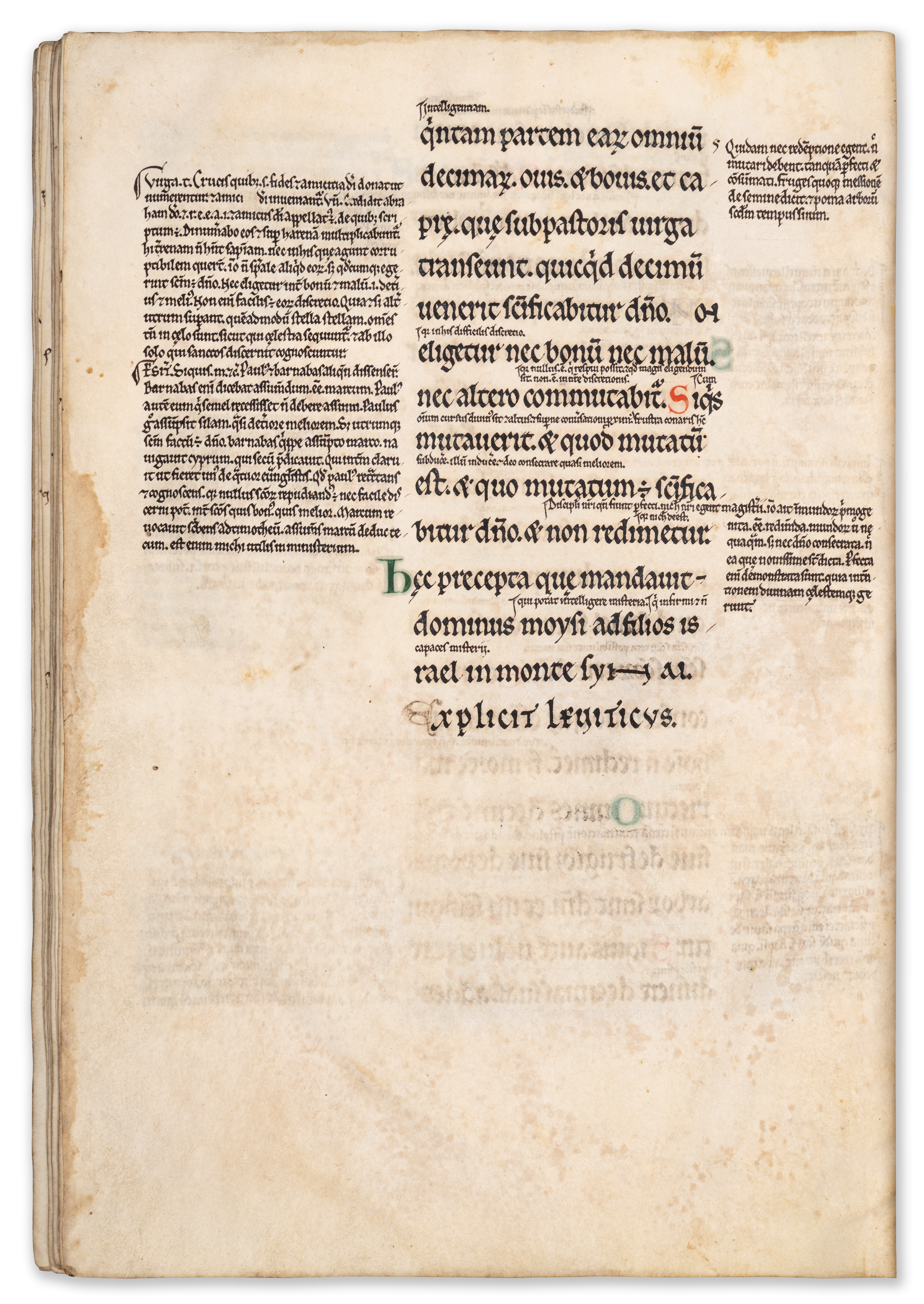
The entire Bible appears to have been reset into this novel format by about 1140. These were complex textual tools for the theology scholar, with the layout of each page bringing scripture and commentary together in a dynamic way that provided a simple and accessible method of reading and comparing both without densely filling the borders of the page or forcing the reader to sit with multiple pages or volumes open. The gloss here is in the earliest and simplest format: with a central column containing the Biblical text, between two parallel columns on either side for occasional blocks of commentary. Further commentary was often then added interlineally.