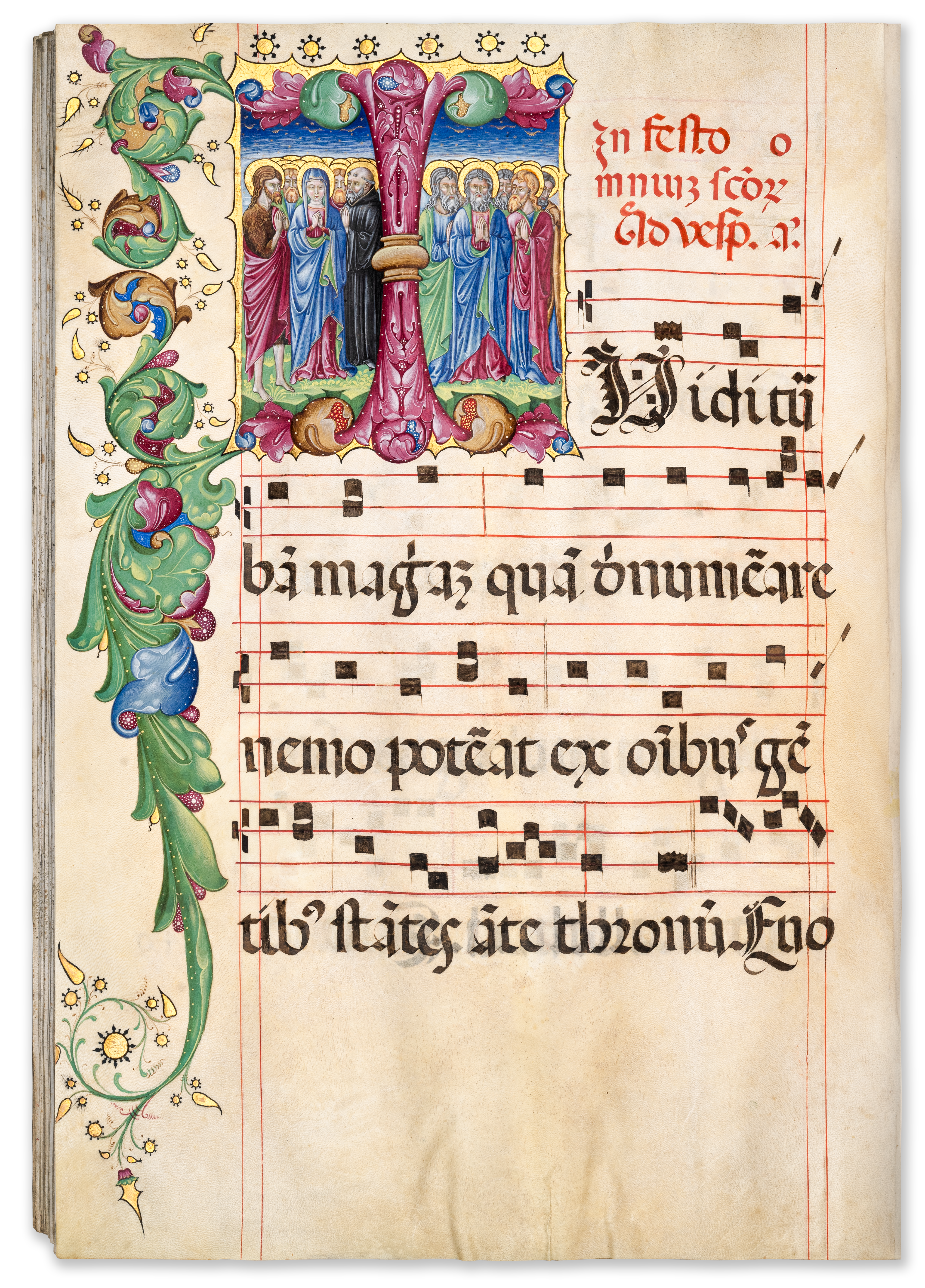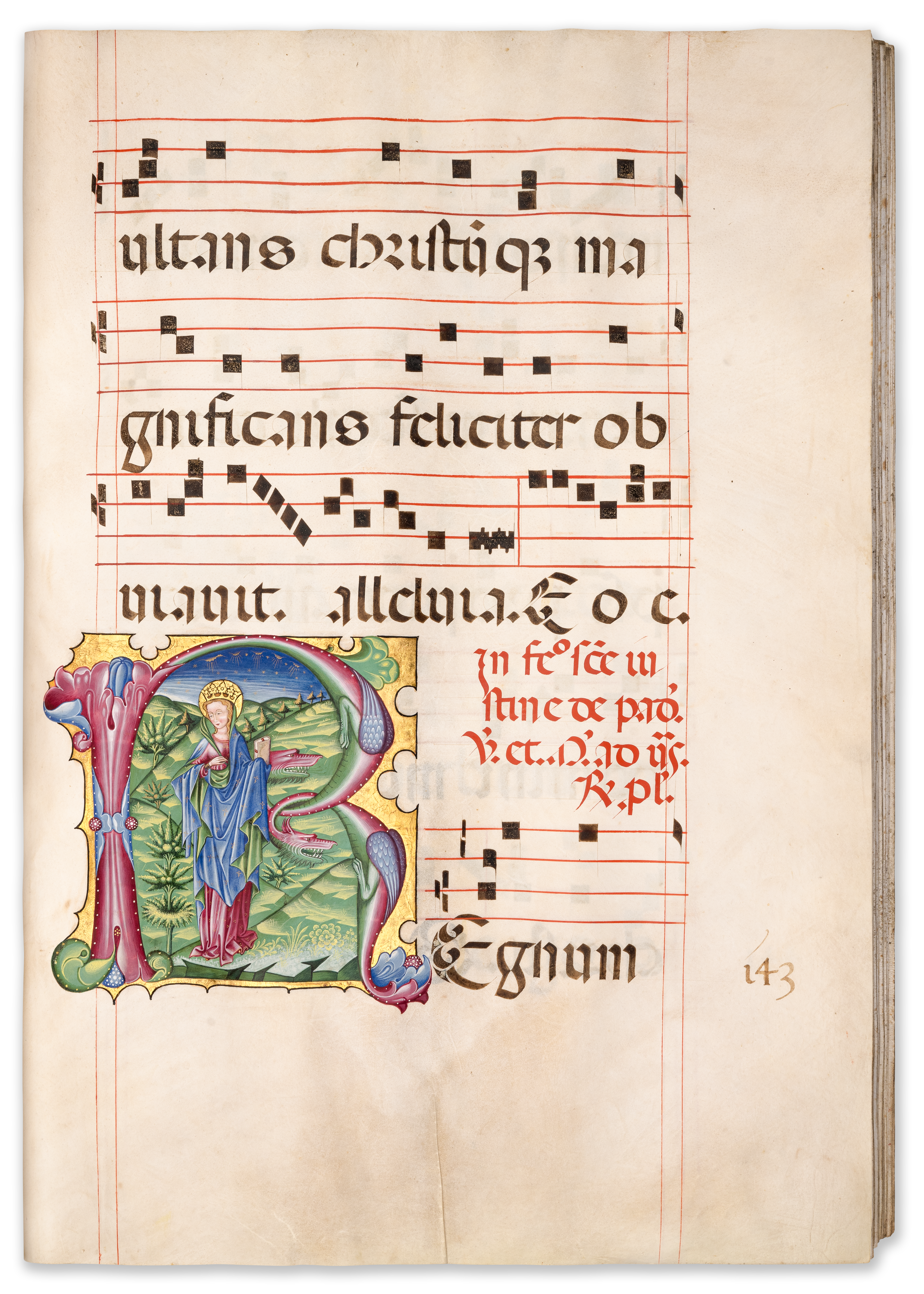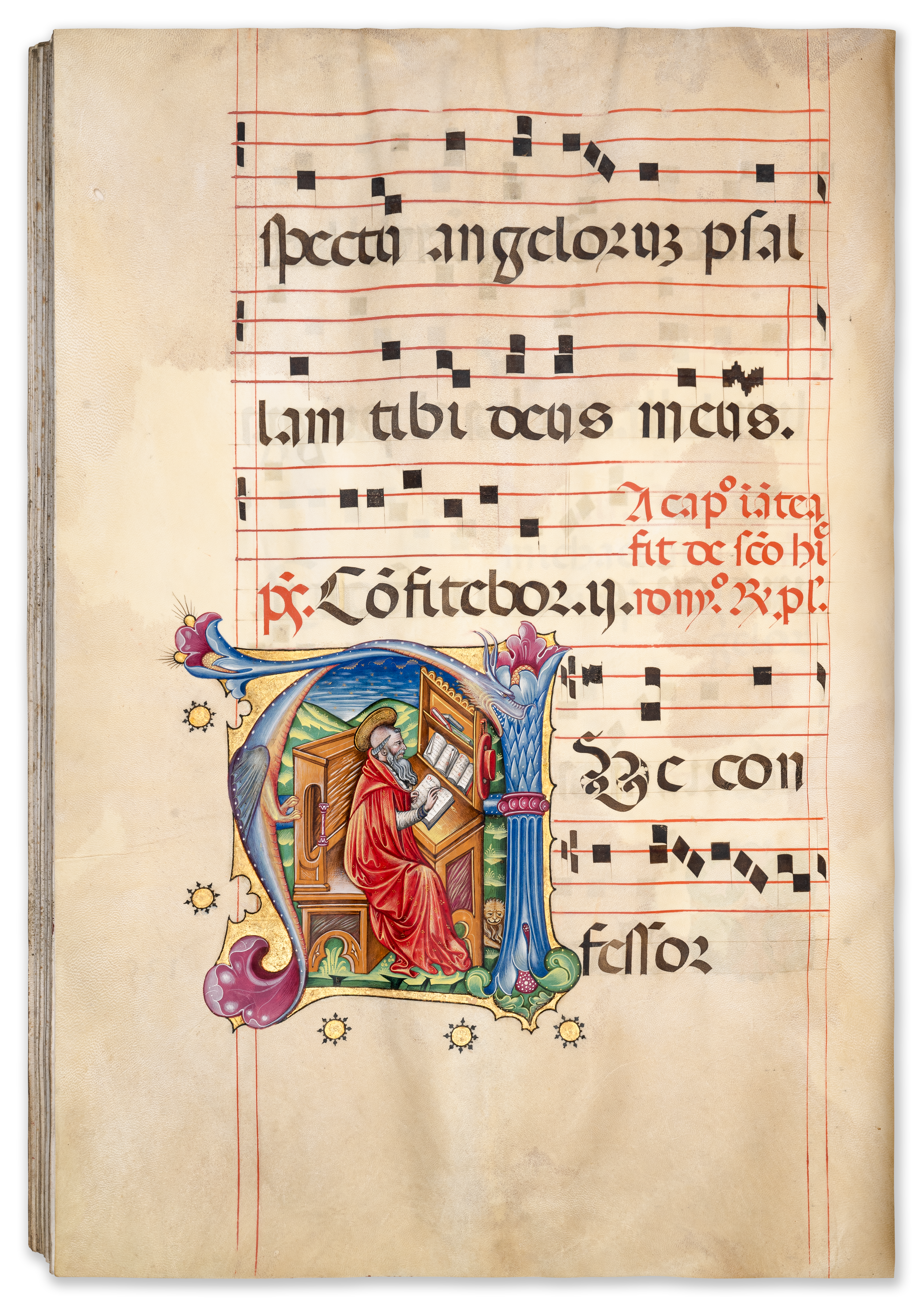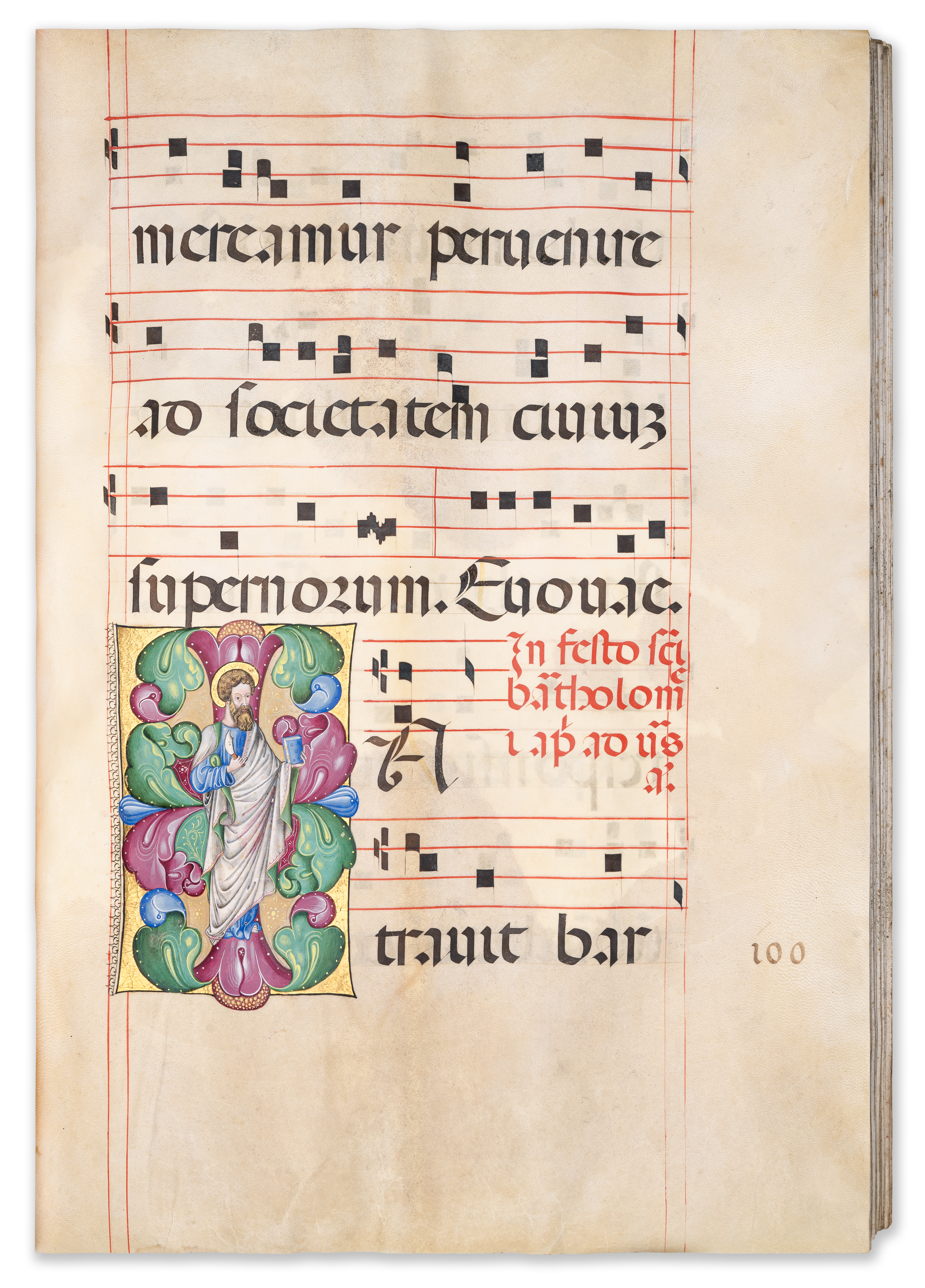


Antiphonal 4
Sanctorum
- Second Master of Antiphonal M of San Giorgio Maggiore of Venice or collaborator (Master of San Sisto)
Manuscript in Latin on vellum
Northern Italy, Milan or Piacenza, c. 1465-1475
592 x 423 mm
Price on request.
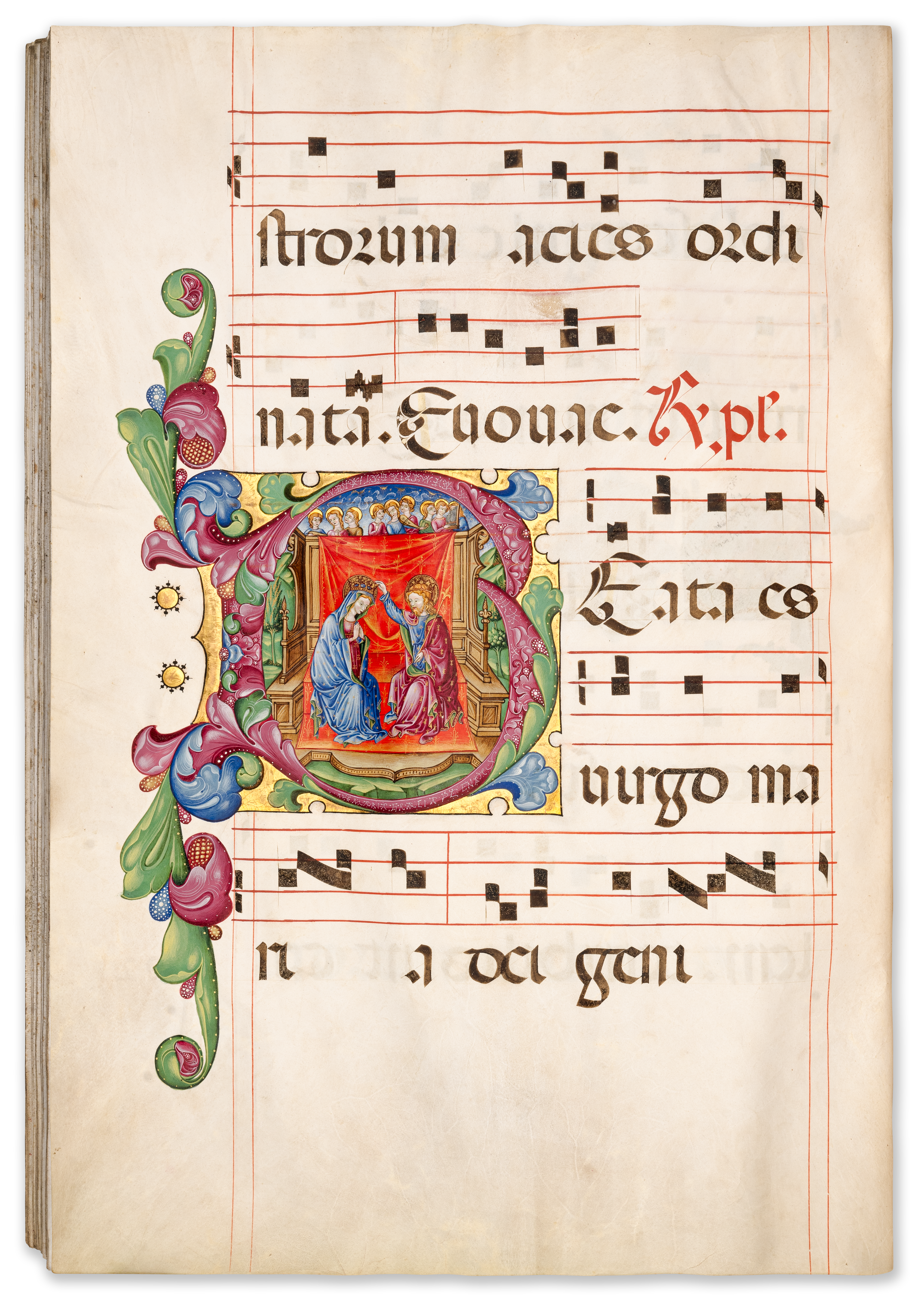
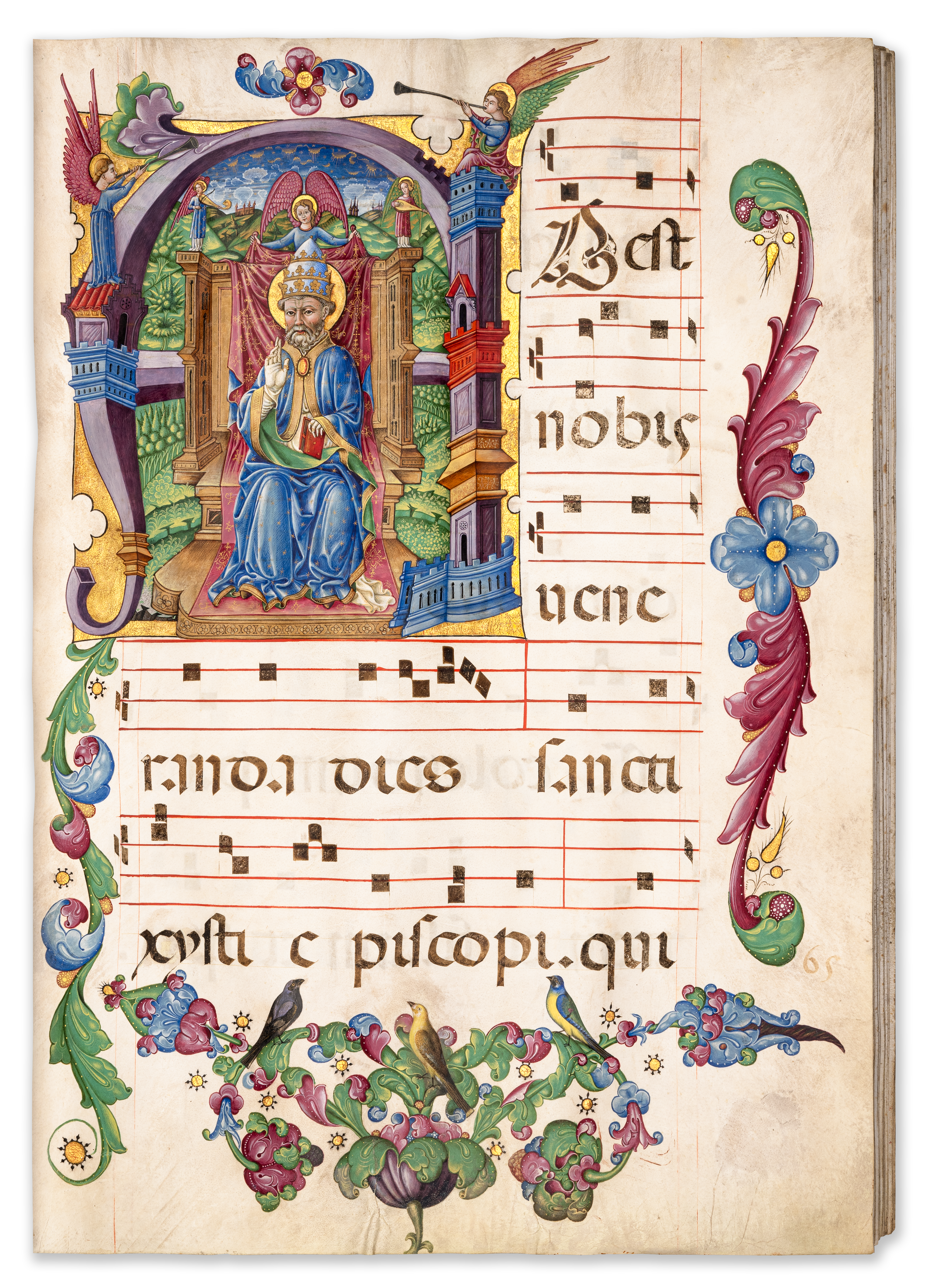
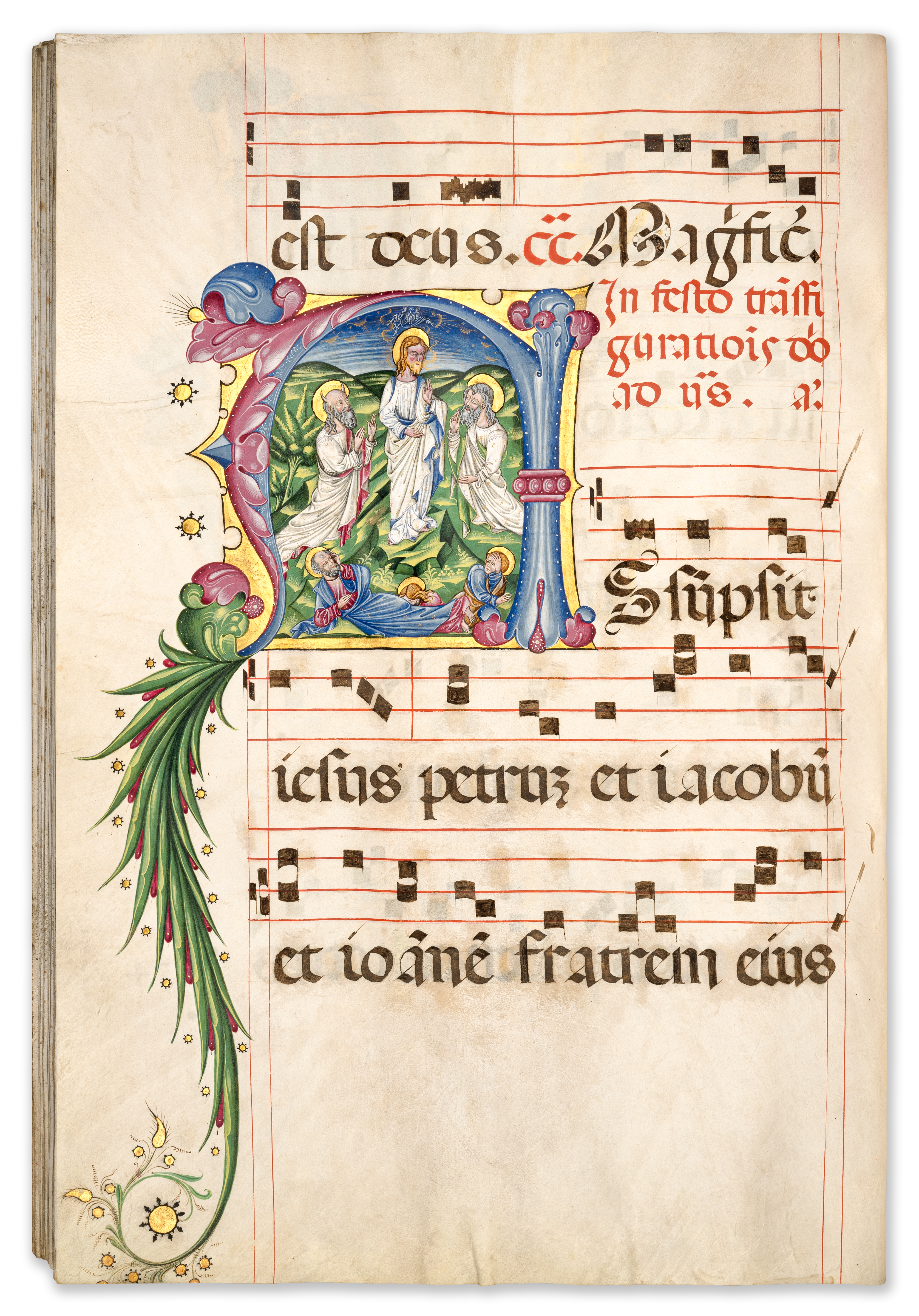
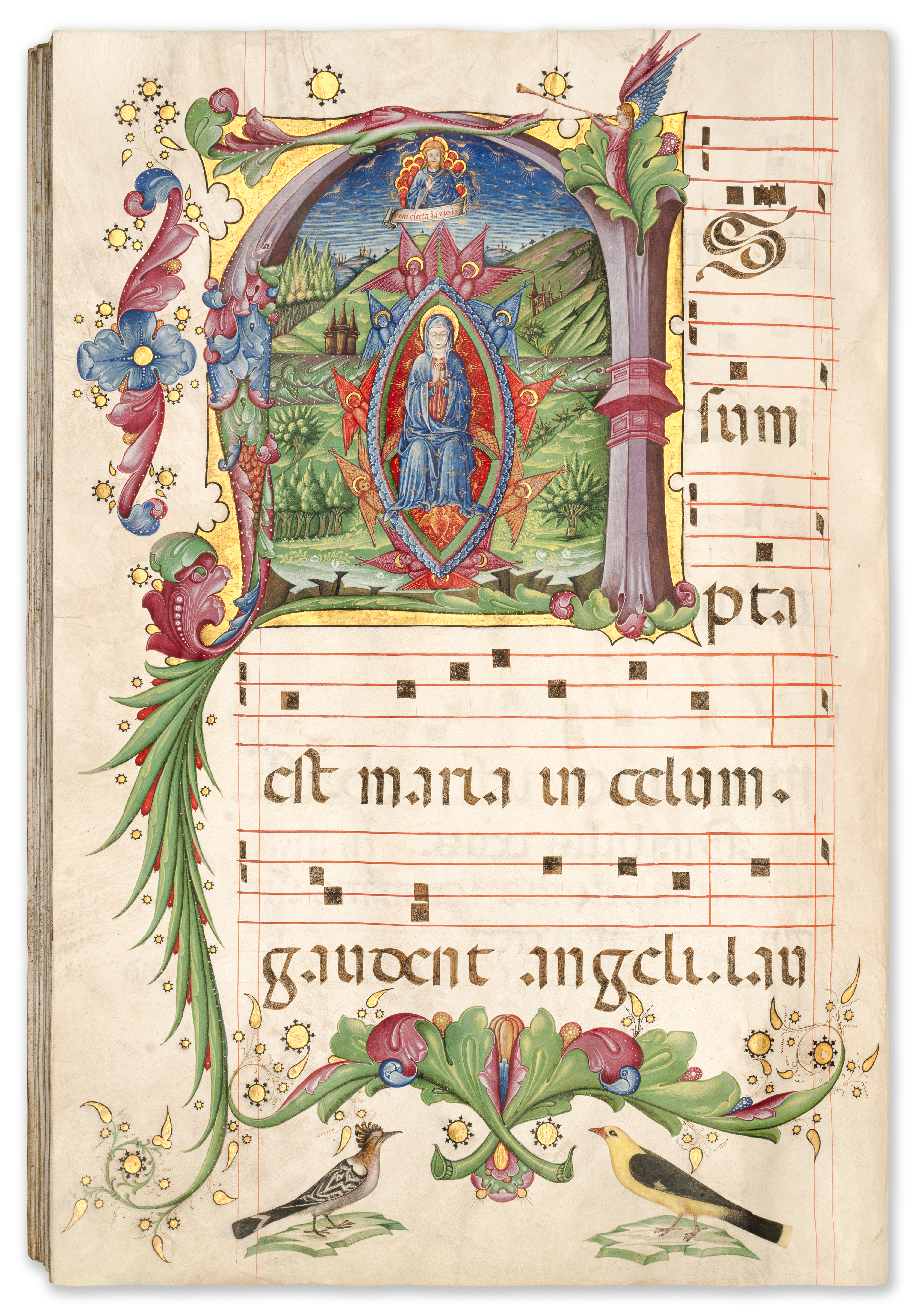
181 leaves. 3 very large historiated initials with vegetal borders, two of them inhabited by birds; 16 large historiated initials, 10 smaller historiated initials; 229 fine illuminated foliate initials in green, light blue, pink, on a gold ground. Antique binding, not contemporary with the manuscript (18th century?), leather on wooden boards, with metal center and cornerpieces, borders and bosses.
This fascinating illuminated manuscript, containing the Sanctoral, is part of an extraordinary series of fourteen illuminated choir books produced in the second half of the 15th century for the Benedictine monastery of San Sisto in Piacenza.
Founded between 870 and 877 by Engelberga, wife of Emperor Louis II, the monastery of San Sisto in Piacenza was an important monastic center in northern Italy, as well as a treasure trove of works of art and masterpieces, such as the famous Madonna Sistina painted by Raphael around 1513-1514 (Dresden, Gemäldegalerie). In the second half of the 15th century, the Benedictines of Piacenza began the production of a set of choir books that can be considered one of the most important series of liturgical manuscripts produced in northern Italy today. Firstly because of the refinement of the illuminated decoration, created by several artists and workshops, probably from Lombardy; but also and above all because the entire series of fourteen choir books has been preserved to this day.
Antiphonal 4 (formerly known as 5), together with Antiphonals 3 and 5, were the first choir book for San Sisto to be decorated, around 1465-1475. The author of the superb miniatures decorating these three volumes has been identified as the “Second Master of Antiphonal M of San Giorgio Maggiore in Venice”. This anonymous illuminator, probably from Lombardy, was active on several occasions alongside the famous Belbello da Pavia, one of the greatest representatives of Lombard illumination in the central decades of the 15th century. Other studies, however, have preferred to attribute the decorations of Antiphonal 4 to a similar but distinct master, known as the “Master of San Sisto”.