


Finding Saint Onuphrius
New light on the Laudario of Sant'Agnese
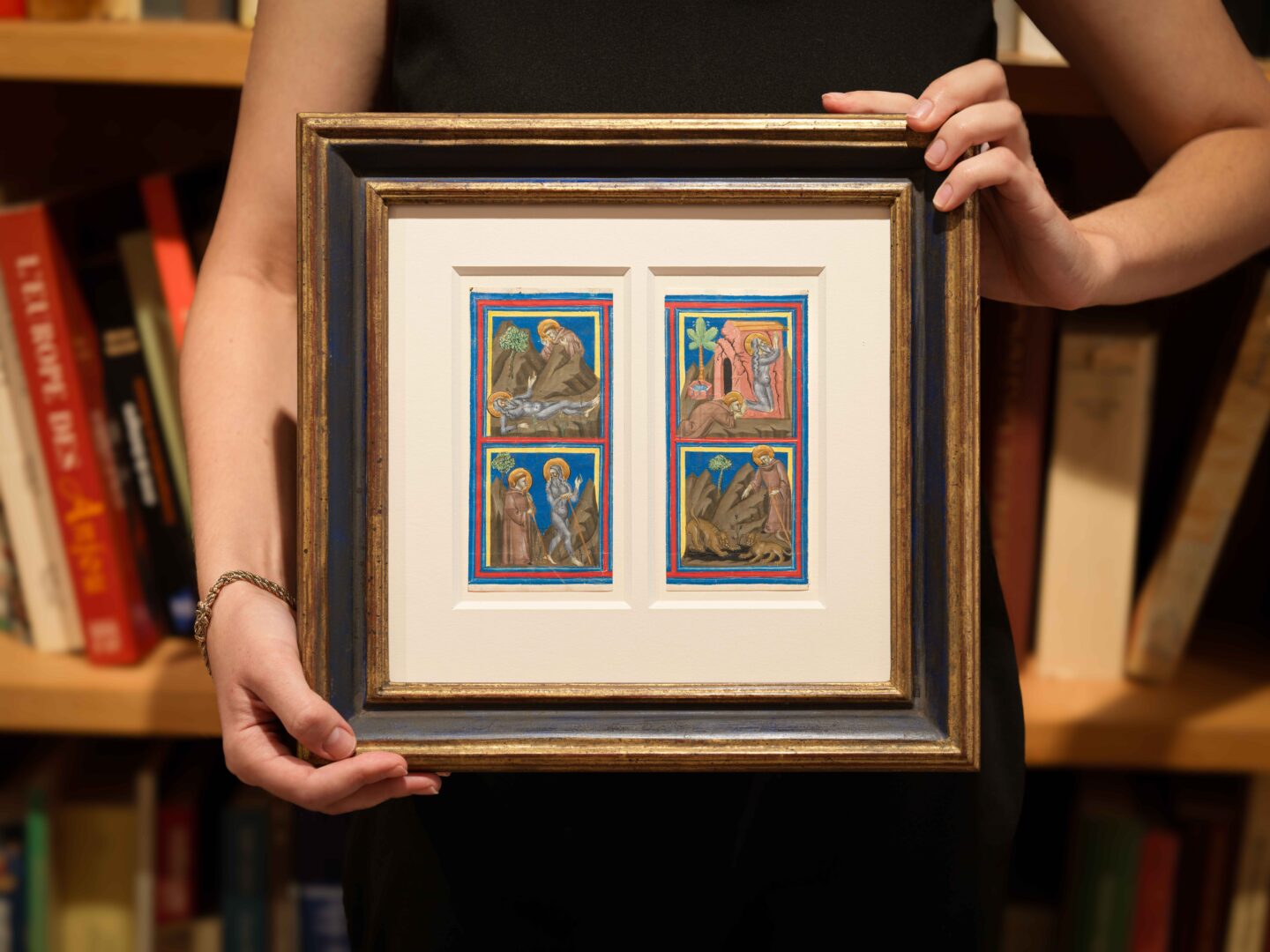
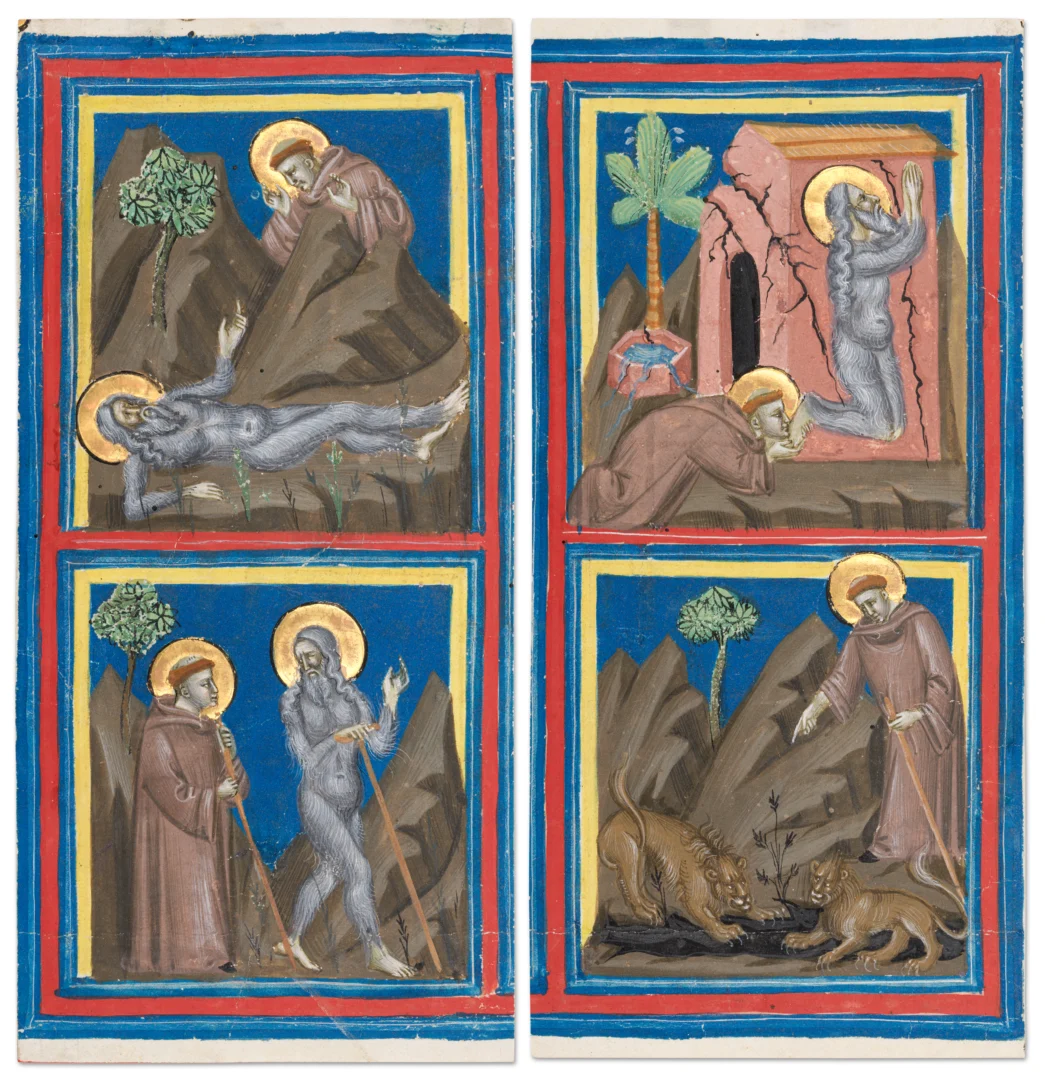
One of the most exciting recent acquisitions of our gallery is a pair of previously unpublished fragments from a miniature painted by the so-called Master of the Dominican Effigies in Florence around 1340. These two beautiful paintings are significant in several respects, and we are particularly pleased to present them here for the first time.
The first thing one notices is their remarkable state of preservation and the exceptional refinement of the painting. Against a rocky landscape in deep brown tones, small figures move with the clarity and animation characteristic of one of the finest Florentine illuminators of the first half of the fourteenth century. The Master of the Dominican Effigies was closely associated with Pacino di Bonaguida and participated with him in some of the most ambitious manuscript projects of the period, including the first illustrated copies of Dante’s Comedy! His paintings are always lucid in composition, brilliant in colour, and particularly lively in their gestures and expressions.
At some point in the twentieth century, the two pieces were mounted and labelled as “Saint Anthony and Saint Paul the Hermit,” supposedly Portuguese work of the fifteenth century. Almost everything about that identification turns out to have been wrong. The miniatures are Florentine, a century earlier, and the protagonists are not Anthony and Paul at all. They illustrate the life of Saint Onuphrius, one of the Desert Fathers, a hermit who had spent so many years in the Egyptian desert that his body was covered in hair.
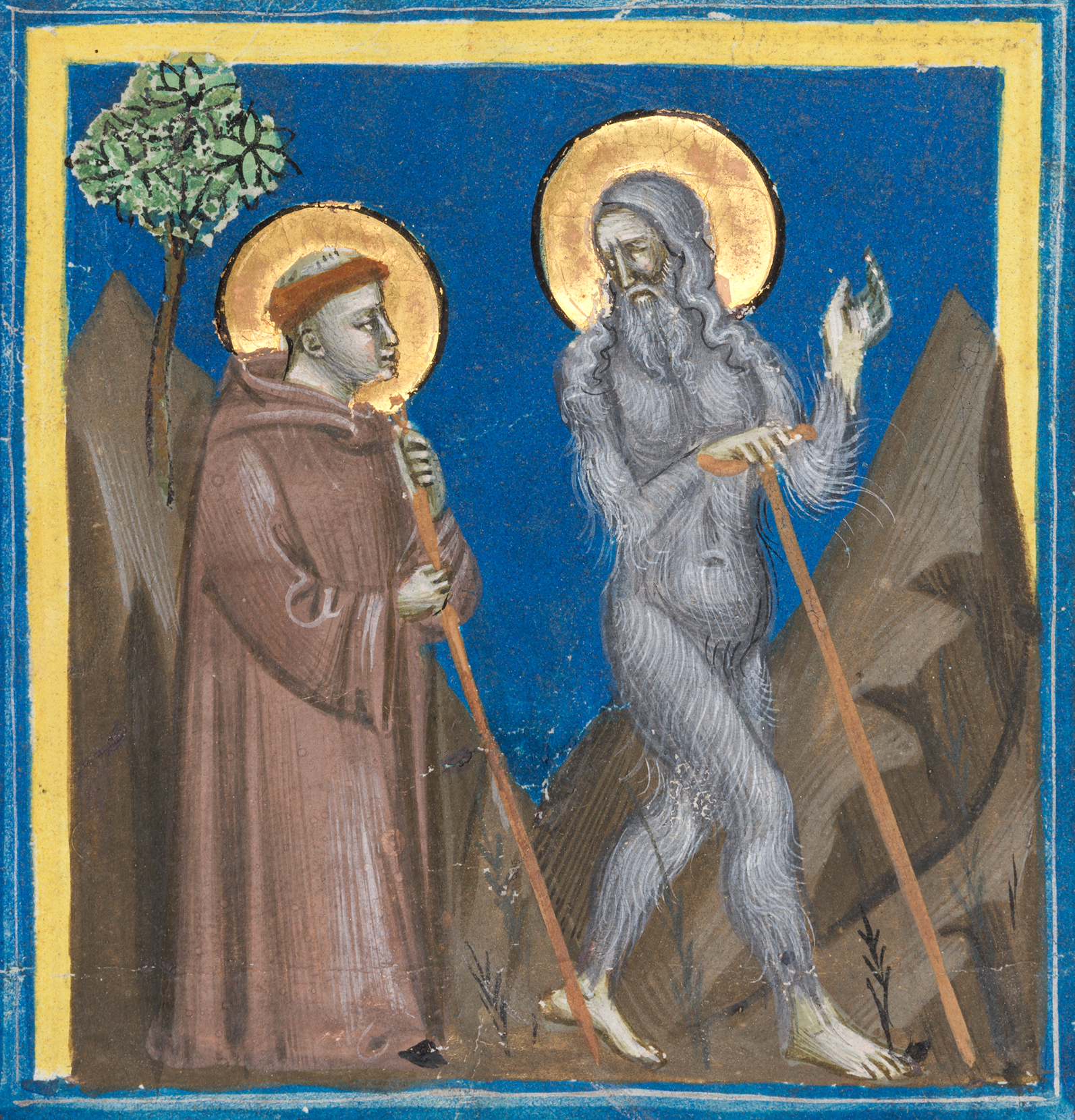
Fig. 1 Detail from the miniature.
The surviving scenes tell the end of his story with unusual richness. In one, the monk Paphnutius encounters Onuphrius in the wilderness and at first mistakes him for a wild beast. In another, the two walk together as Onuphrius recounts his life of solitude (fig.1). On the opposite fragment, the hermit appears in prayer beside the palm tree and miraculous spring that sustained him in the desert. Finally comes his burial: after the saint’s death, two lions arrive to help Paphnutius dig the grave.
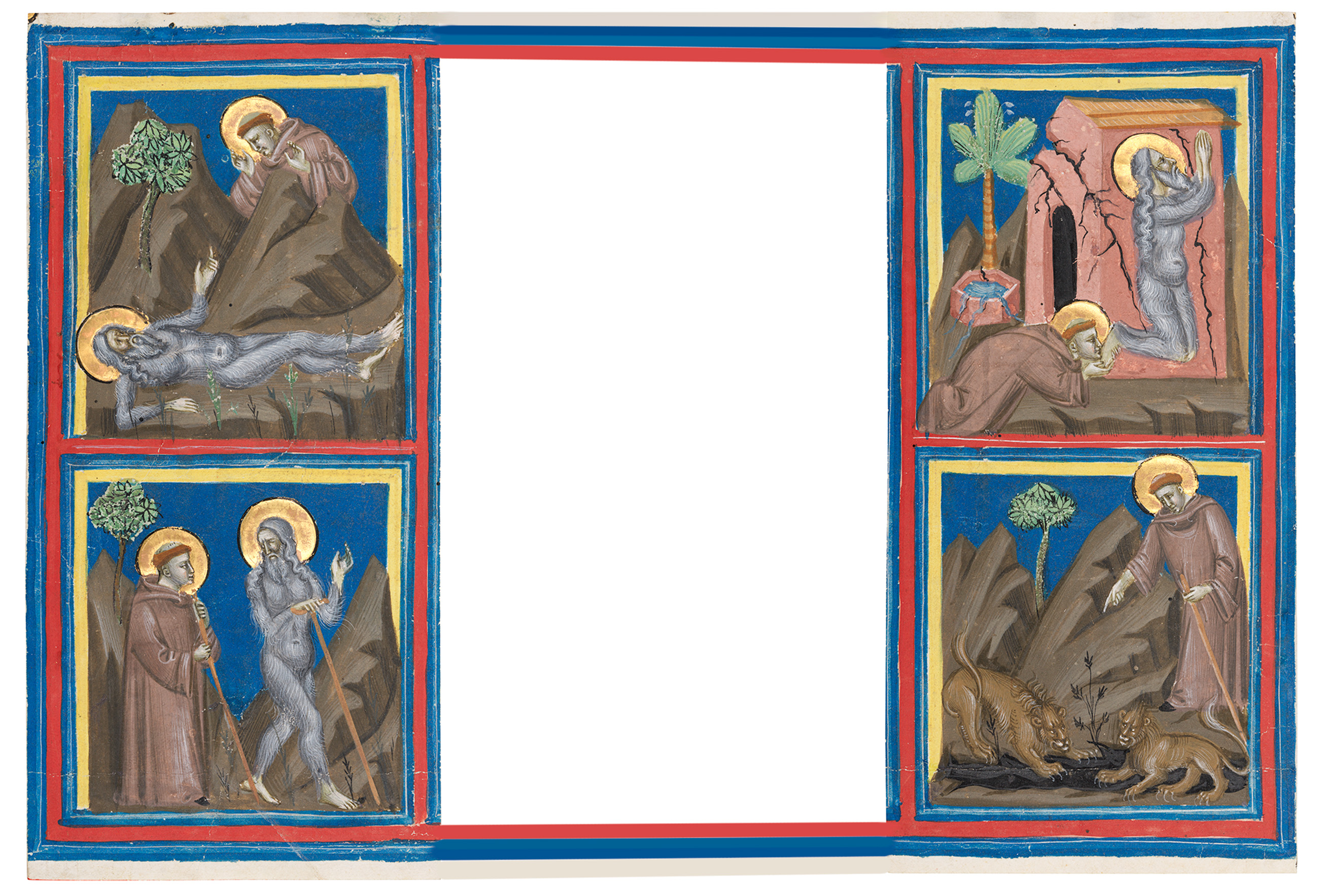
Fig. 2 An attempt at reconstructing the original arrangement of the cuttings.
The two fragments are, in fact, the outer sections of a once considerably larger miniature; the central portion has been cut away and remains lost (fig.2). It is tempting to imagine that this missing section contained a larger representation of Saint Onuphrius himself, surrounded by the smaller episodes of his life that survive today. On the reverse, however, something equally important survives: three lines of musical notation and fragments of an Italian hymn (fig.3). The words belong to Alta Trinità Beata, a vernacular lauda sung for Trinity Sunday, preserved in only two other fourteenth-century manuscripts. This modest survival of text and music proves essential to identifying the manuscript from which the miniature originated.
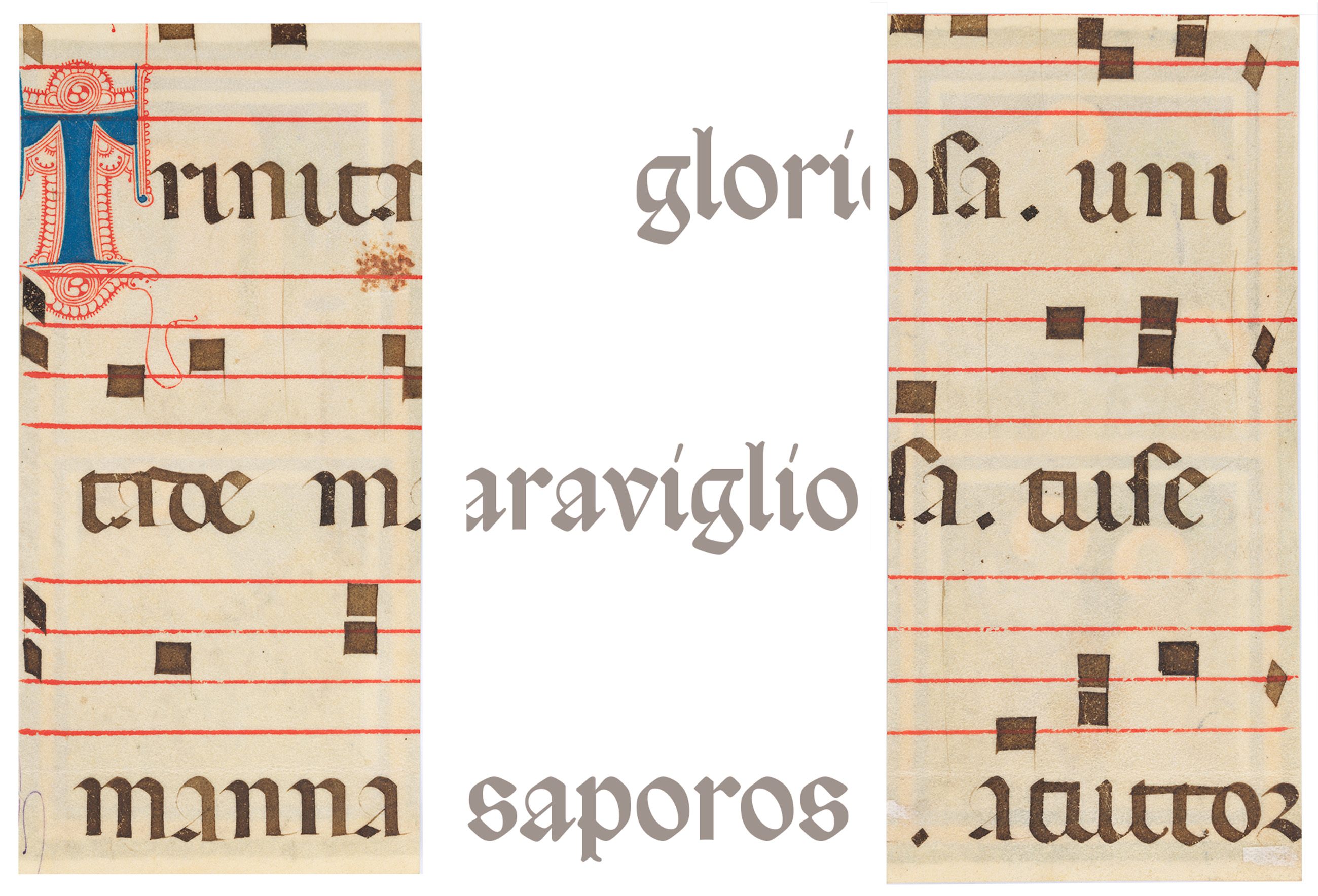
Fig. 3 Schematic reconstruction of the reverse.
A magnificent Florentine manuscript known as the Laudario di Sant’Agnese once contained a large collection of such devotional songs. Made around 1340 for the Compagnia di Sant’Agnese, a confraternity that met at Santa Maria del Carmine in Florence, it was illuminated by Pacino di Bonaguida and the Master of the Dominican Effigies. Originally extending to more than 125 folios, the manuscript was probably dismantled in the early nineteenth century. Its pages are today scattered among collections in Europe and the United States, and scholars have spent decades gradually putting the book back together. In 2012, a major exhibition at the J. Paul Getty Museum in Los Angeles, Florence at the Dawn of the Renaissance, succeeded in reuniting 24 of its 28 known surviving leaves for the first time in nearly two centuries (Getty exhibition page dedicated to the Laudario). Subsequent discoveries, including three miniatures identified in Compiègne and published by Bryan Keene in 2016, have further refined our understanding of the manuscript.
Our fragments fit into this reconstruction with remarkable precision. They were painted around the same time, by the same master, and, like the securely identified miniatures from the manuscript, the painting is executed on the verso. Most strikingly, the surviving text appears to continue the hymn that begins beneath the miniature of the Trinity on a leaf now in the Morgan Library in New York (MS M.742).
The liturgical calendar supplies another piece of the puzzle. Trinity Sunday falls between late May and the first weeks of June, while the feast of Saint Onuphrius is celebrated on 12 June. A miniature devoted to his life therefore falls exactly where we might expect it in the sequence of the Laudario. The fragments can consequently be placed between the Morgan Trinity leaf, originally numbered folio LXXXVII, and the Martyrdom of Saints Peter and Paul, folio LXXXXII, now in the Fitzwilliam Museum in Cambridge.
The Laudario di Sant’Agnese remains dramatically incomplete. Its surviving leaves are now divided among museums, libraries, and private collections, from Los Angeles and New York to London, Paris, Cambridge, and Basel. Each newly identified fragment therefore restores a little more of the original appearance of what was one of the most ambitious manuscript commissions of fourteenth-century Florence. In the case of our two miniatures, this recent study does more than rediscover a lost painting: it restores a rare and particularly compelling depiction of the life of Saint Onuphrius to its original devotional context.
References
Sciacca, Christine, ed. Florence at the Dawn of the Renaissance: Painting and Illumination, 1300 – 1350 . Los Angeles: J. Paul Getty Museum, 2012, pp. 244-245, cat. 45-5.
Keene, Bryan C. “New Discoveries from the Laudario of Sant’Agnese.” Getty Research Journal 8 (2016): 199–208.
Scenes of the Life of Saint Onuphrius
A discovery from the corpus of the Master of the Dominican Effigies
