

Petrarchs Rerum vulgarium fragmenta, I trionfi and Nota obituaria
Manuscript in Italian and Latin on vellum
Italy, Tuscany, 1451
224 x 140 mm
680'000,- (VAT not incl.)
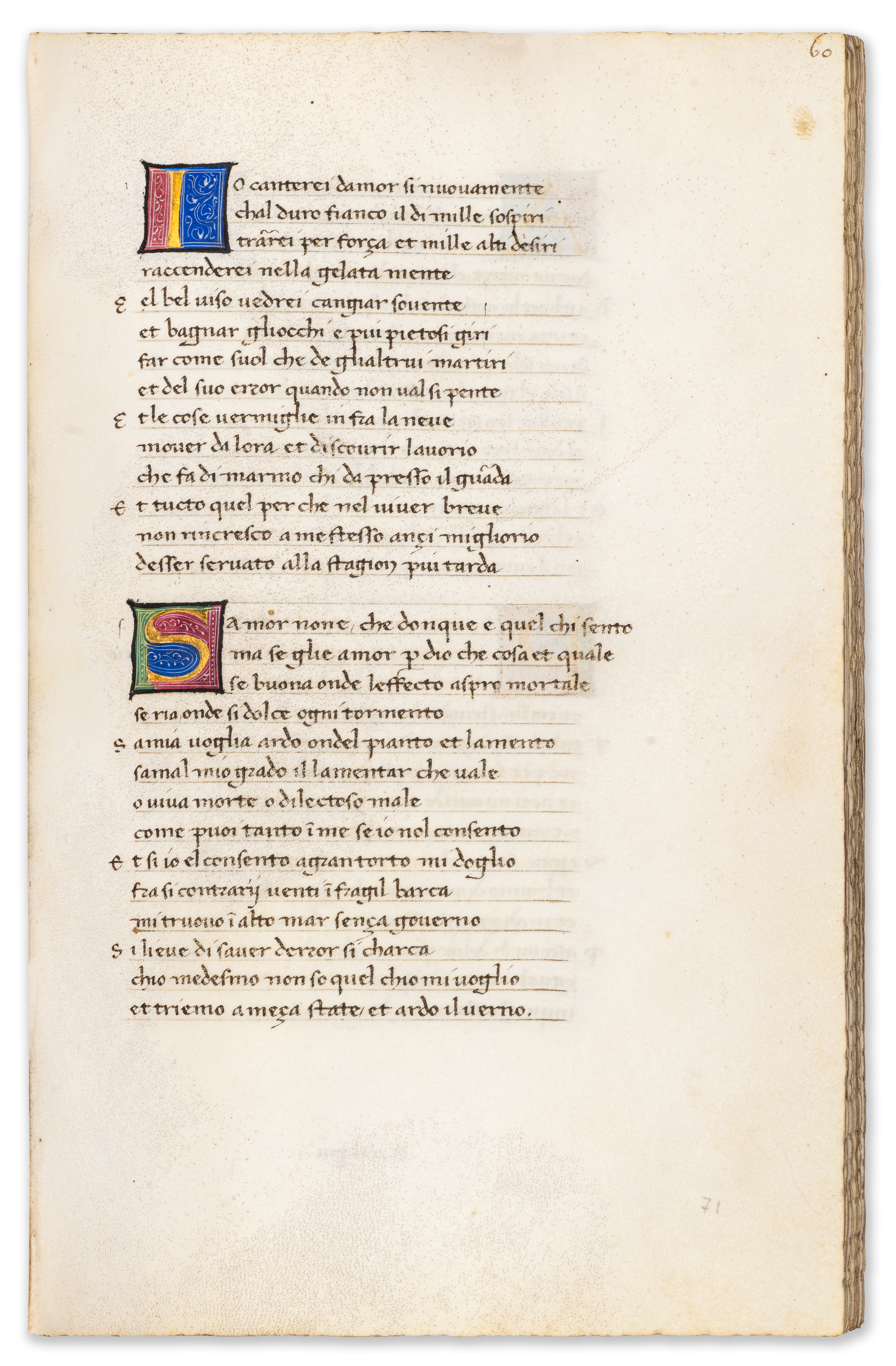
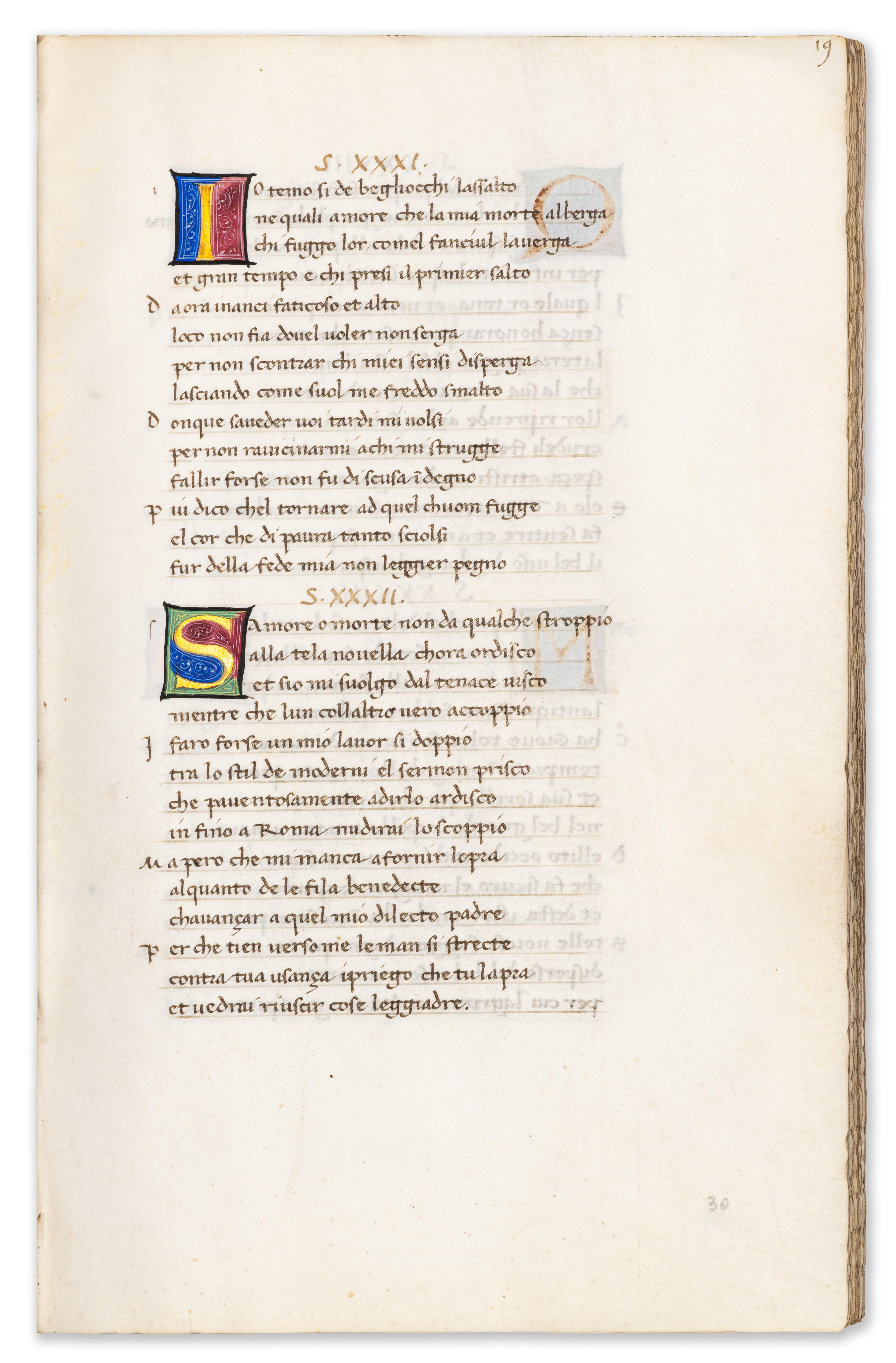
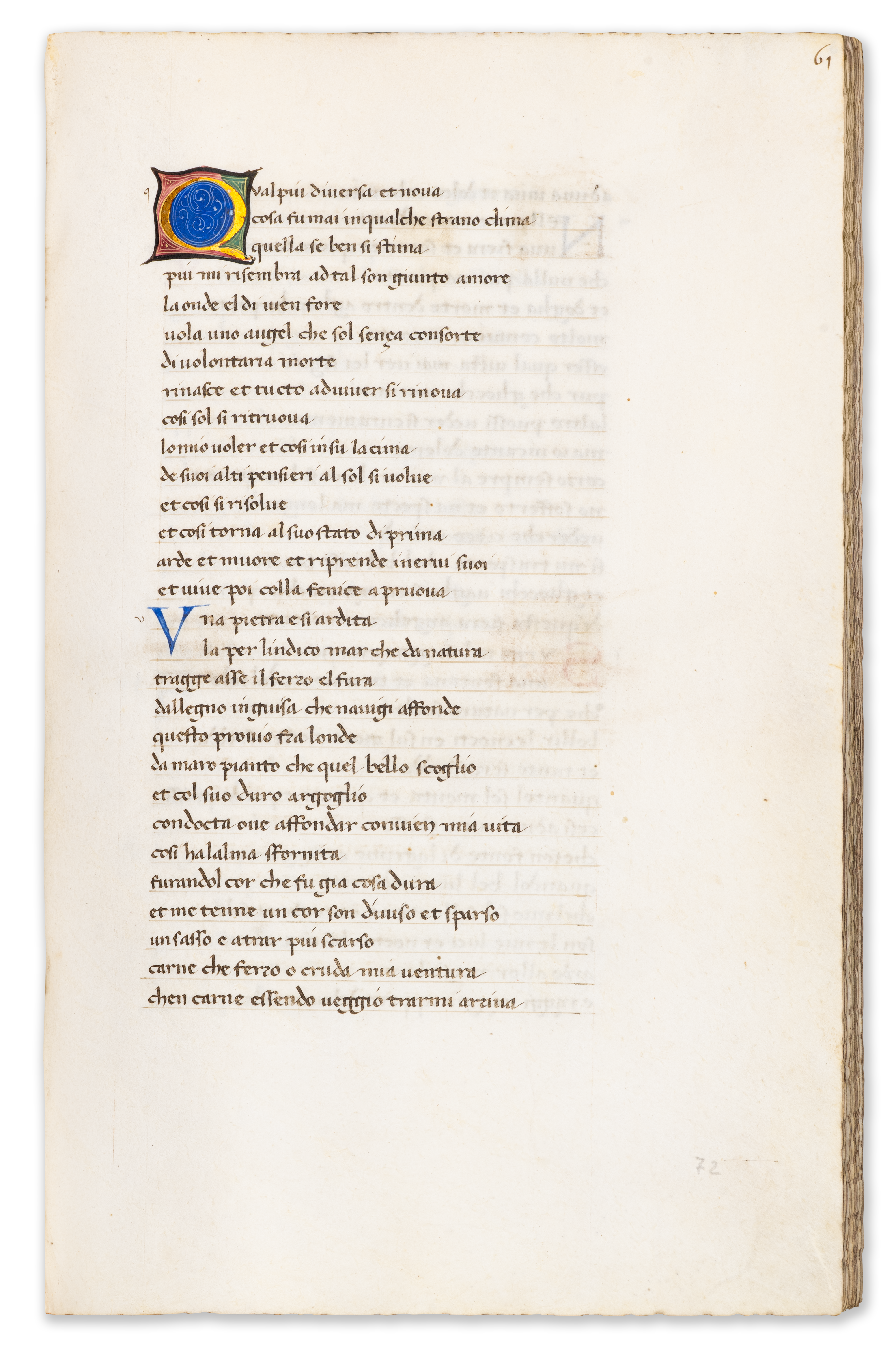
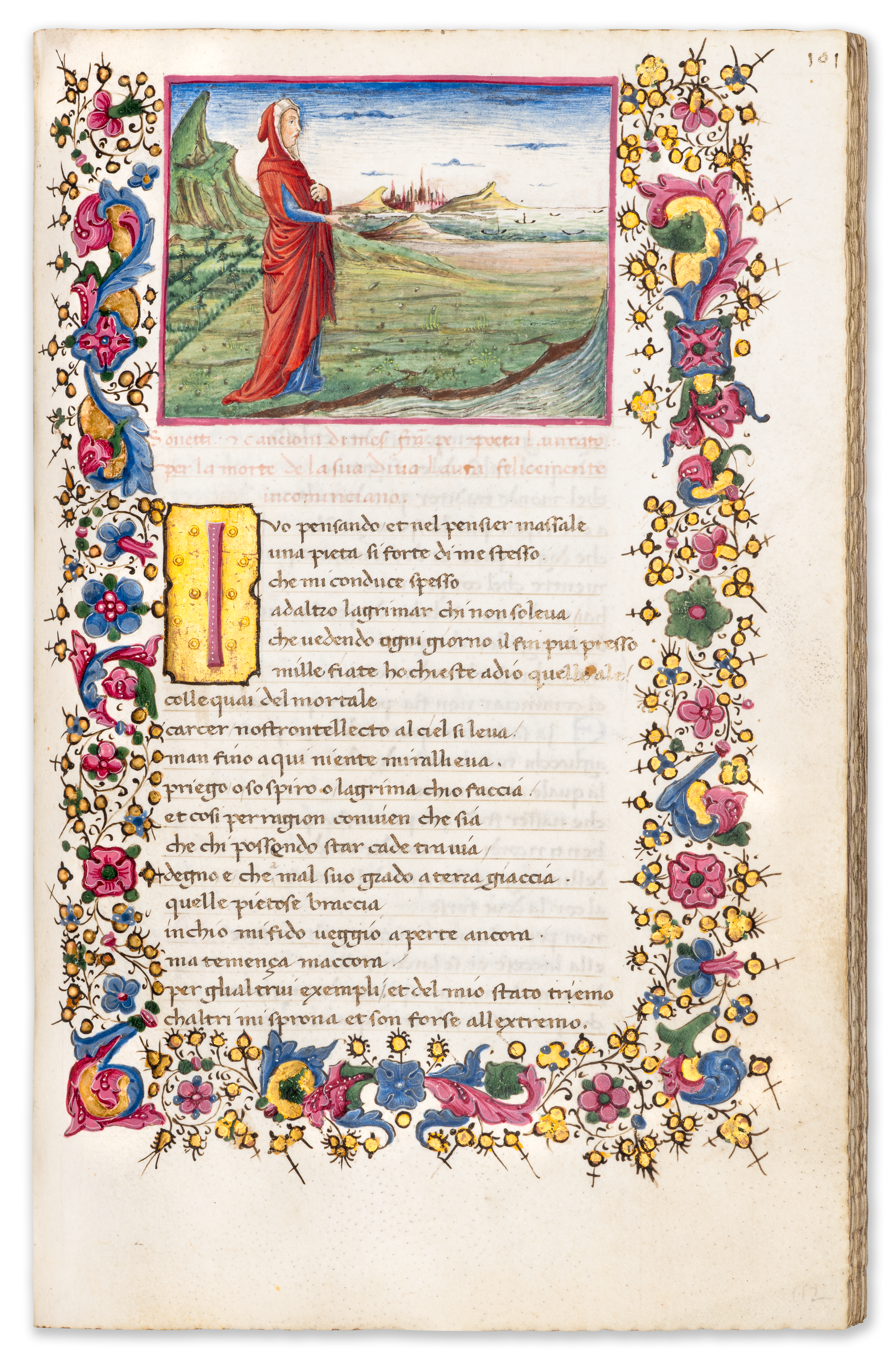
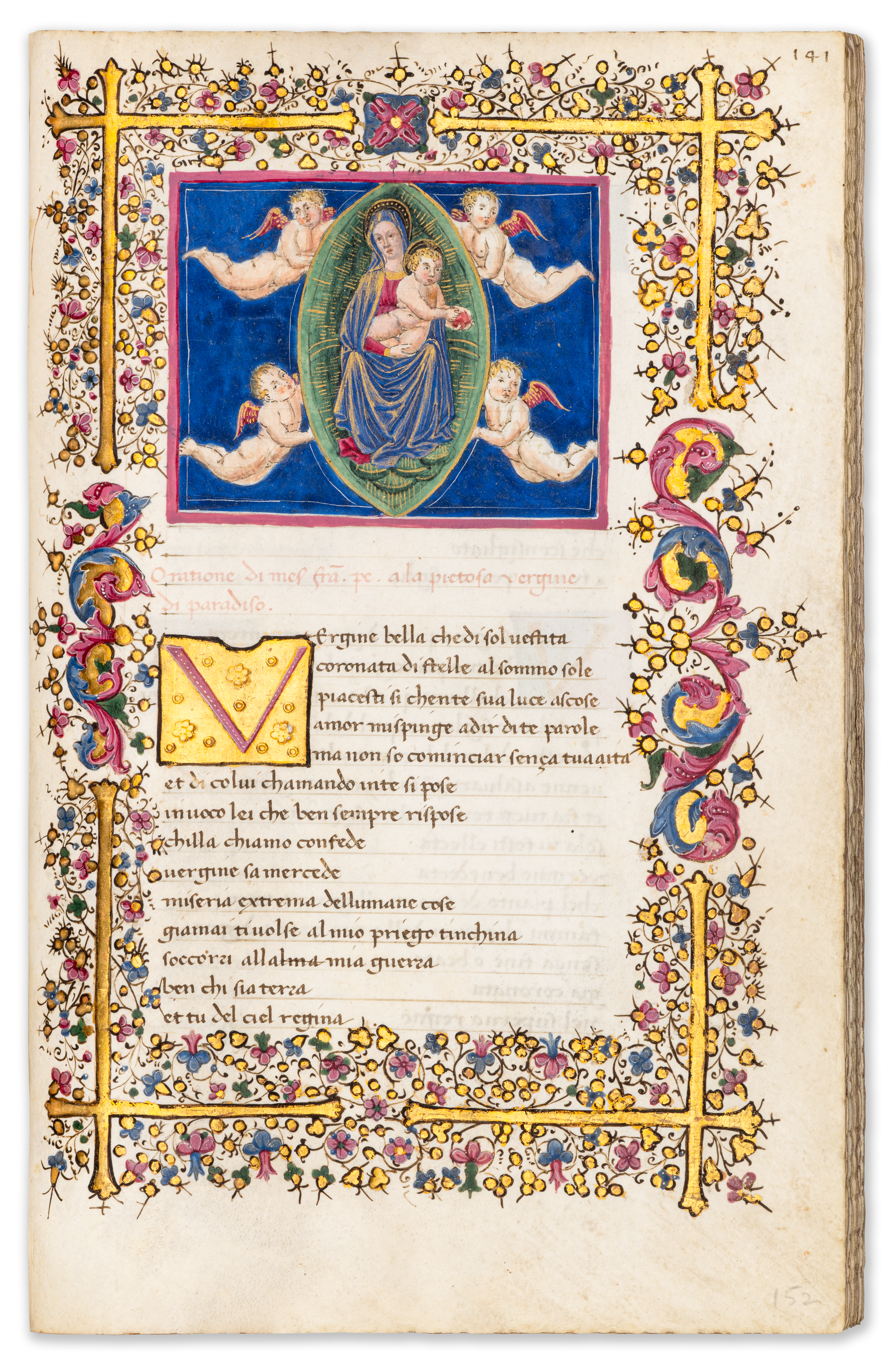
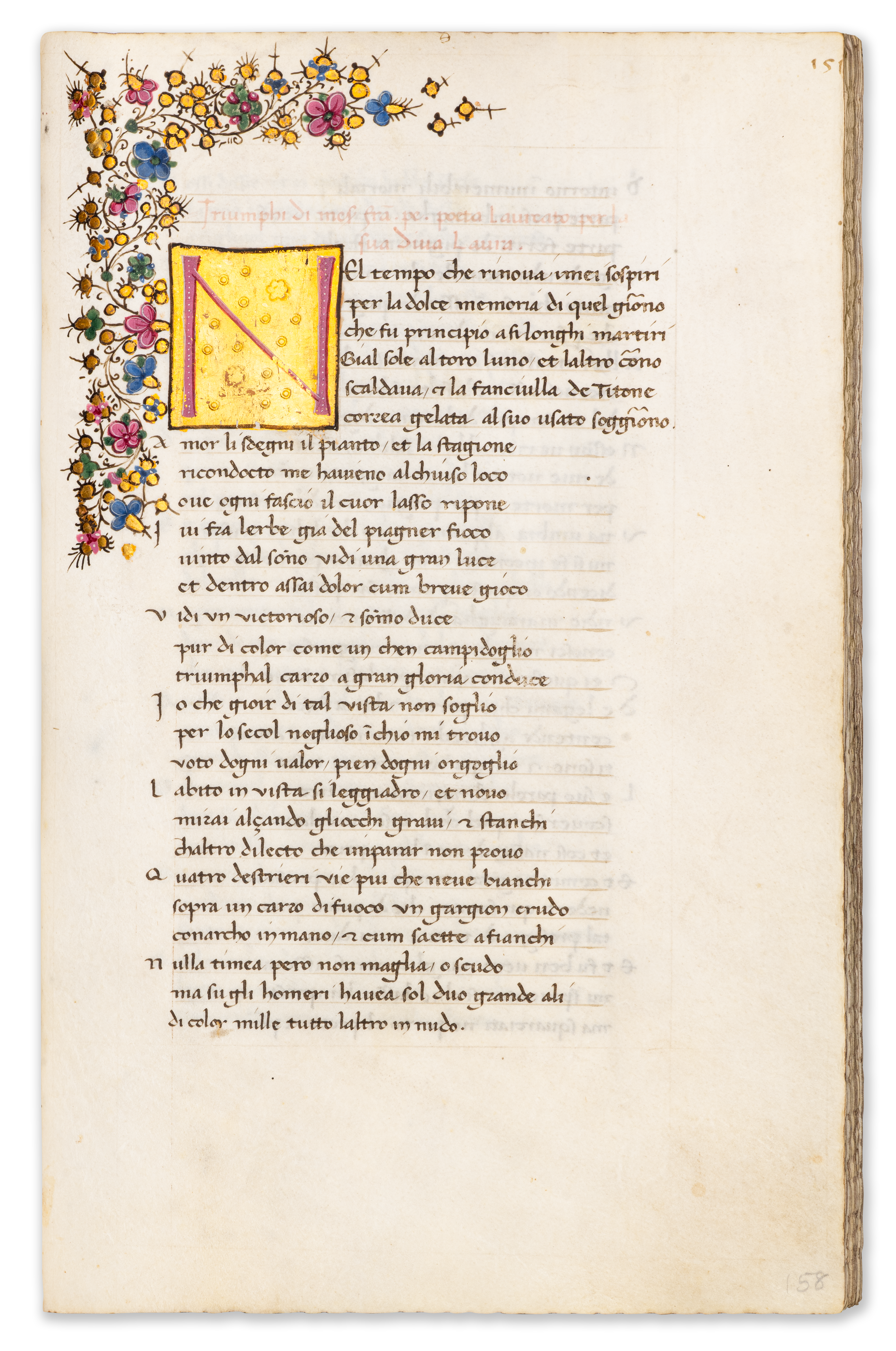
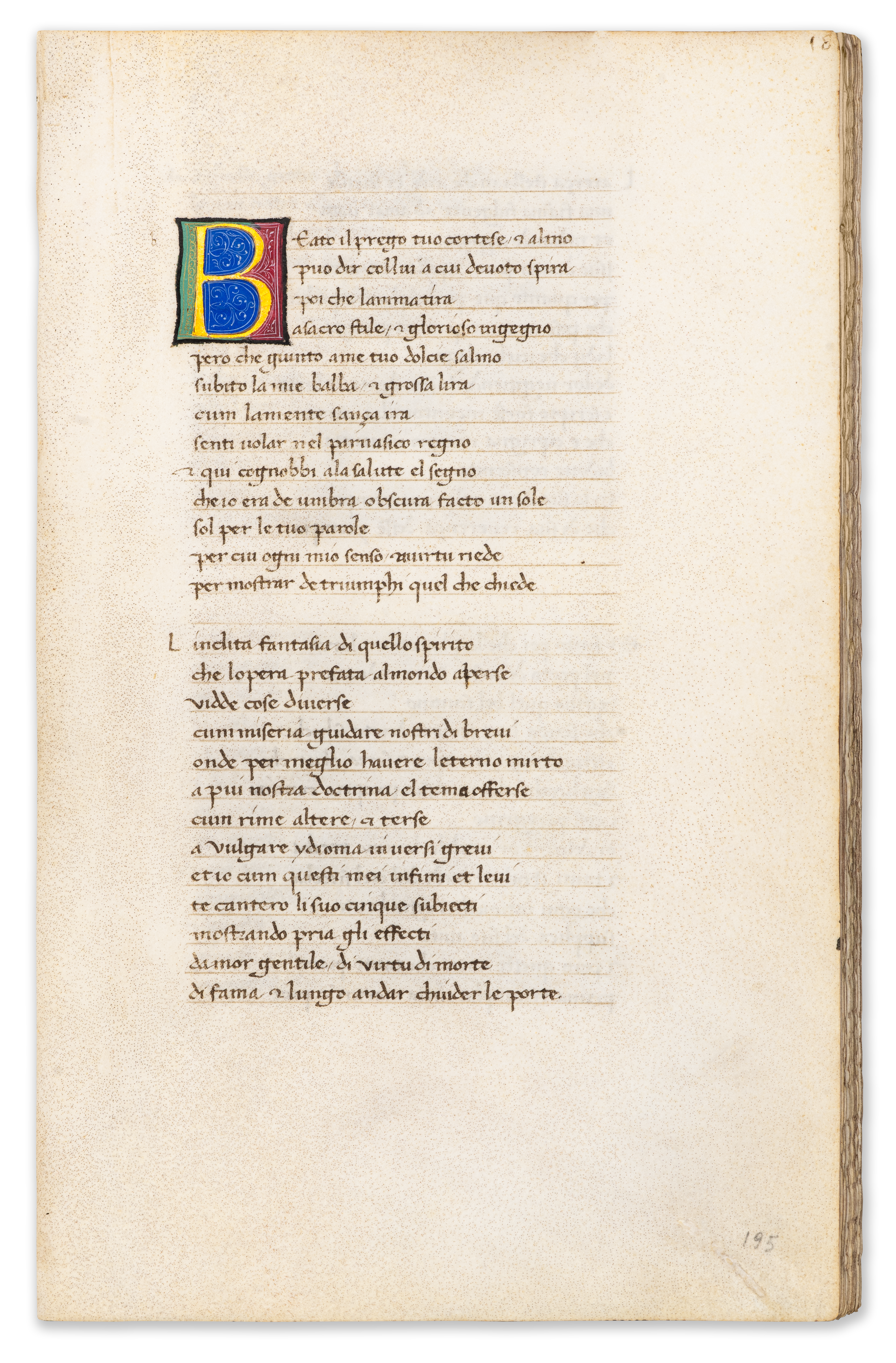
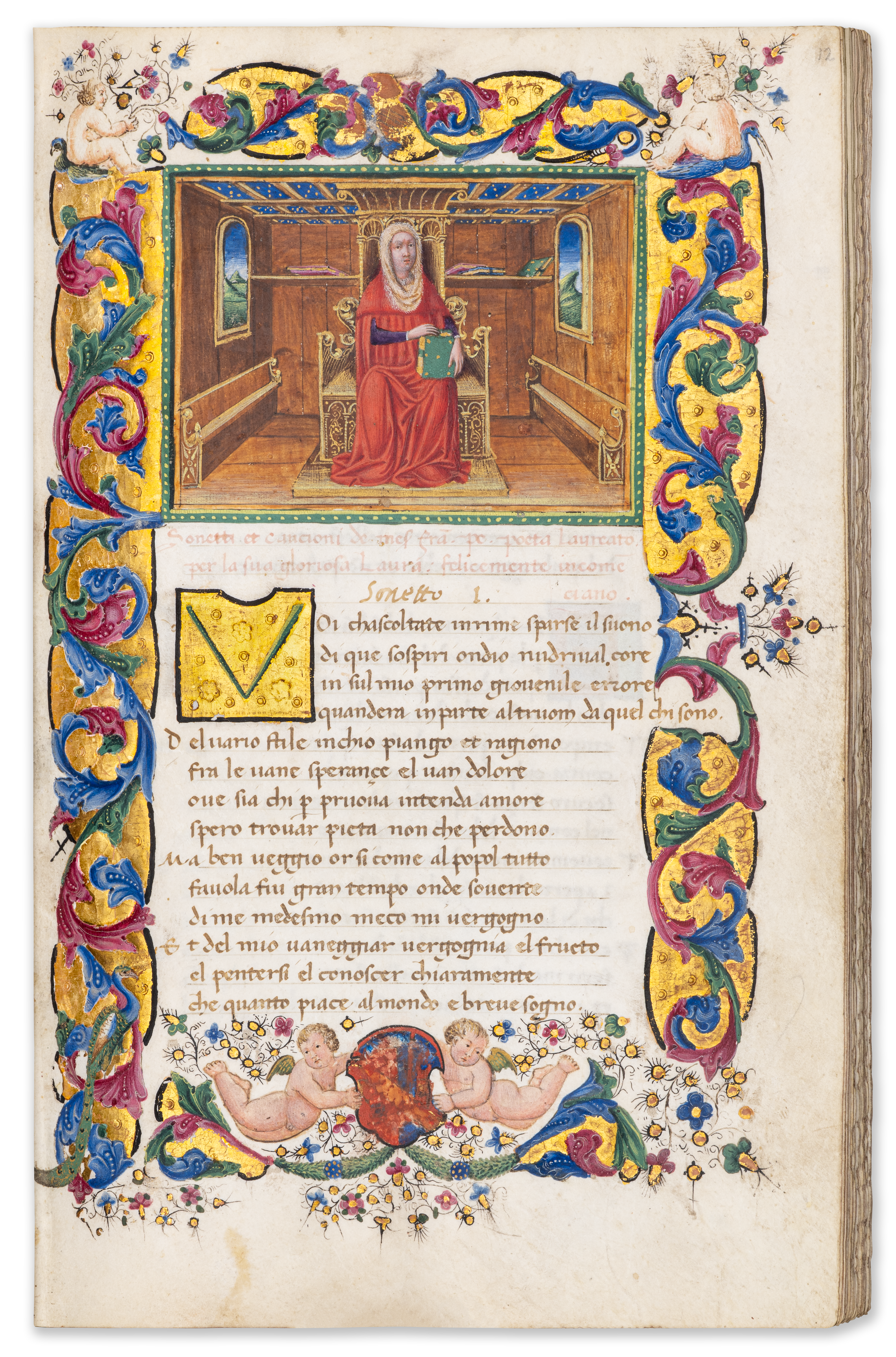
196 leaves. Three large miniatures within full illuminated borders of scrolling acanthus, flowers and bezants, the first of these with putti holding a coat of arms, c. 407 large illuminated initials on blue, red and green grounds with white filigree infilling, four large initials in pink or green on grounds of burnished gold, the initial on f. 158 opening the Trionfi with a partial floral border, smaller initials alternately in red or blue, rubrics in red. Complete. 17th-century brown morocco binding, tooled in gold and blind, gauffered edges. Overall in excellent condition.
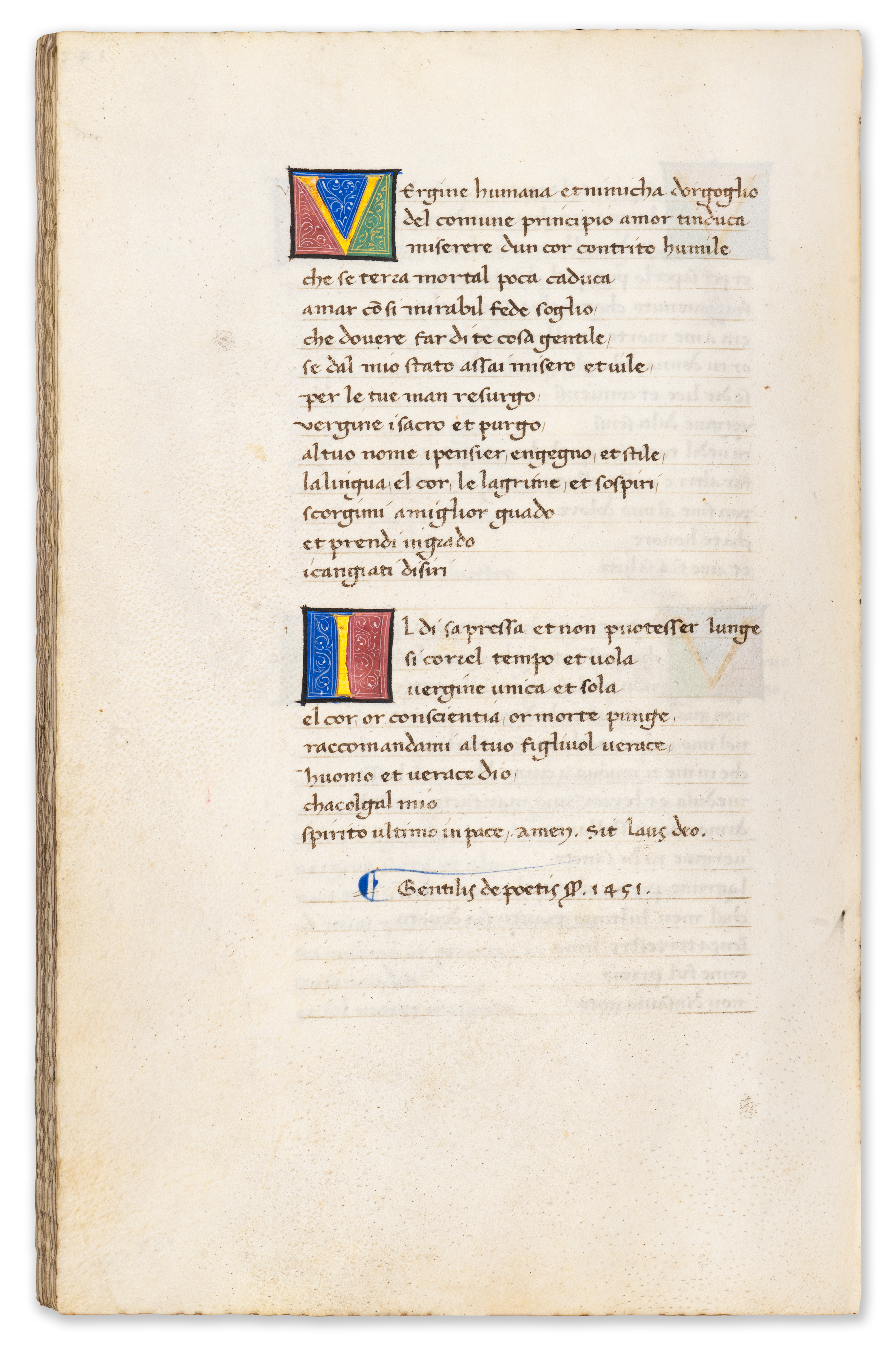
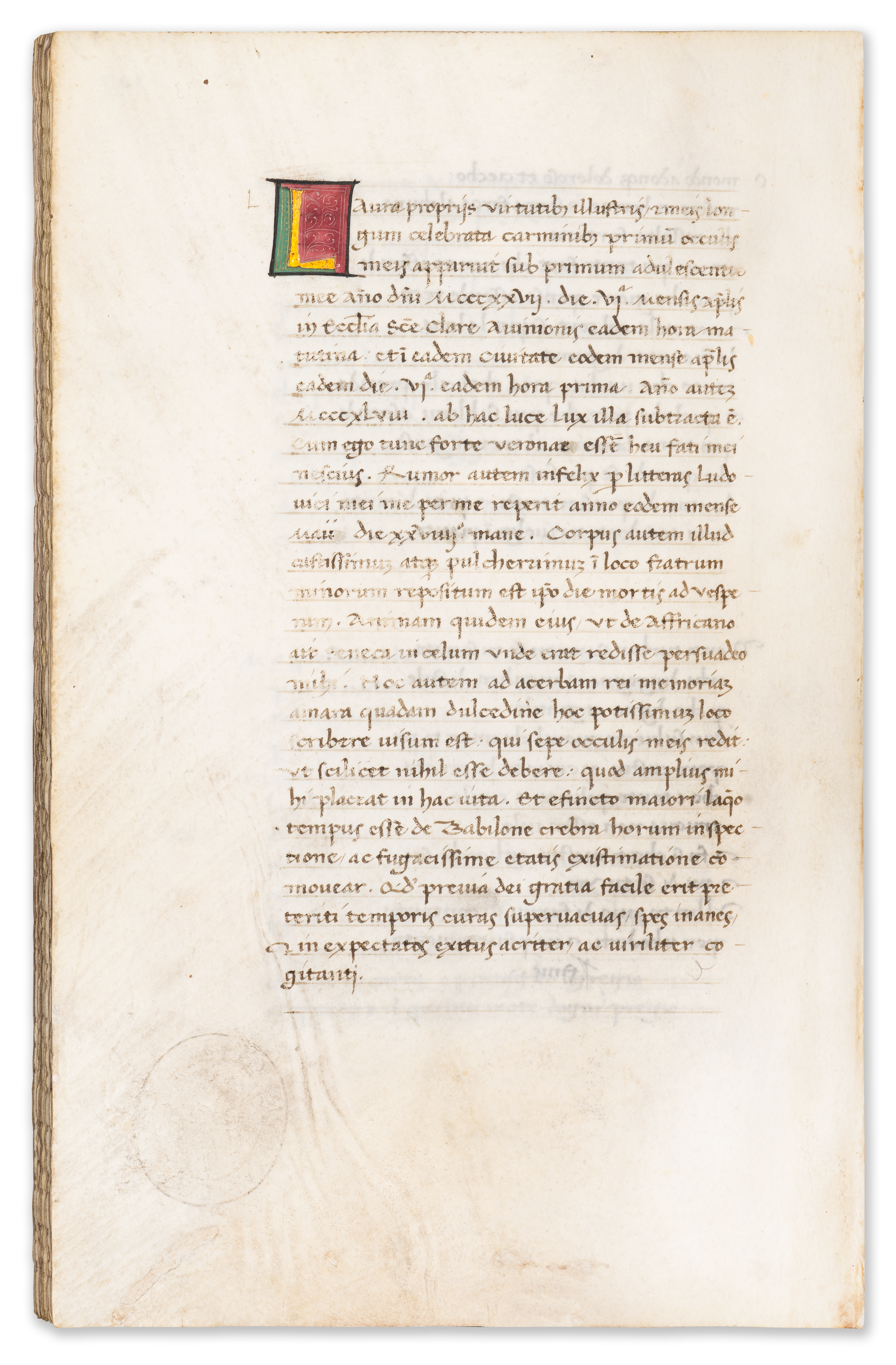
The manuscript at hand is a long-lost copy of Petrarch’s Rerum vulgarium fragmenta, transcribed in 1451 by the Bolognese notary and scribe Gentilis de Poetis.
Francesco Petrarca’s Rerum vulgarium fragmenta is a collection of 366 poems composed in fourteenth-century Italy that came to define the lyrical expression of love, loss, and spiritual longing for generations of readers. Structured around the poet’s idealized relationship with Laura, the collection shaped the development of the sonnet form and exerted a lasting influence on European literary culture. While grounded in the religious and intellectual framework of Petrarch’s own time, the poems inspired new arrangements, additions, and interpretations as they circulated in manuscript form.
Distinguished by its refined illumination and elegant humanist script, it offers a rare and highly contemporary witness to the reception of Petrarch’s poetry in mid-fifteenth-century Tuscany. Newly identified as a previously unknown member of the Forma Chigi textual family—descended from Boccaccio’s autograph copy—the manuscript shows especially close affinities with two Florentine exemplars, and its mise en page corresponds exactly to that of another codex unmistakably penned by Gentilis himself. The poems are arranged in a non-canonical sequence, shedding light on early modes of textual organization and personal engagement with the Fragmenta .
The manuscript also preserves an interesting physical trace of censorship: the so-called “Babylonian sonnets,” critical of the Avignon papacy, were visibly crossed out and the leaves temporarily sealed—an act of expurgation that highlights the ideological tensions surrounding Petrarch’s work. Its distinguished provenance— encompassing Cardinal Gentili, the renowned bibliophile Henry Huth, and the Swiss collector Arnold Mettler—further underlines its stature as a manuscript of exceptional pedigree.