

The Crawford Hours
Use of Rome
- Prayerbook Master of c. 1500
Manuscript in Latin on vellum
Flanders, Bruges or Ghent, c. 1500
97 x 64 mm
Price on request.
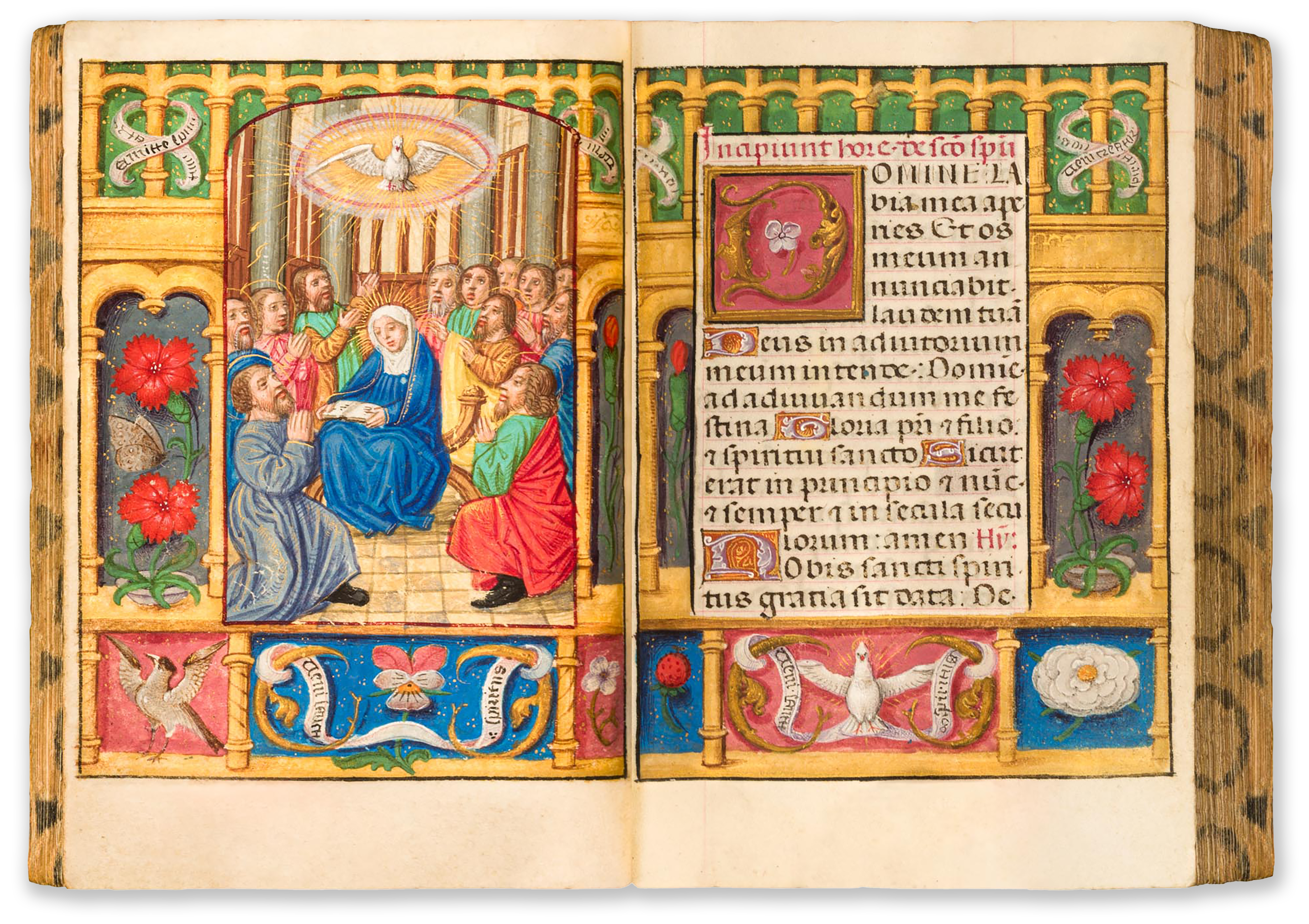
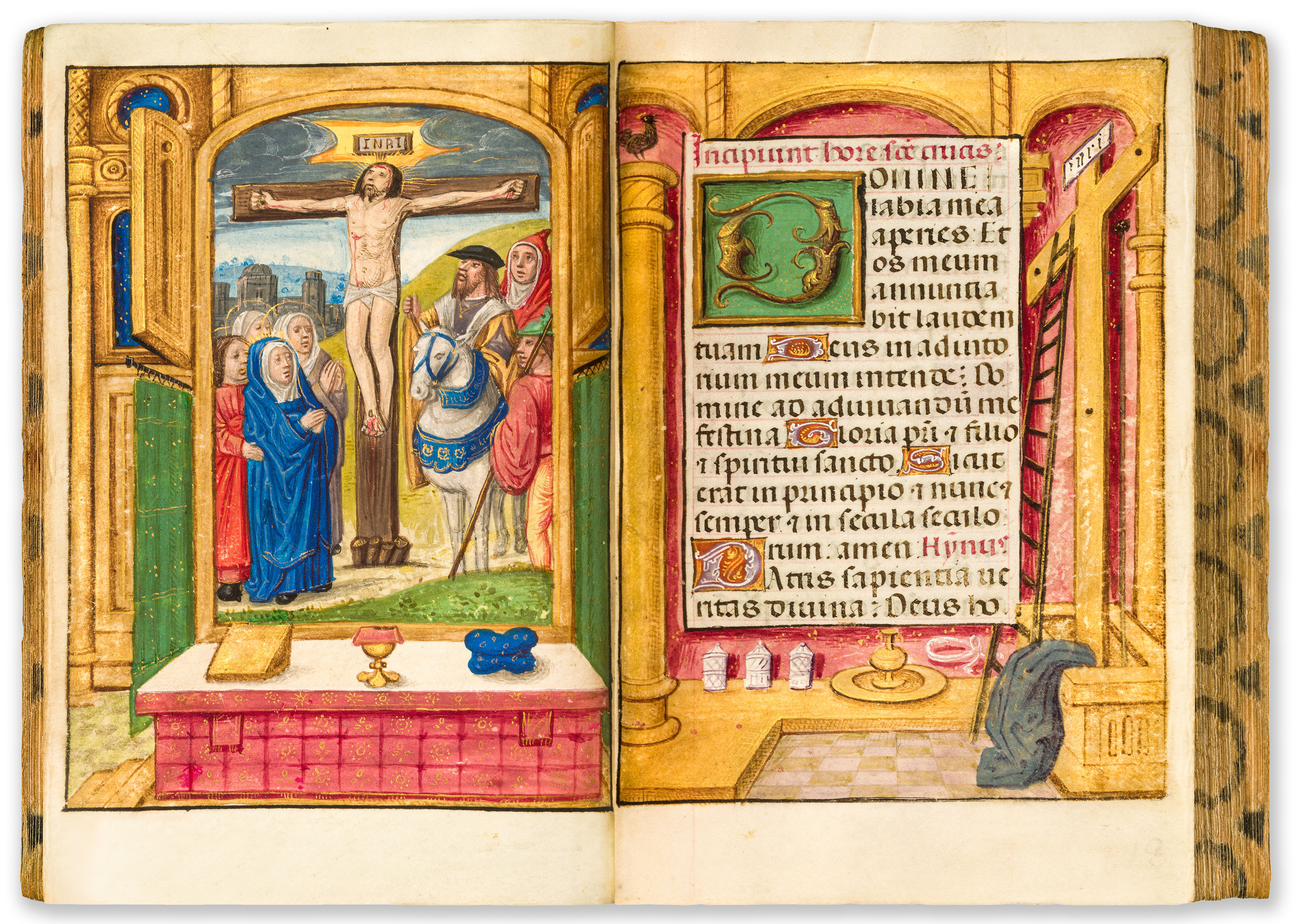
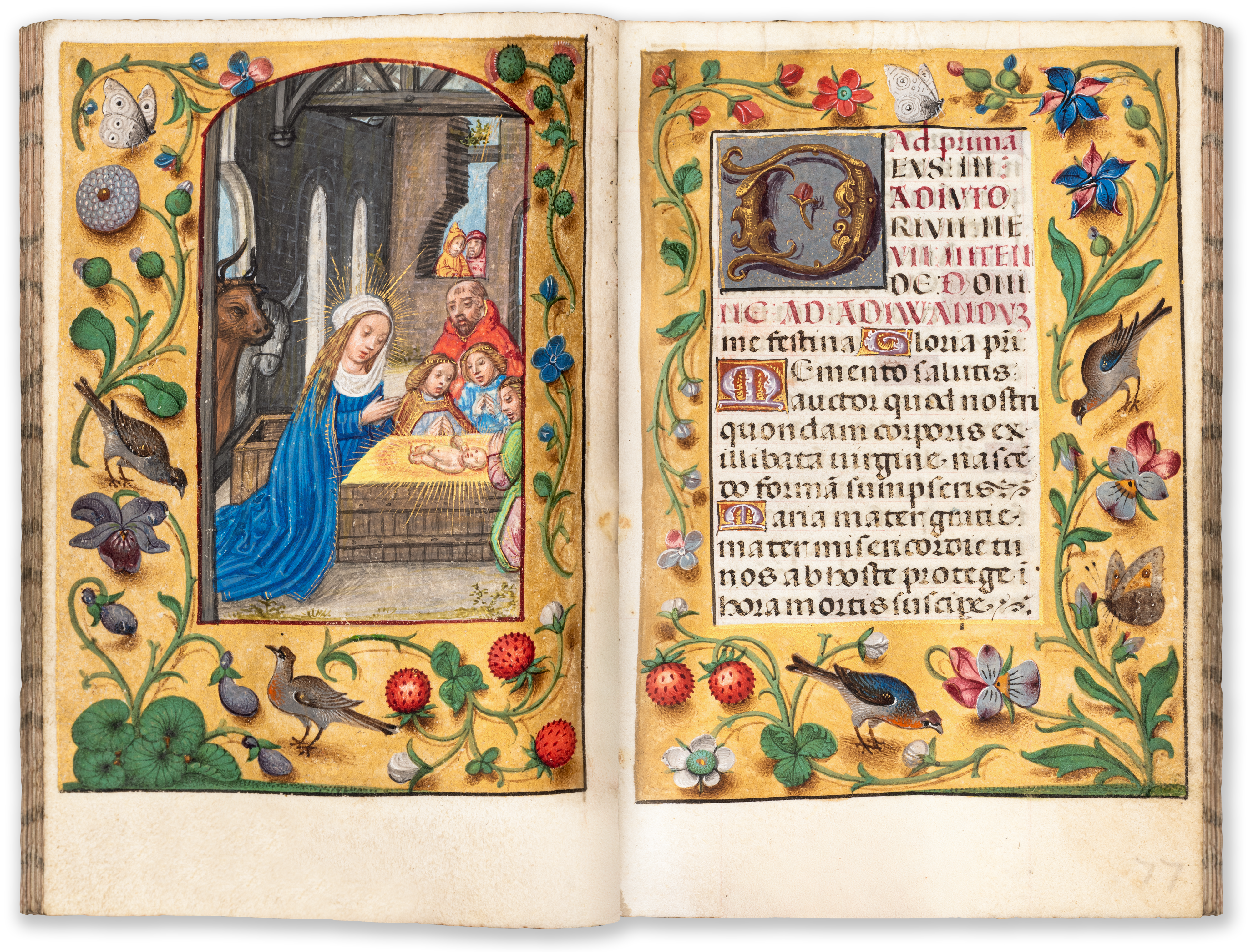
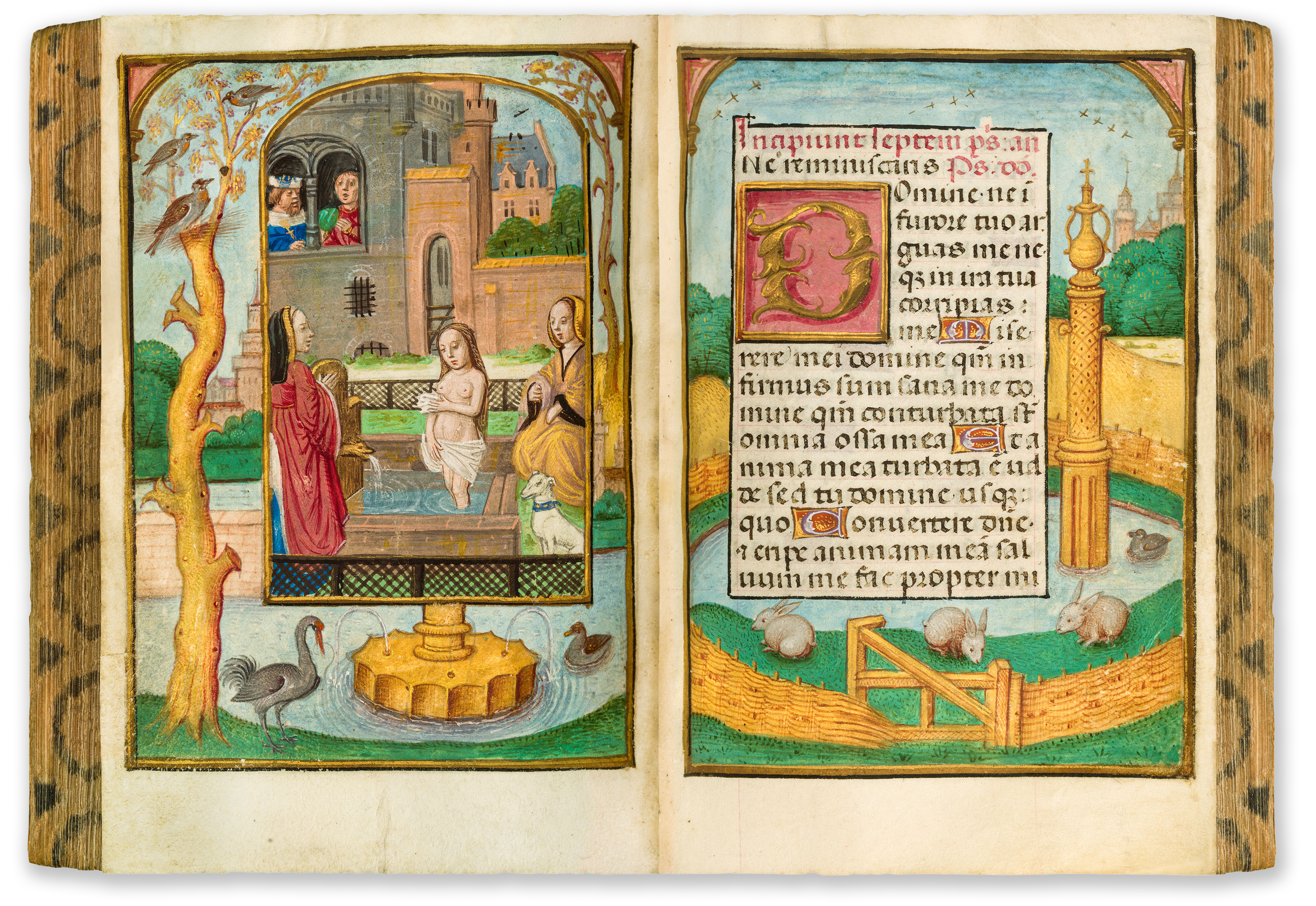
209 leaves. 24 small calendar miniatures in roundels, 1 historiated initial in a three-quarter illuminated border, 15 full illuminated borders and 13 (of 15) full-page miniatures within full borders. Roman binding of the late 16th century: richly gilt red morocco, with angels and dolphins entwined in filigree tendril volutes. In very fine fresh condition.
An important and characteristic example for Flemish book illumination around 1500, this lovely Book of Hours was made for export to Italy or was potentially intended for Italian clients who temporarily lived in Flanders as bankers or traders.
The book at hand boasts an exciting alternation of modern architectural and classic trompe l’oeil borders and was illuminated by the Prayerbook Master of c. 1500, with another illuminator painting the borders. Both artists were likely collaborators of the Master of the David Scenes of the Breviarium Grimani. This small masterpiece belongs to a significant group of meticulously designed manuscripts in small format with architectural borders, in which renowned art historians have taken a vivid interest for decades. Our book is in an excellent state of preservation, with breath-taking colours and delicate features.
Flemish manuscript workshops selling to clients within or from Mediterranean regions seem to have adapted the design of their scripts. For this reason, Bruges- and Ghent-based scribes developed an elegantly rounded Gothic script, which, without completely denying traditional Flemish calligraphy, rather recalls the Antiqua typeset that Nicolaus Jenson introduced in his popular printed editions. Our manuscript reflects such modern hands, especially in its capital letters; the incipits of the most important passages are introduced by small capitals, furthermore alternating in red and black – also a novelty in Flemish manuscripts.
The illuminator, to whom we owe the expressive miniatures, is somewhat unwieldly called the Prayer Book Master of c. 1500. Friedrich Winkler gave him this sobriquet, which still is in use. One of his master pieces, however, by means of which his style can best be characterised, is not a prayer book at all, but a Roman de la Rose for Engelbert of Nassau.