

The Dartmouth Hours
copied by Isidore de Ny
- Mansel Master
Manuscript in French and Latin on vellum
Northern France, Amiens (?), 1440-1450
154 x 115 mm
Price on request.
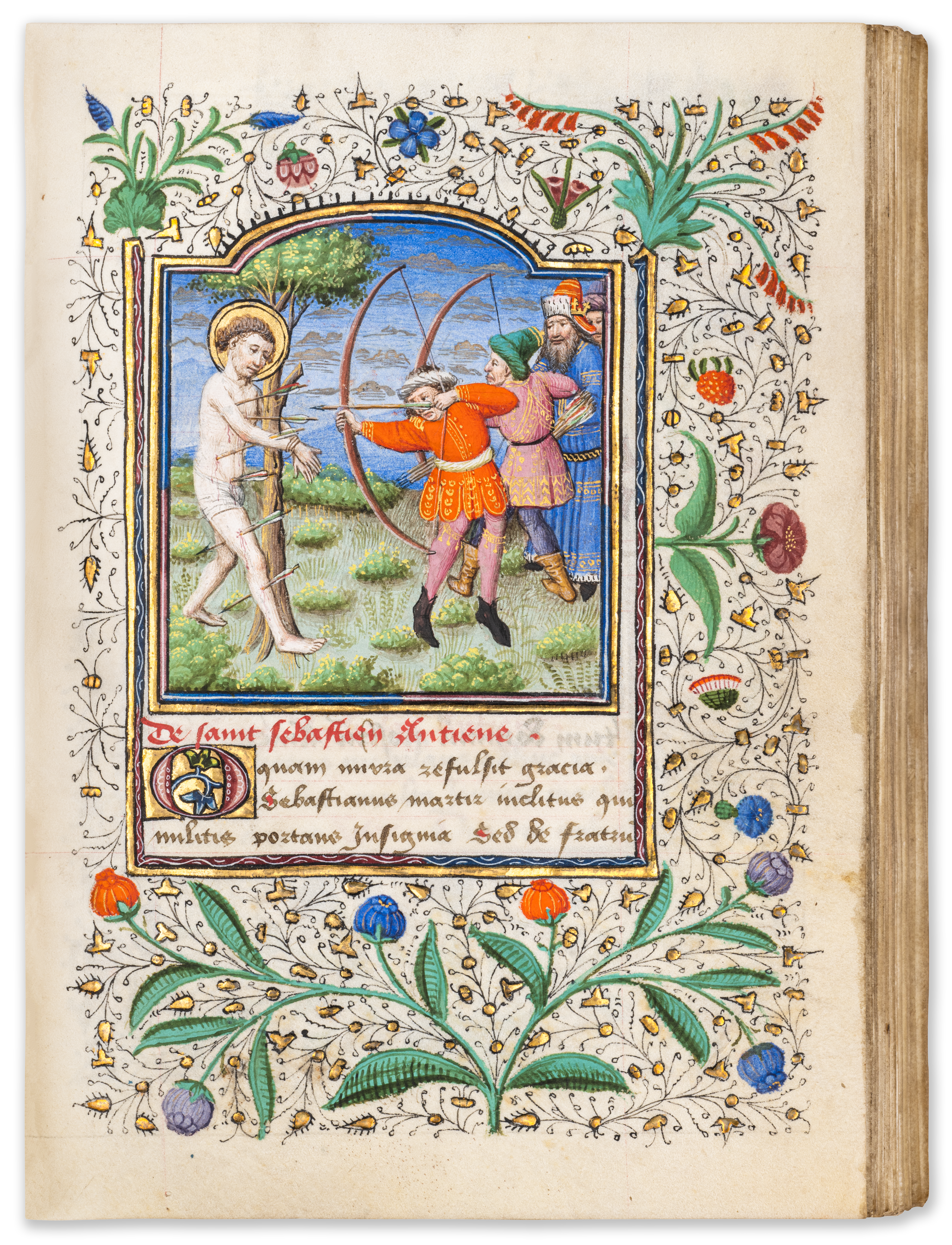
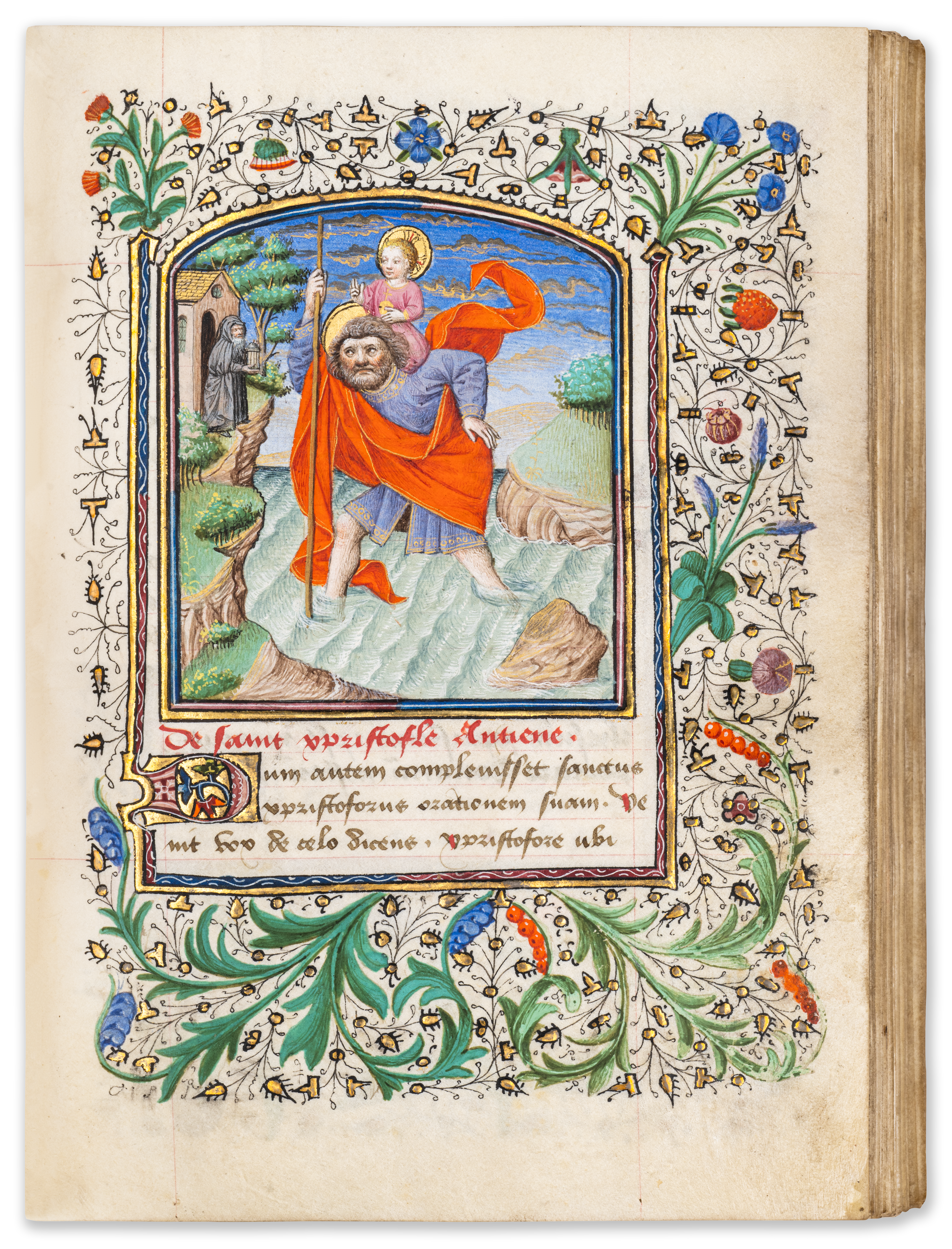
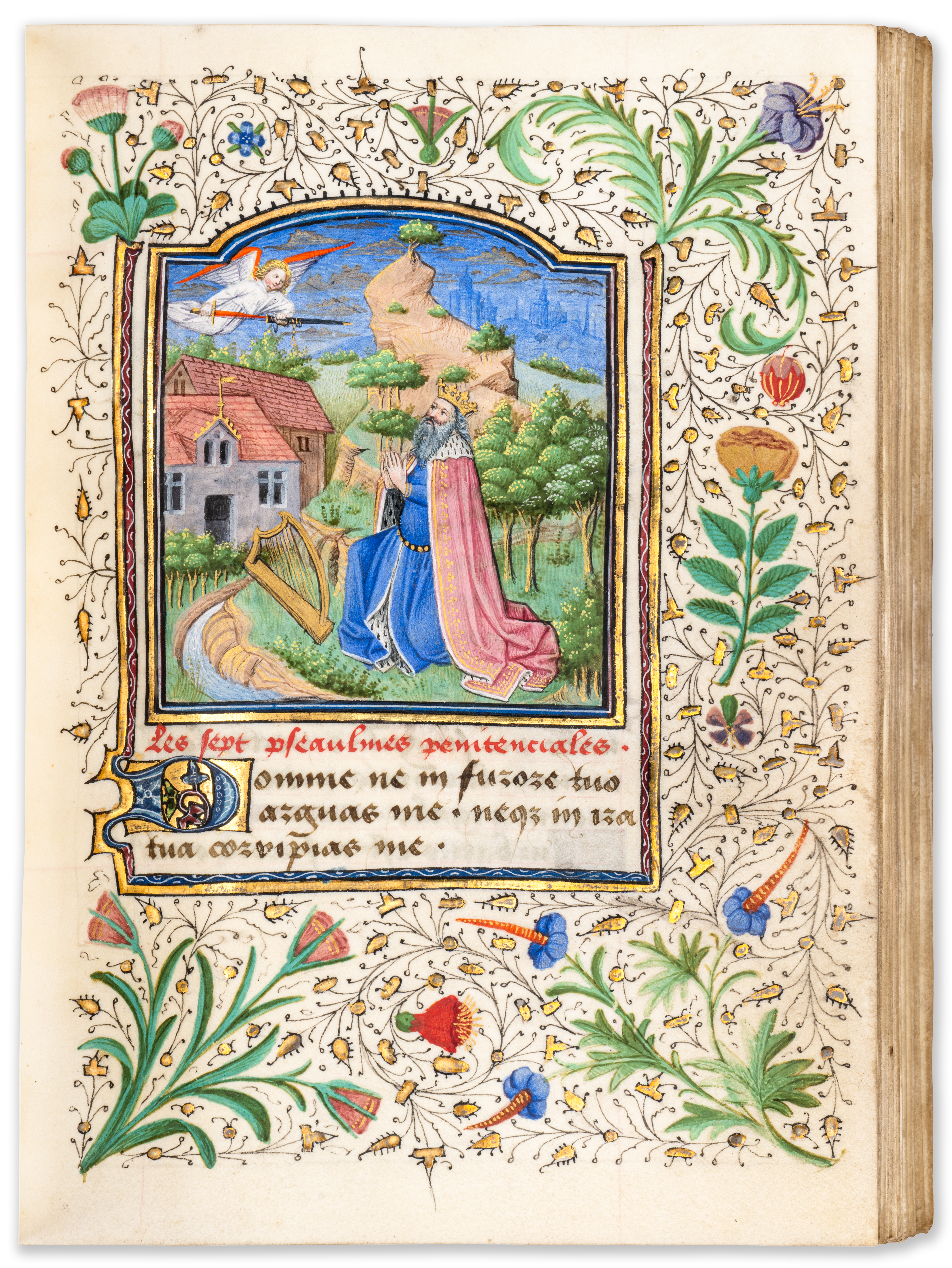
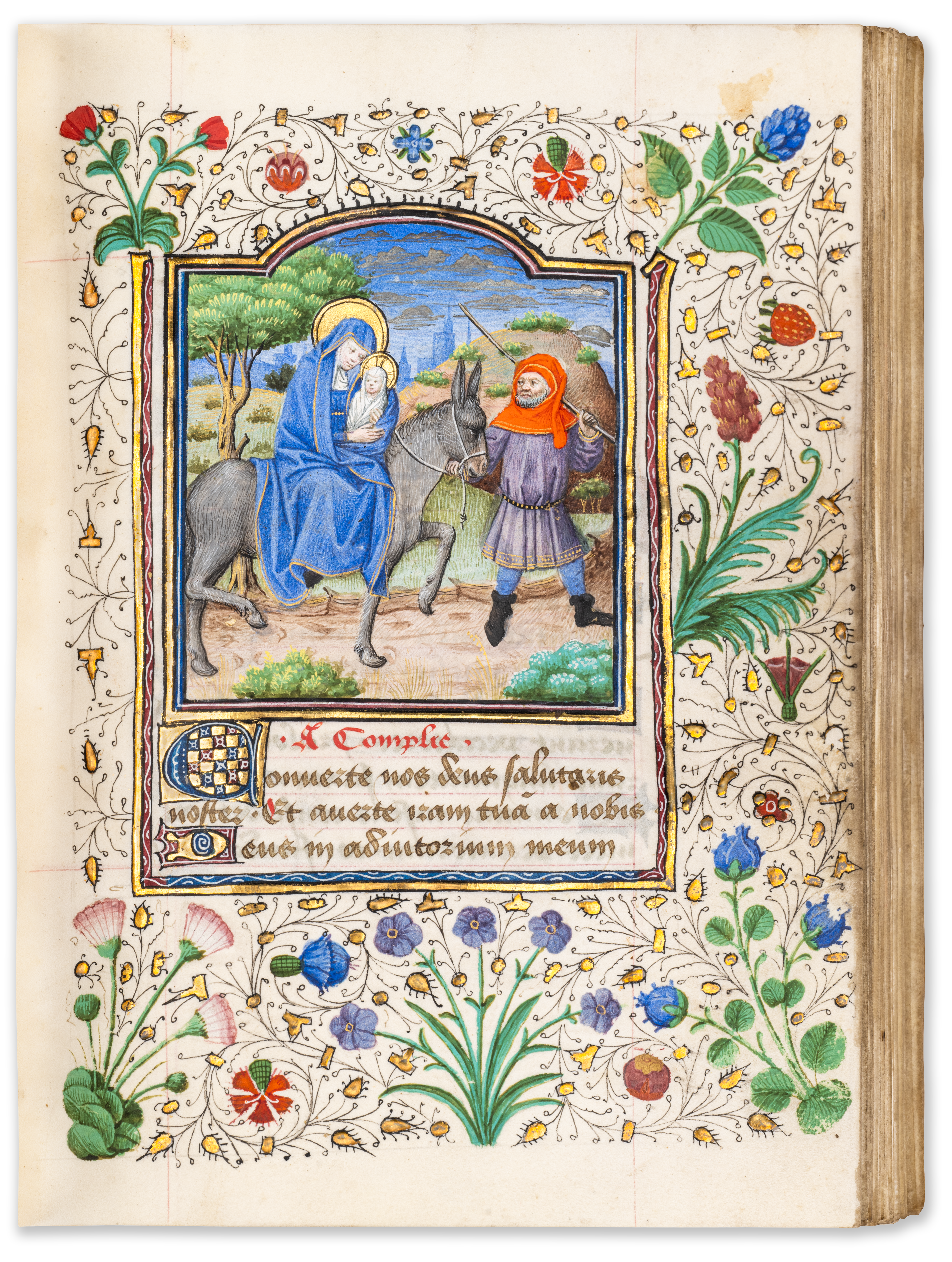
161 leaves. 27 large miniatures by the Mansel Master; one large miniature added later in the 15th centu-ry by a northern French illuminator (f. 152r). Many illuminated borders, initials and line-endings illuminated throughout. Complete. Bound in an English 17th century red morocco binding, richly gilt with floral volutes, quatrefoils and cherubs’ heads. Excellent and fresh condition.
This exceptionally well-preserved Book of Hours is one of the very few works by the highly skilled illuminator known as the Mansel Master.
He is named after one of the masterpieces in the Royal Library of Brussels (ms. 9231-9232), a copy of Jean Mansel’s Fleur des Histoires. The artist is primarily recognised for his illuminated literary texts, with only two known Books of Hours attributed to him today. One of these is our manuscript, which may represent an early milestone in his career, offering valuable insights into his geographical origins, a topic still debated by scholars.
The Mansel Master was an artist with a brief career, active for barely a decade. This artist’s name derives from a prestigious manuscript offered to Philip of Burgundy, La Fleur des Histoires by Jean Mansel (Brussels, KBR, ms. 9231-9232), for which the renowned painter Simon Marmion completed the illustrations. The origins of the Mansel Master remain debated among scholars, with some suggesting he hailed from Amiens, rooted in the tradition of an earlier generation, such as the Collins Hours Master. However, more recent research positions him as an artist fully integrated within the northern European milieu, linking his style to Flemish artists such as Robert Campin from Tournai and, particularly, Jacques Daret of Arras.
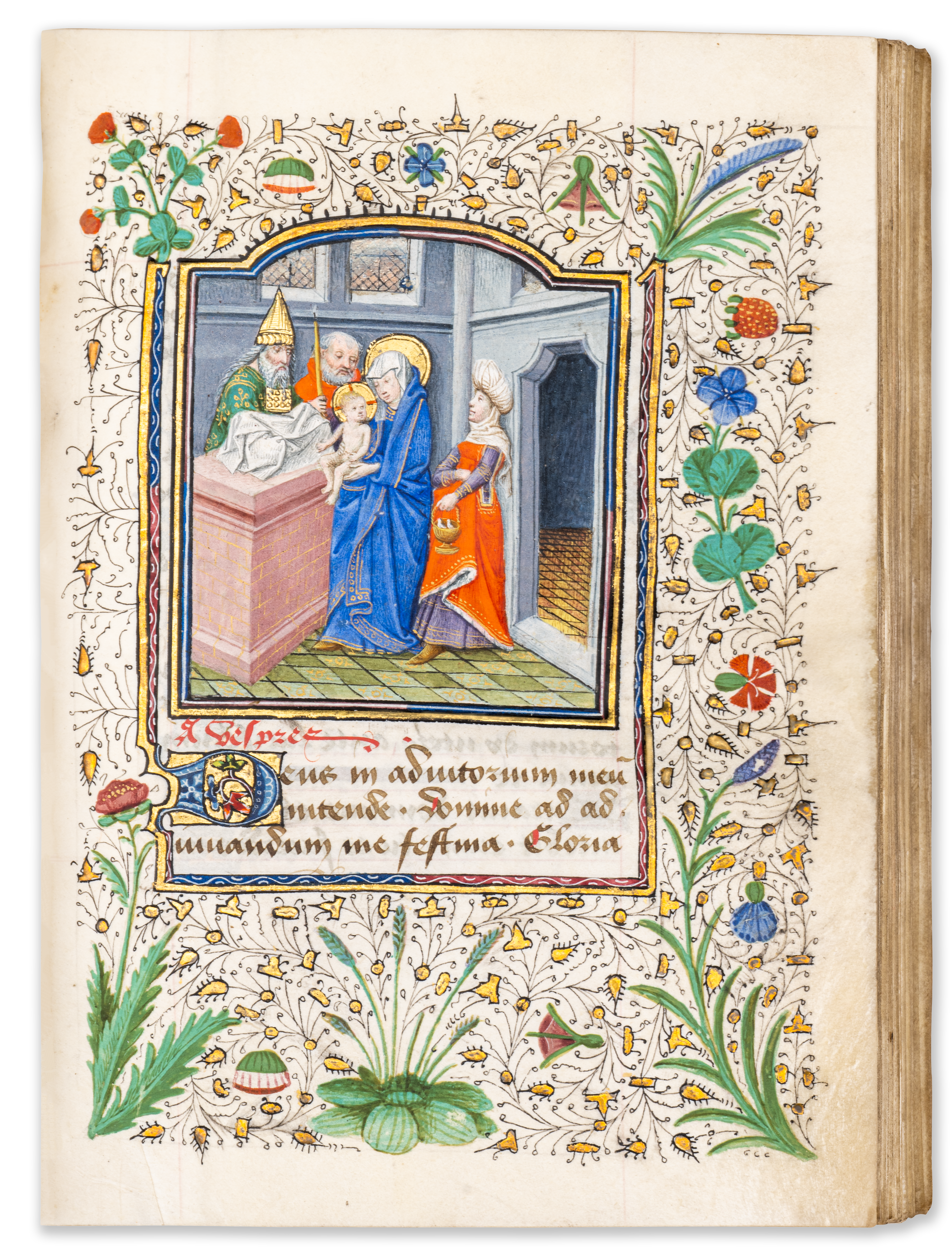
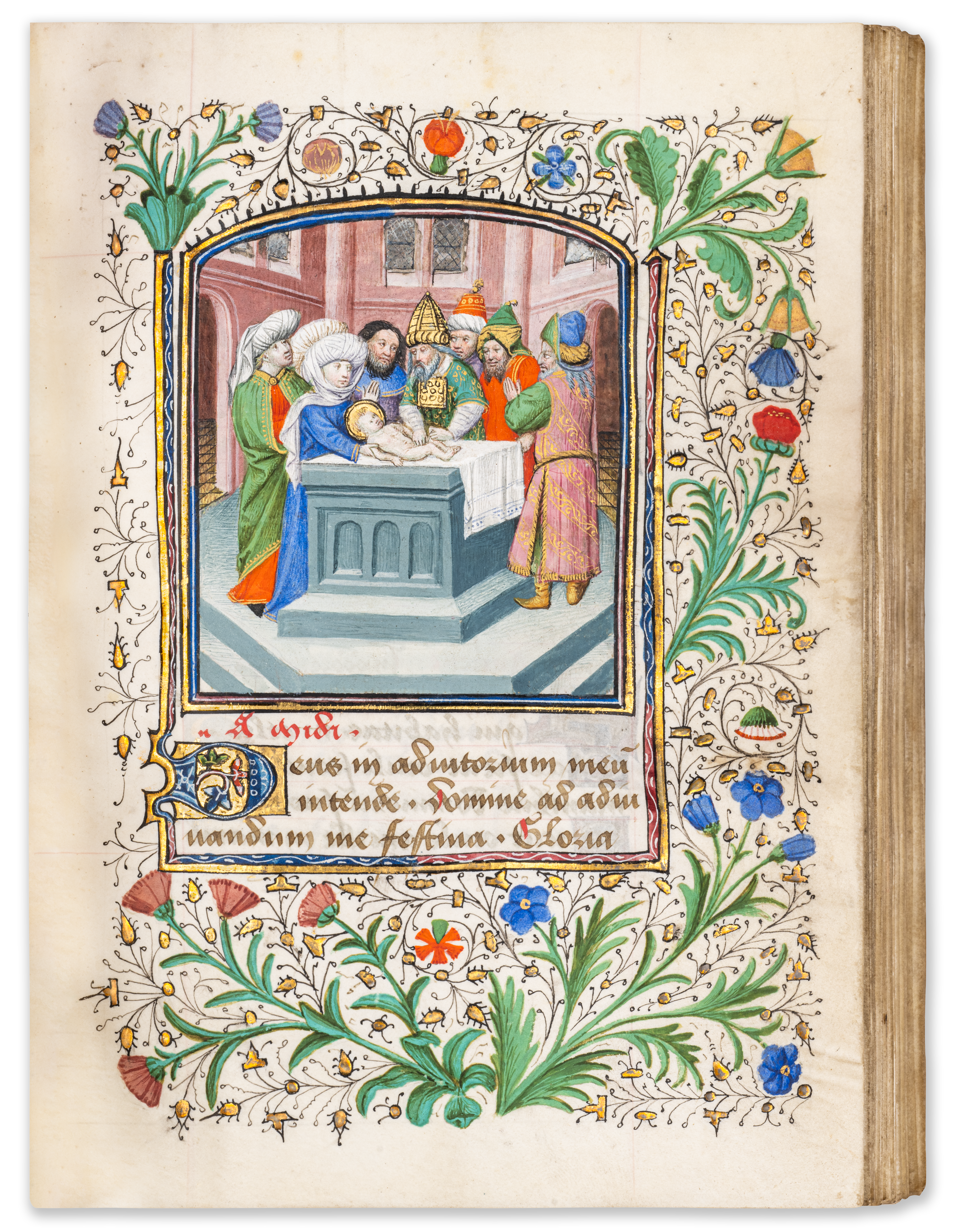
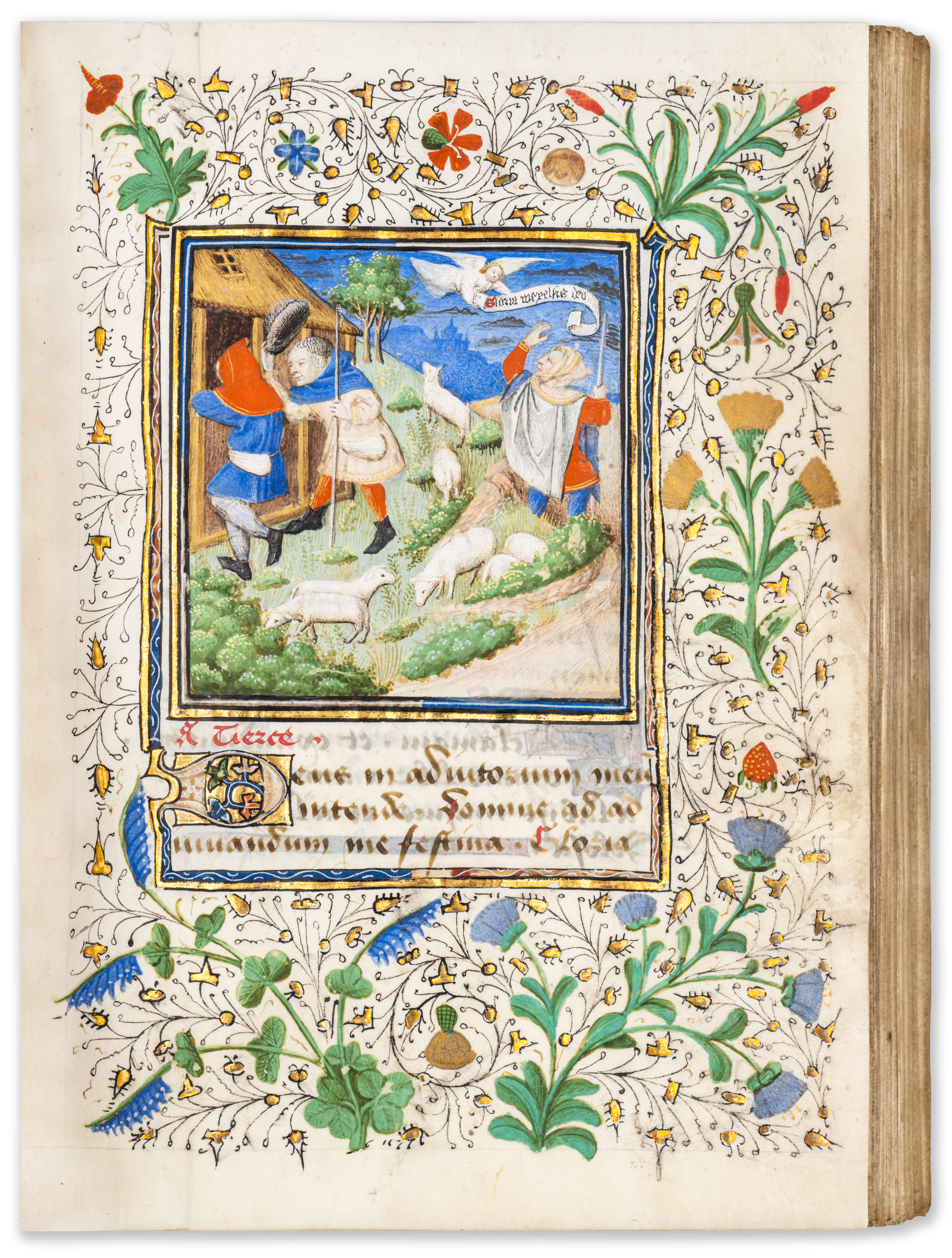
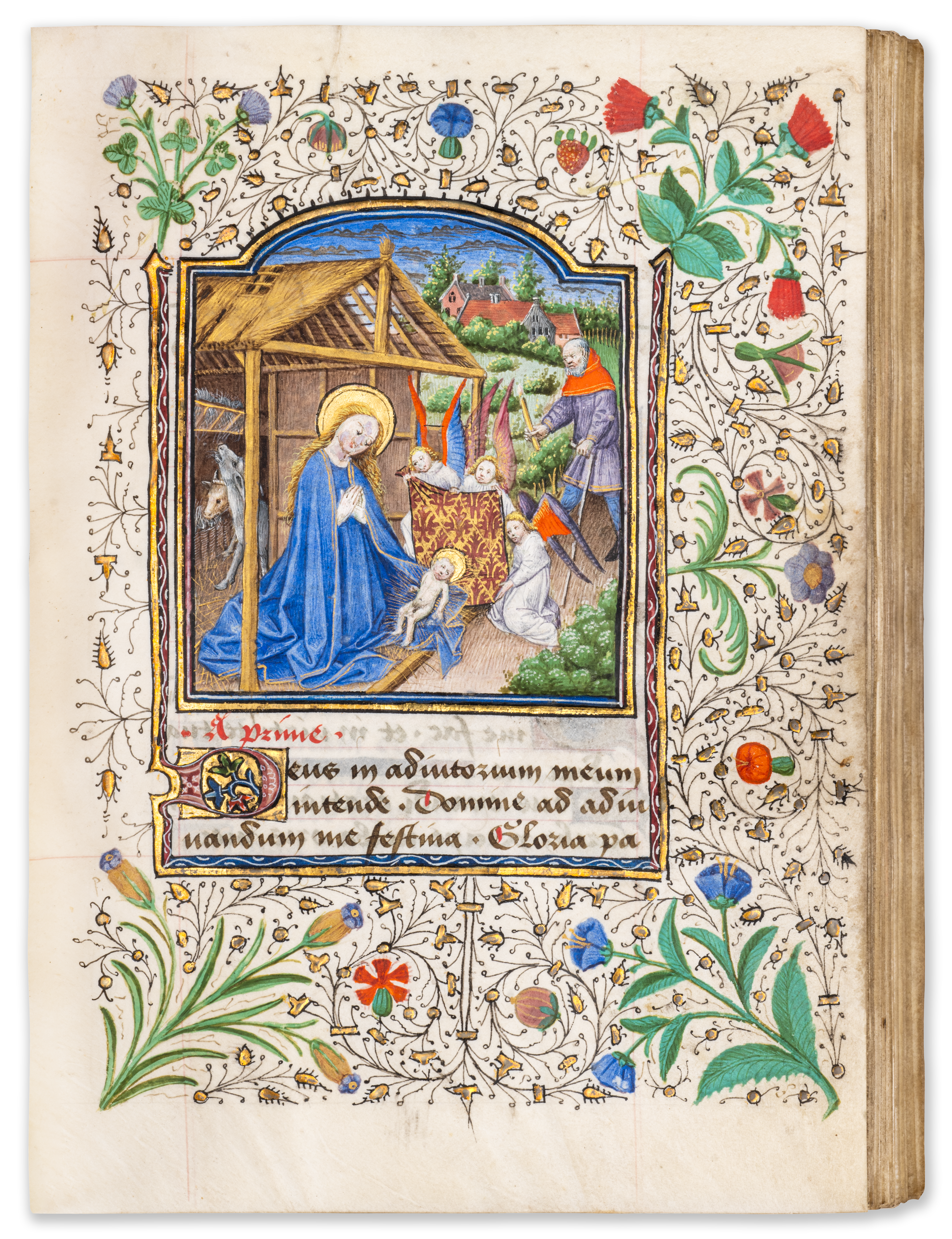
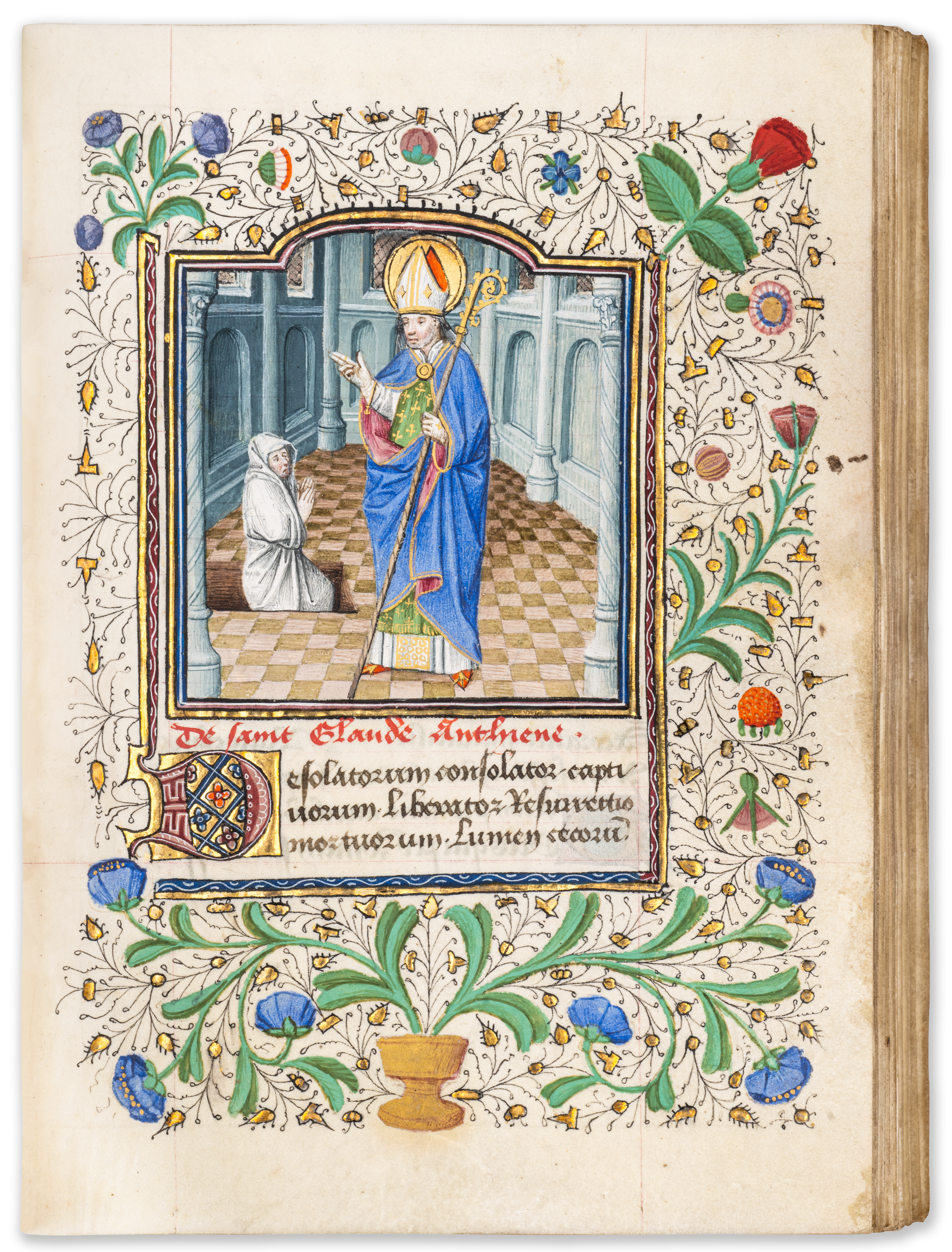
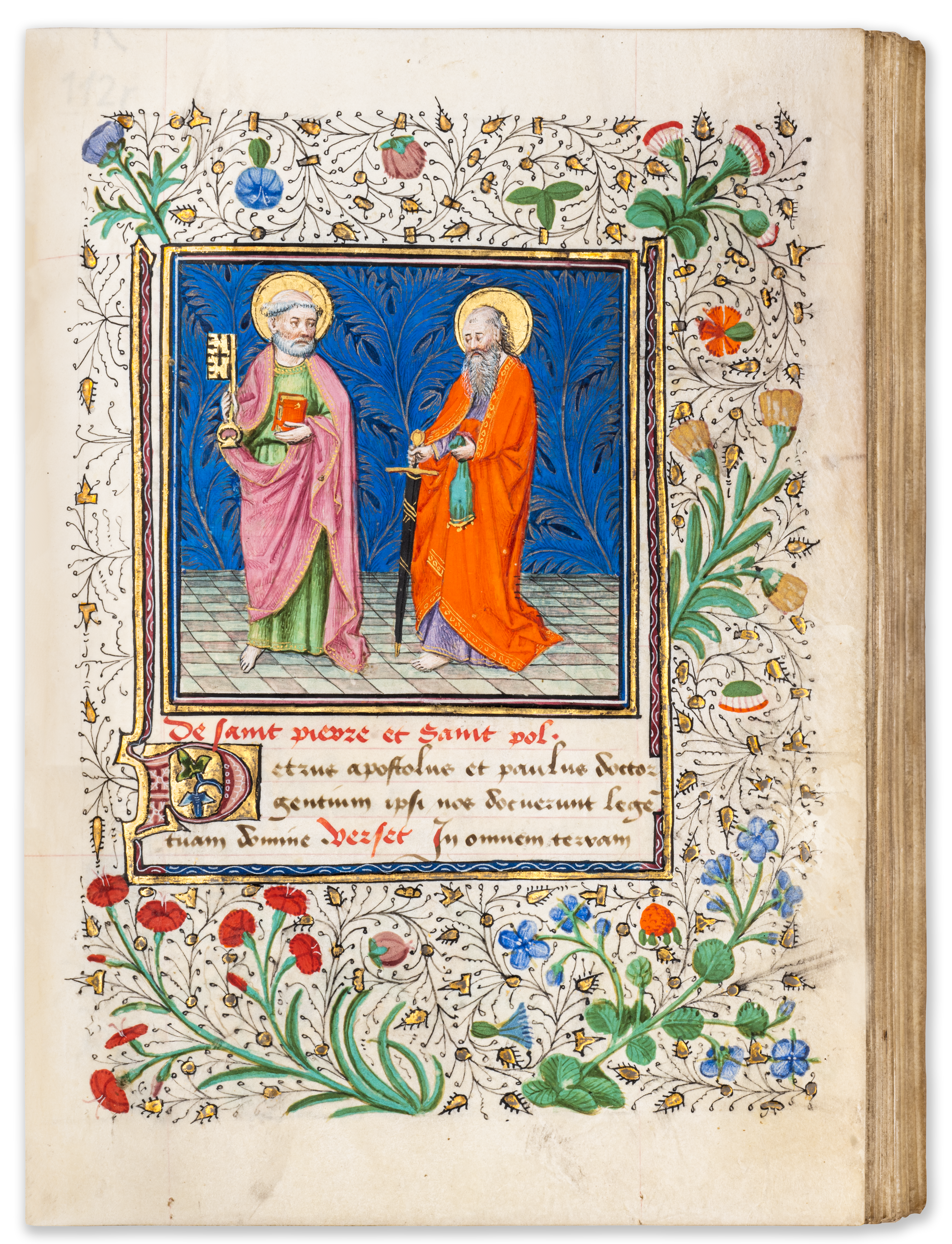
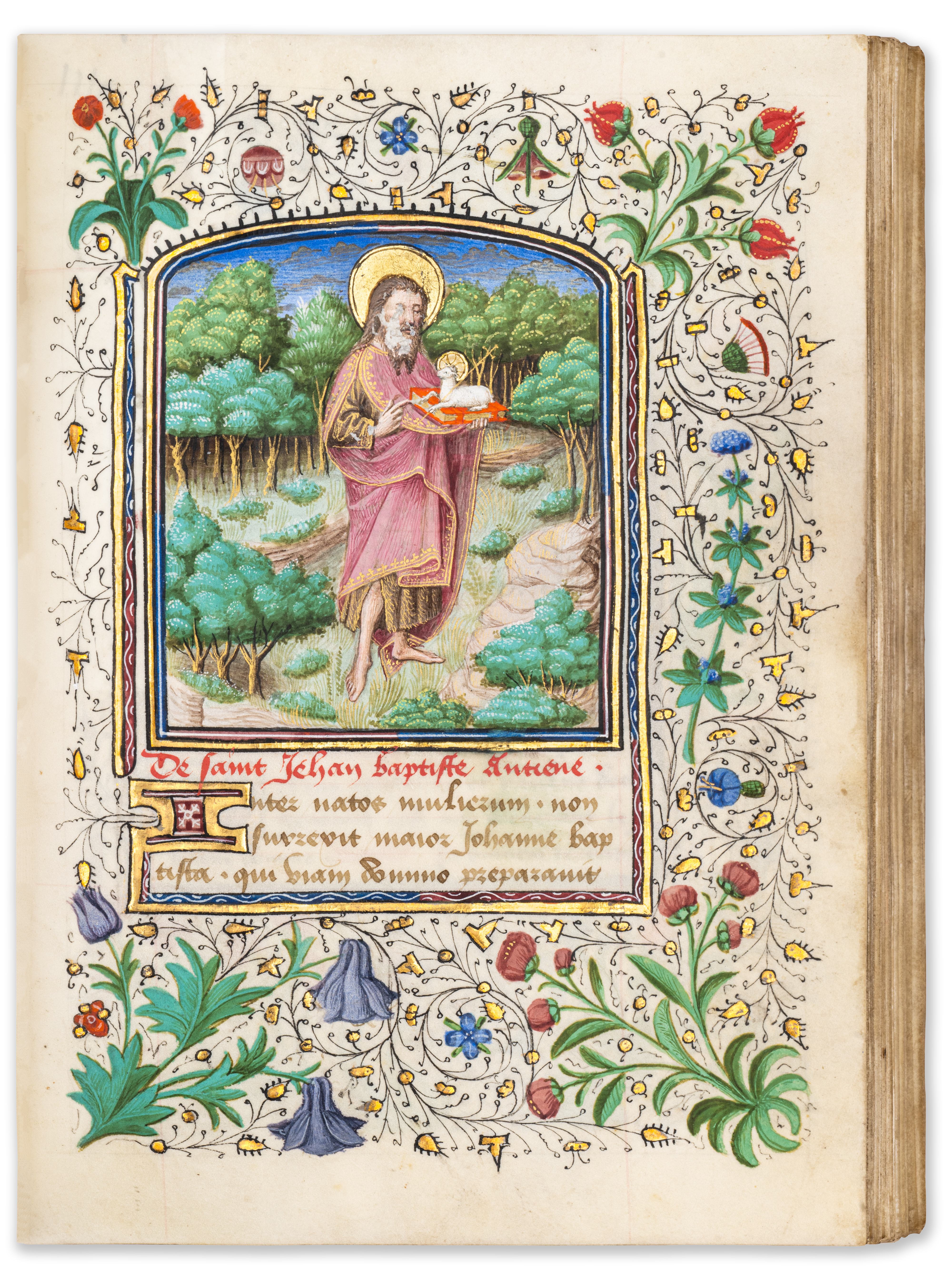
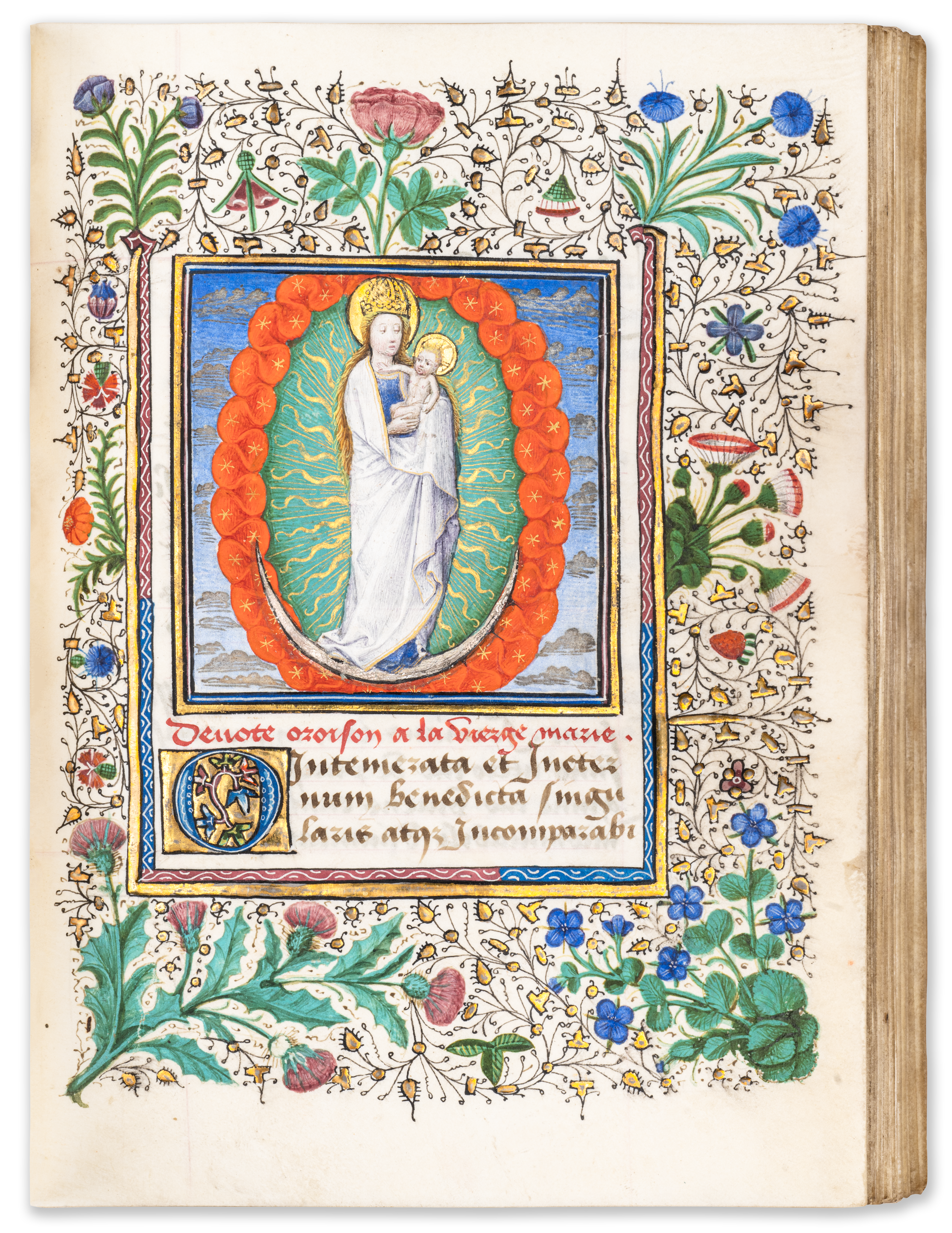
One of the most striking features of our manuscript is the richness of its illustrated cycle, which allows us to fully appreciate the defining characteristics of his artistic language. The first thing that stands out is the illuminator’s skill in creating atmospheres, masterfully rendering light through delicate gradations of blue, giving the skies and scenes a real luminosity. His attention to detail is also noteworthy; the architectural spaces are quite naturalistic in terms of perspective, grounding the scenes in a believable environment. The skies are always adorned with charming silver clouds, adding a touch of elegance to the compositions. The figures painted by the Mansel Master have short proportions and relatively large, rounded heads, lending them a kindly and soothing appearance. While expressiveness or drama does not seem to be his primary concern, he shows an exceptional attention to drapery, with stunningly beautiful garments, always constructed with deep, angular folds. This combination of soft, gentle figures within richly textured settings highlights his distinctive approach, creating a visual harmony that feels both intimate and refined.