

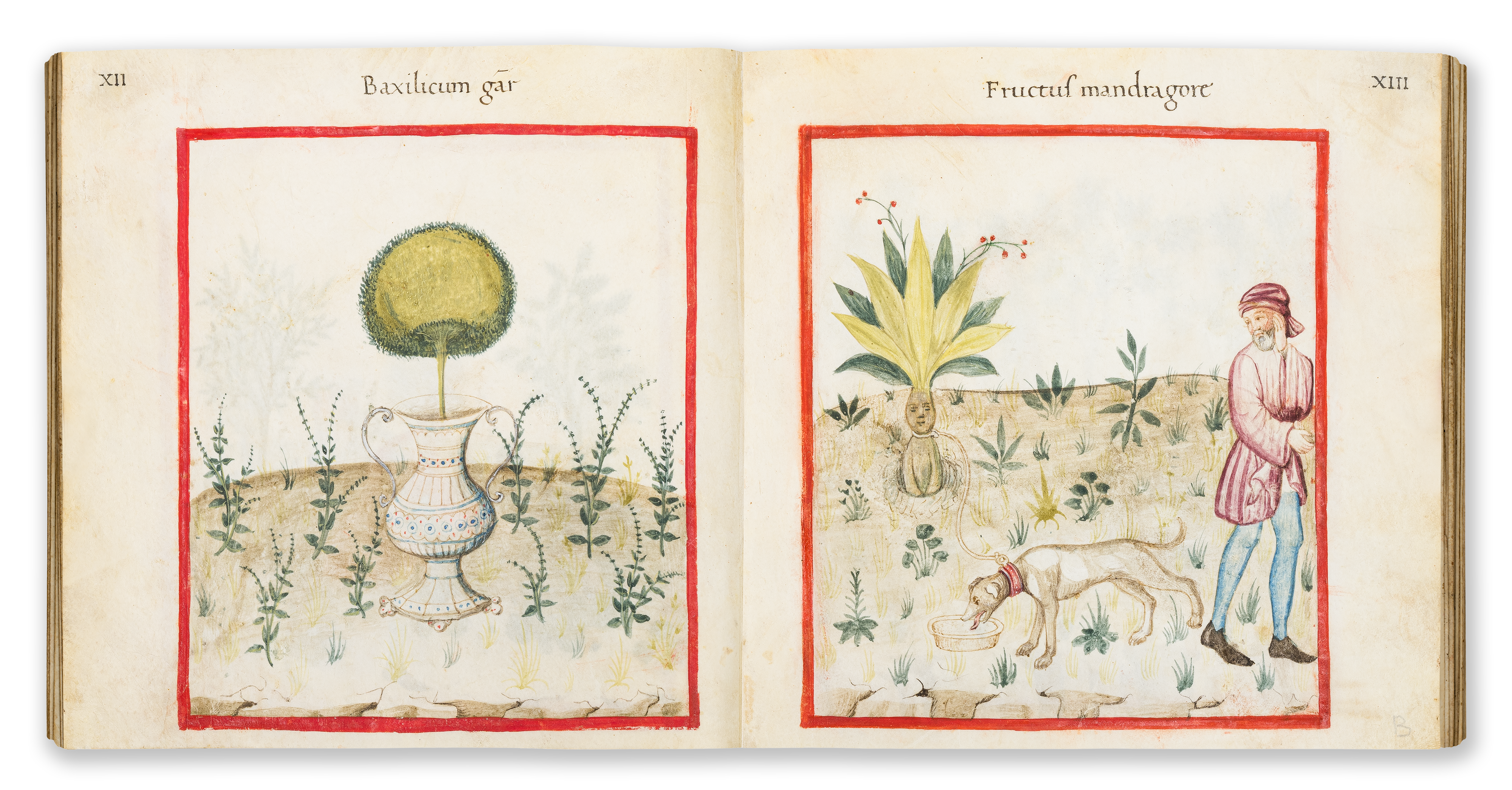
The Liechtenstein Tacuinum Sanitatis
Manuscript in Latin on vellum
Italy, Padua, c. 1450
160 x 170 mm
This work has been sold.
68 (of 121) leaves. 130 full page miniatures. Expertly rebound and inserted into its 19th century binding, by Jean-Philippe Belz-Niedrée (1831-1917).
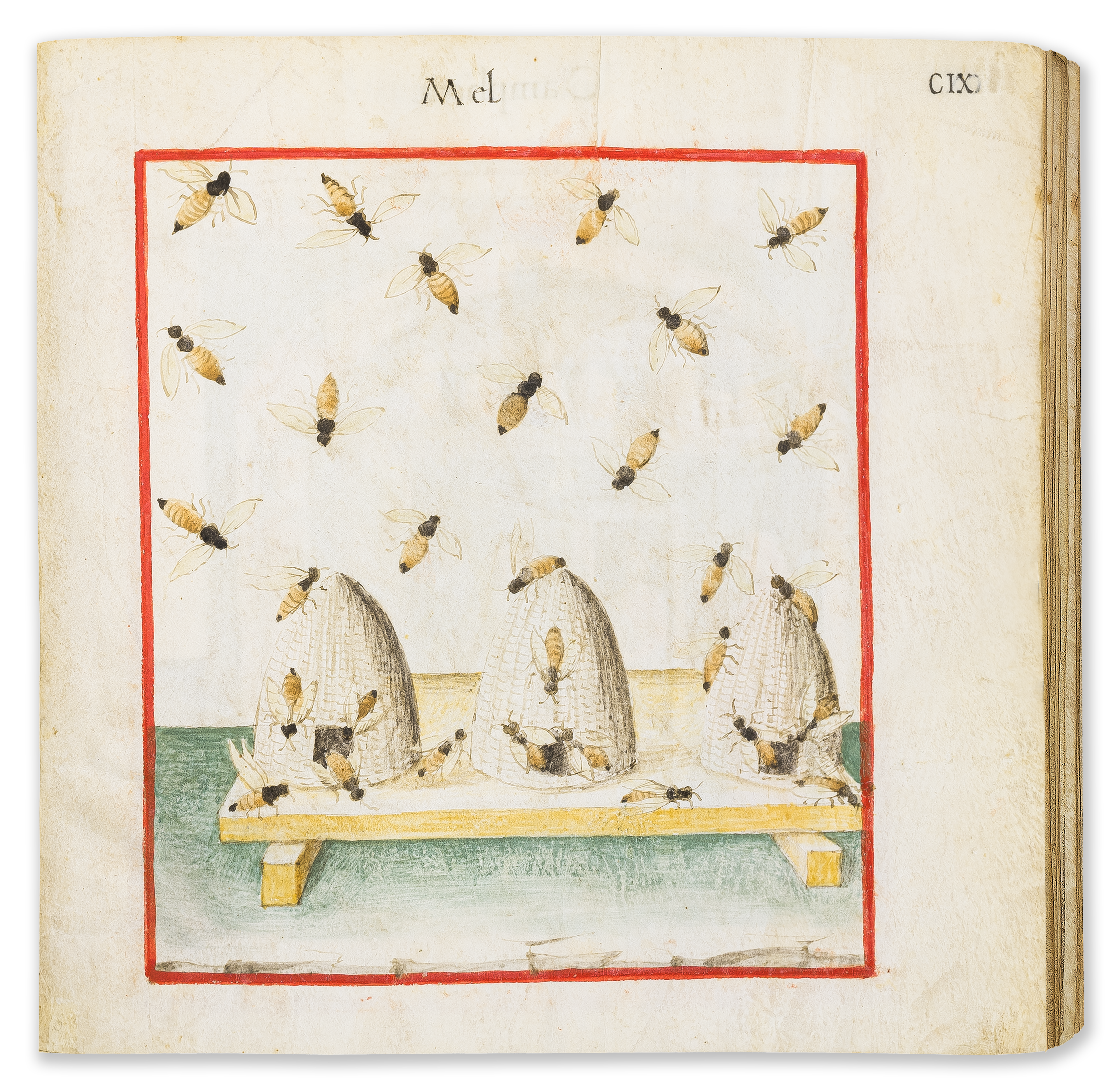
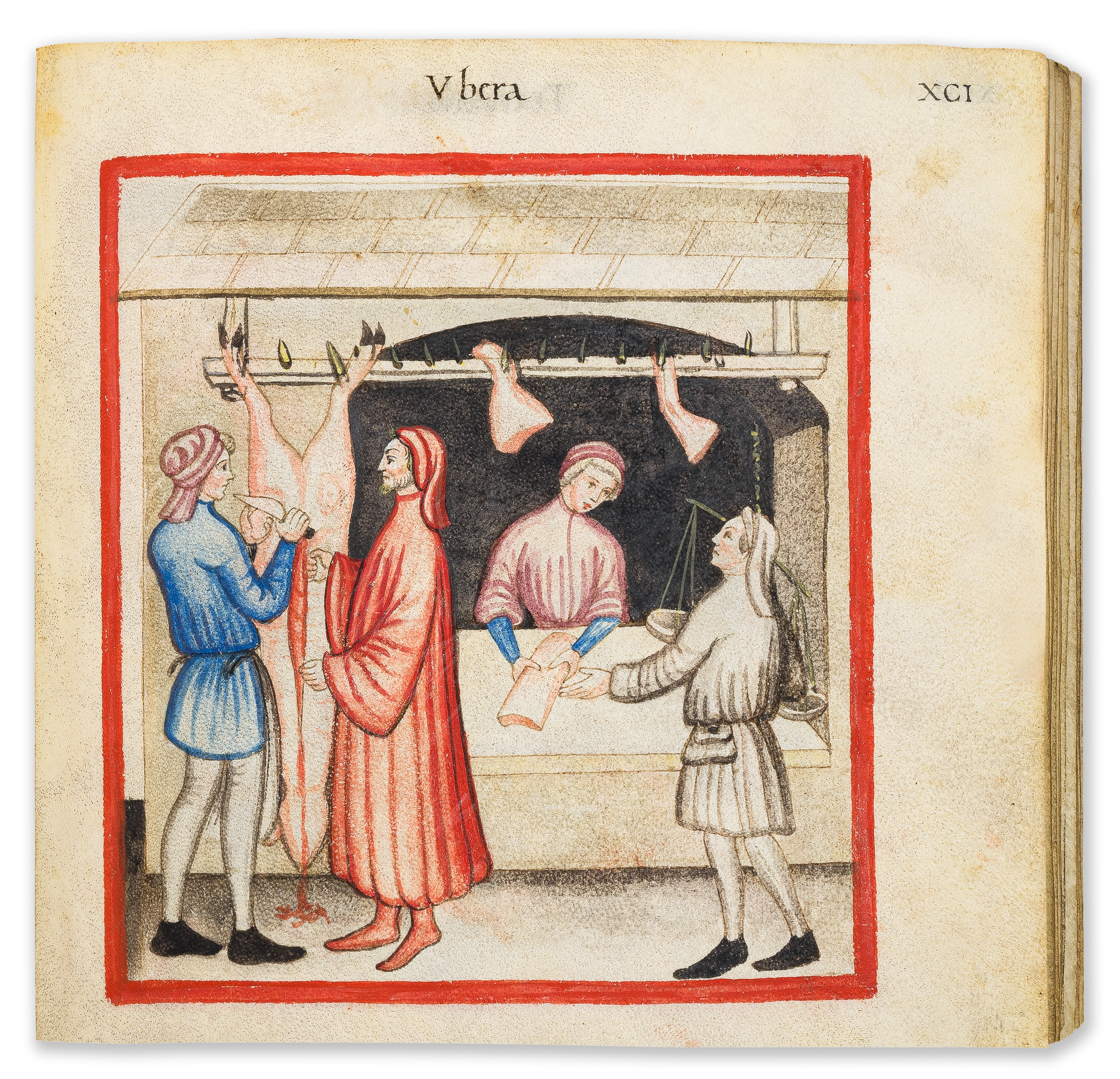
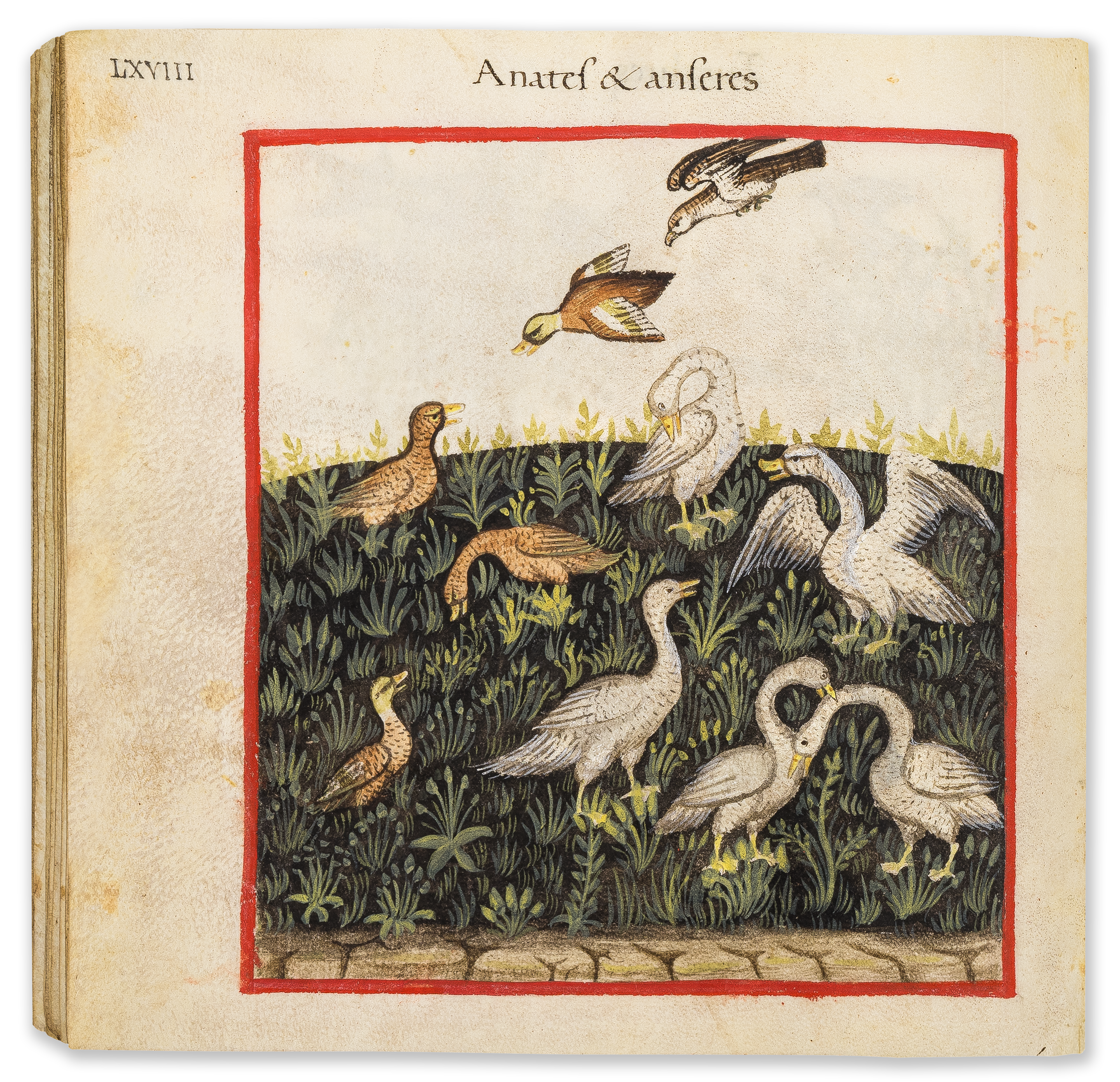
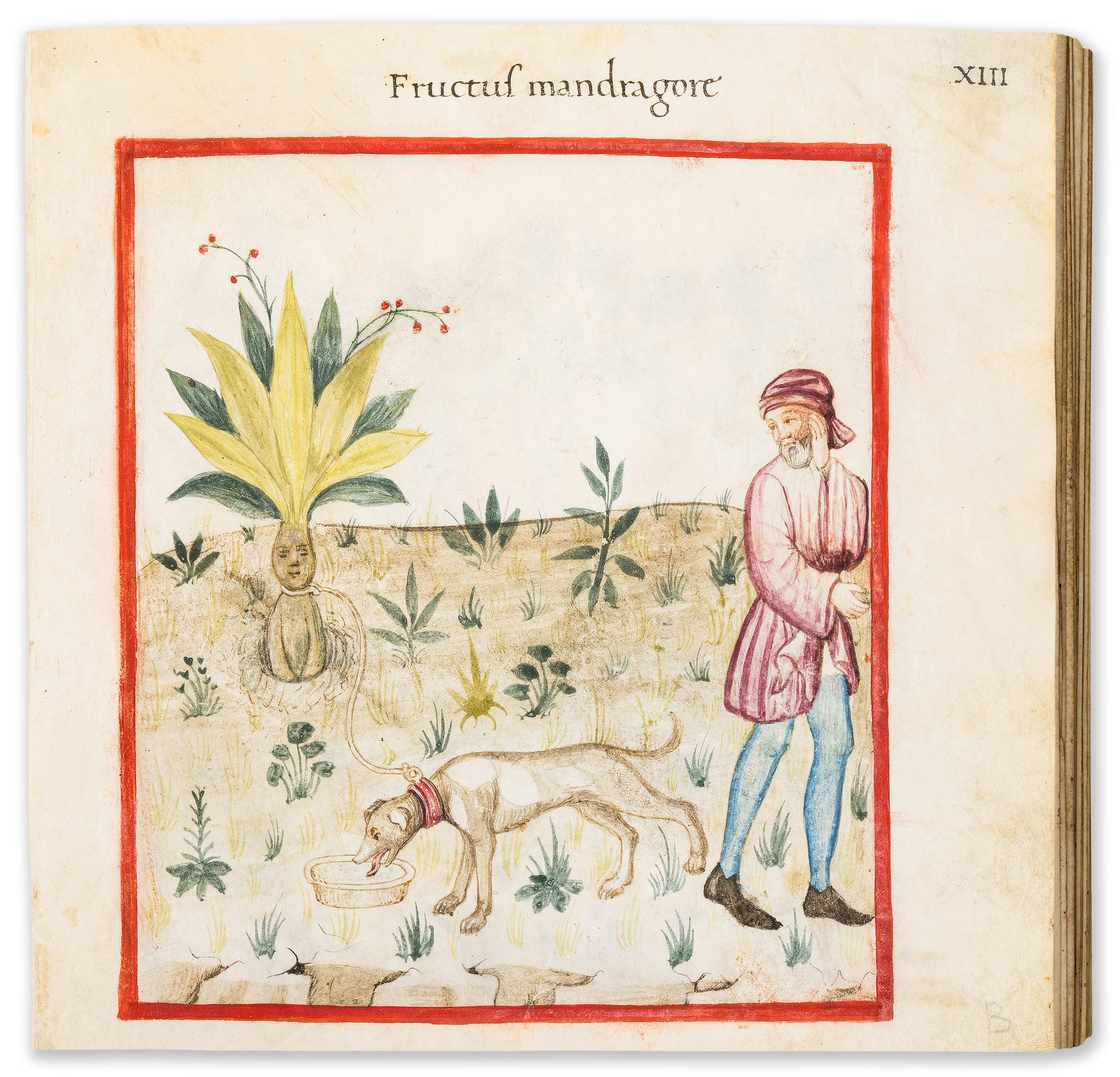
Depictions of men and women belonging to different social classes eating, preparing, and selling food, visiting shops, harvesting and mowing, conversing around a fire, drinking different types of wine (and sometimes too much of it), having sex, and playing musical instruments are interspersed with identifiable plants in verdant and craggy landscapes, metaphorical depictions of the seasons, beloved and spoiled pets, as well as animals led to slaughter.
This extraordinary secular picture book is a highly unusual witness to everyday life in 15th century Padua. Originally a medical handbook, or a guide to healthy living, the miniatures are now presented without the accompanying text as the pages were trimmed in the 19th century. The work of an important scribe working almost exclusively for high status patrons and four accomplished artists, this book is as beautiful as it is fascinating.
This manuscript is a unique mirror to life in 15th century Italy. A man camouflaged in twigs and branches catches turtledoves in a forest clearing (f. 34r). In one kitchen two women make spaghetti (f. 13v), in another kitchen, a cook has prepared gelatine that a servant is getting ready to bring to the table (f. 42r). In one merchant’s shop a customer is sampling a dried fig (f. 26v) and in another a child is distracted and has wandered off from his mother (f. 31v).
This manuscript gives us unparalleled access to the summer rooms of the wealthy (f.57r), the kitchens and gardens where their servants work (f. 46v), the fields where peasants toil and harvest (f.14r), as well as the kitchens of the middling orders where a woman prepares her chickpea stock (f. 17v). Alongside metaphorical depictions of the seasons (ff. 24r-25v), the cardinal winds (ff. 27r-28v), human emotions like anger (f.58v), and virtues such as modesty (f. 58r), this book provides depictions of human experiences that are rarely seen in medieval art: the troubles with insomnia (f. 62r), the benefits of sleep (f. 60v), the pleasures of music (ff. 62v, 63r) and the necessity of sex (f. 61v).
Secular manuscripts of this date with depictions of everyday life depicting men, women, and children of all different social strata, pets and animals breed for food, domestic scenes and public spheres, are exceedingly rare. This manuscript belongs to a small group of books using the text of the Tacuinum sanitatis as an excuse to depict scenes from everyday life.10 All books in this group were richly illuminated and produced for courtly patrons in Northern Italy. The present manuscript, with over 200 miniatures when it was first created, was the most elaborate book in this group.