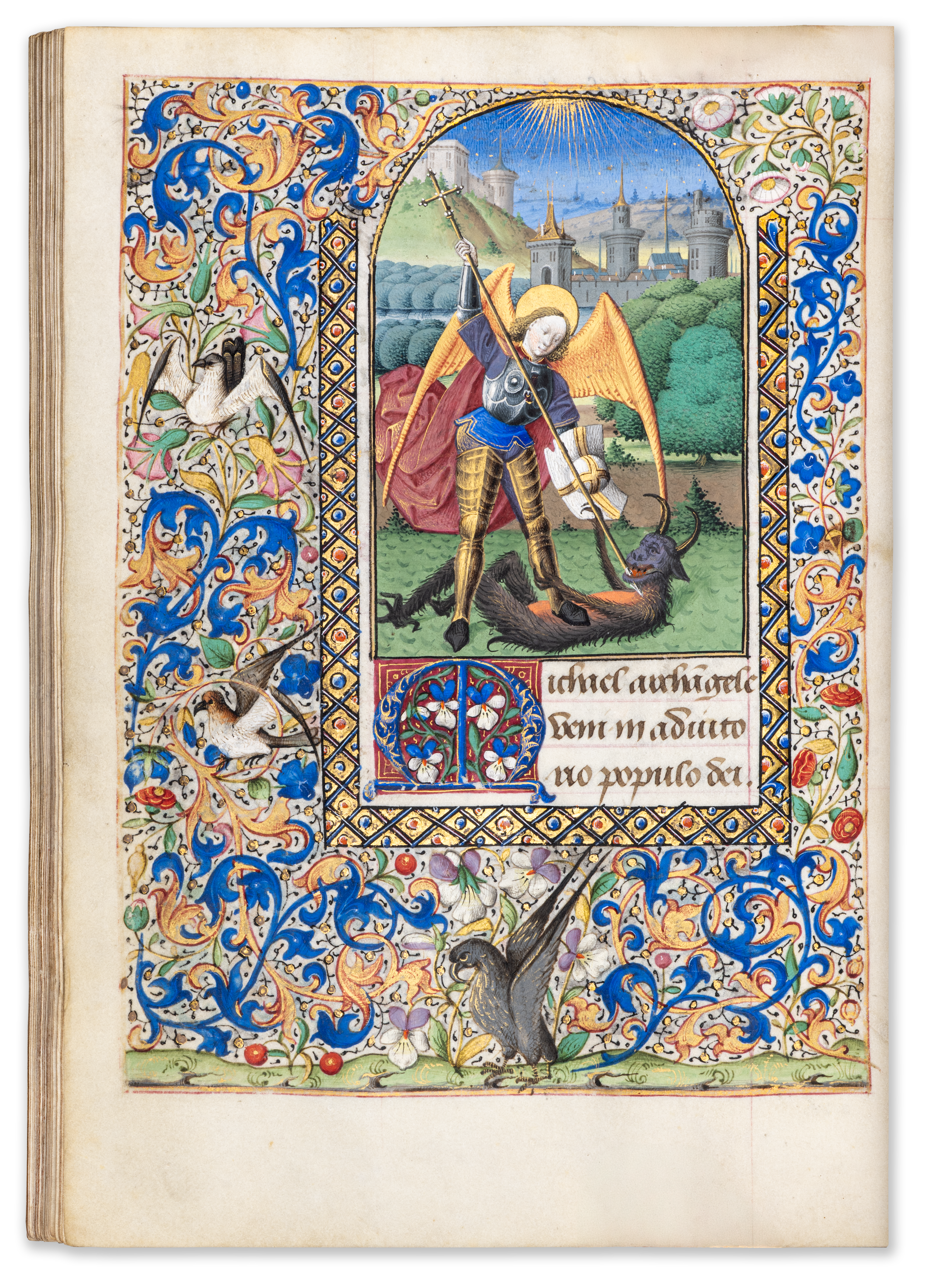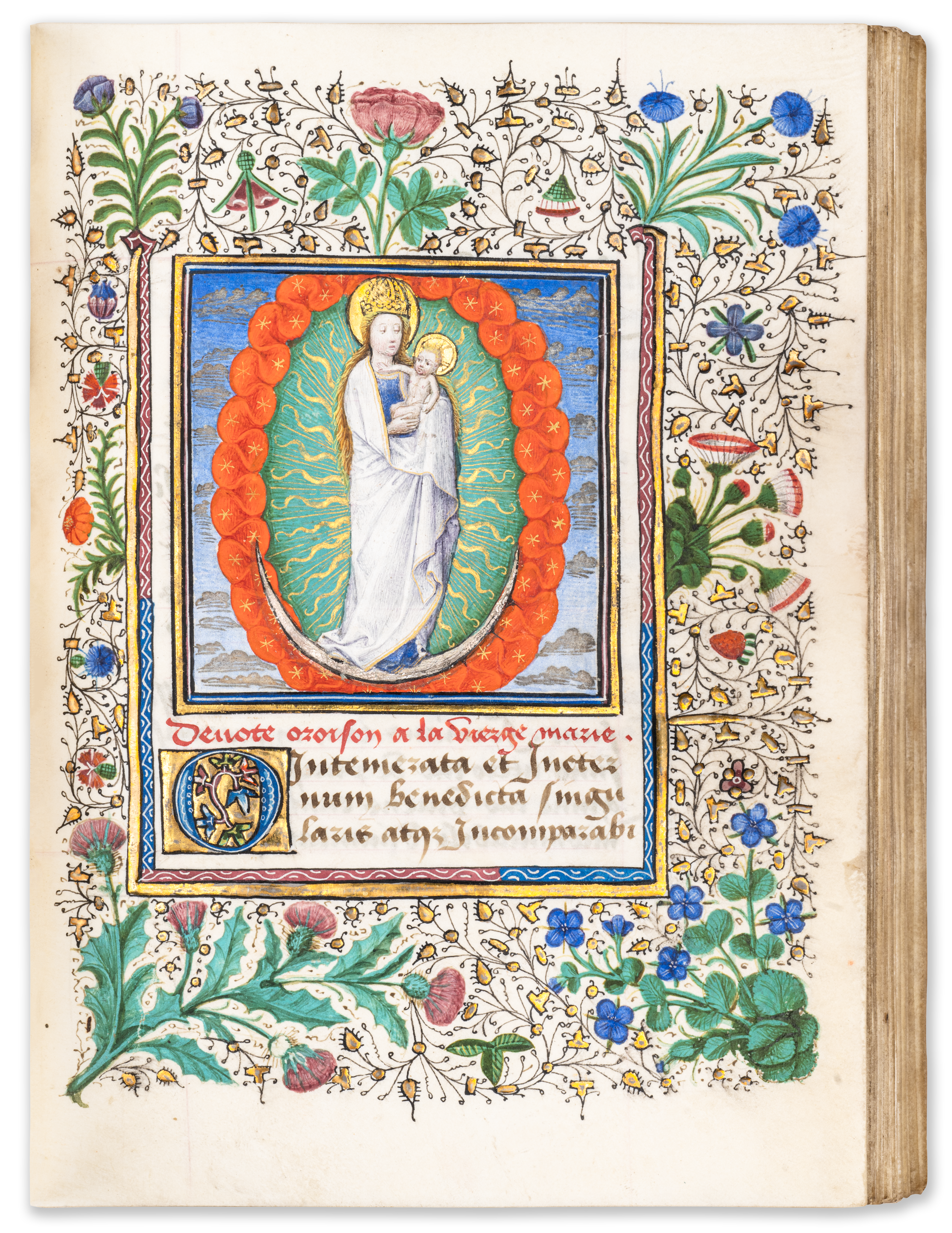


Quality Matters: Two exceptional books of Hours from the 15th century
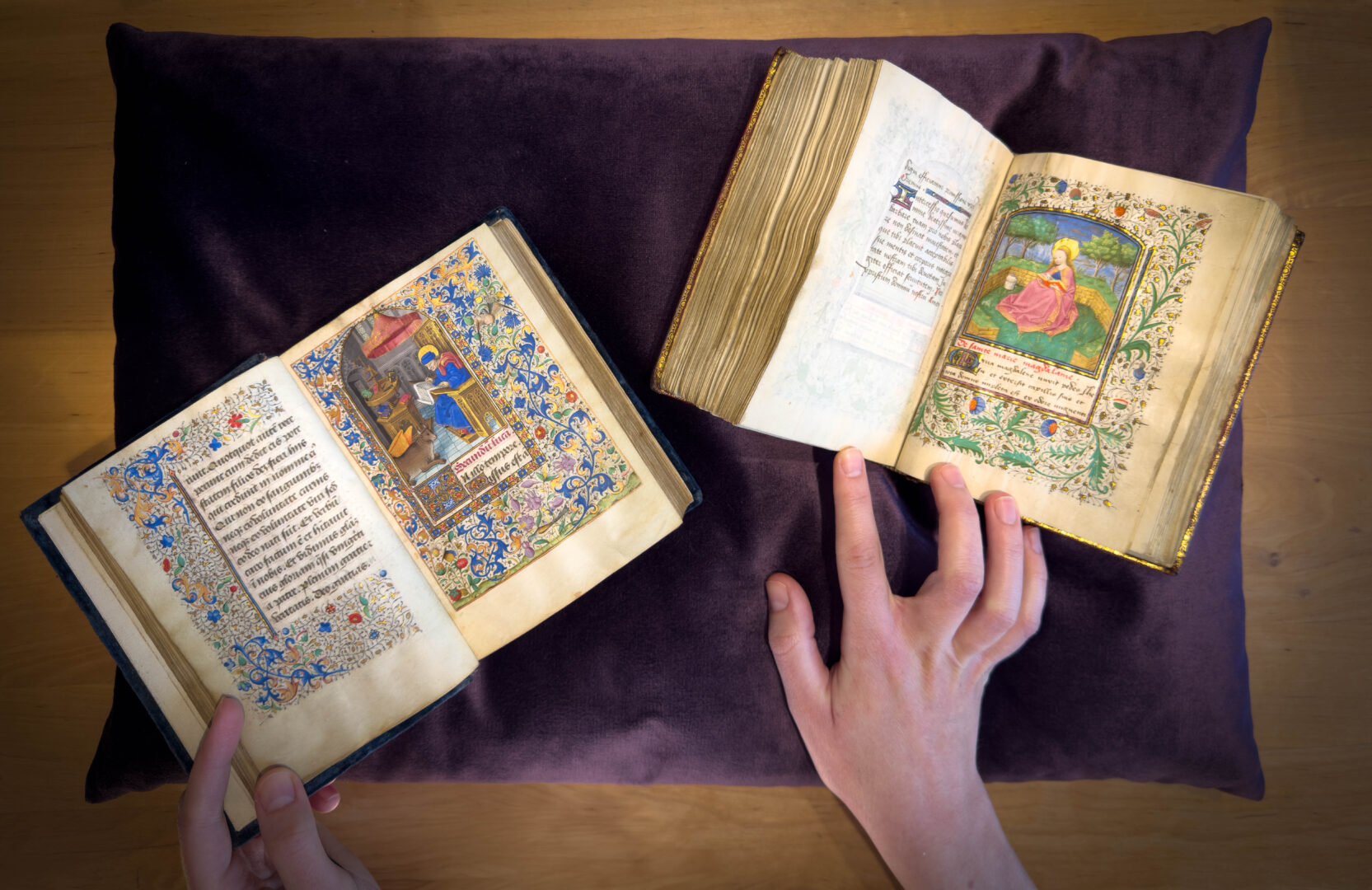
Why do certain medieval manuscripts command our attention instantly, even centuries after their creation? Beyond fascination for the precious character of the object, there is something more elusive at work: quality.
We are not talking about an abstract ideal, but about a combination of mastery and artistic intelligence that reveals itself to the eye. This notion of quality lies at the heart of manuscript painting — and it is beautifully illustrated by two exceptional Books of Hours produced in France in the mid-fifteenth century. Illuminated respectively in two different contexts and styles by the Master of Mansel and the Master of Jean Rolin, these two manuscripts embody a shared standard of excellence.
In the fifteenth century, Books of Hours were intimate objects, designed for repeated personal use, structured around the canonical hours of the day. It was meant to guide prayer, contemplation, and reflection, while also serving as a deeply personal object shaped by the taste and aspirations of its owner. On top of the precious materials and technical virtuosity, these manuscripts also offer a perfect balance between image and text, colour and line, narrative clarity and visual pleasure. The two manuscripts discussed here exemplify this ambition in different yet equally compelling ways.
The Dartmouth Hours, produced in northern France around 1440–1450, is one of the very few surviving works attributed to the Master of Mansel. This rarity alone would make it significant, but its true importance lies in the remarkable consistency and delicacy of its paintings (fig. 1).
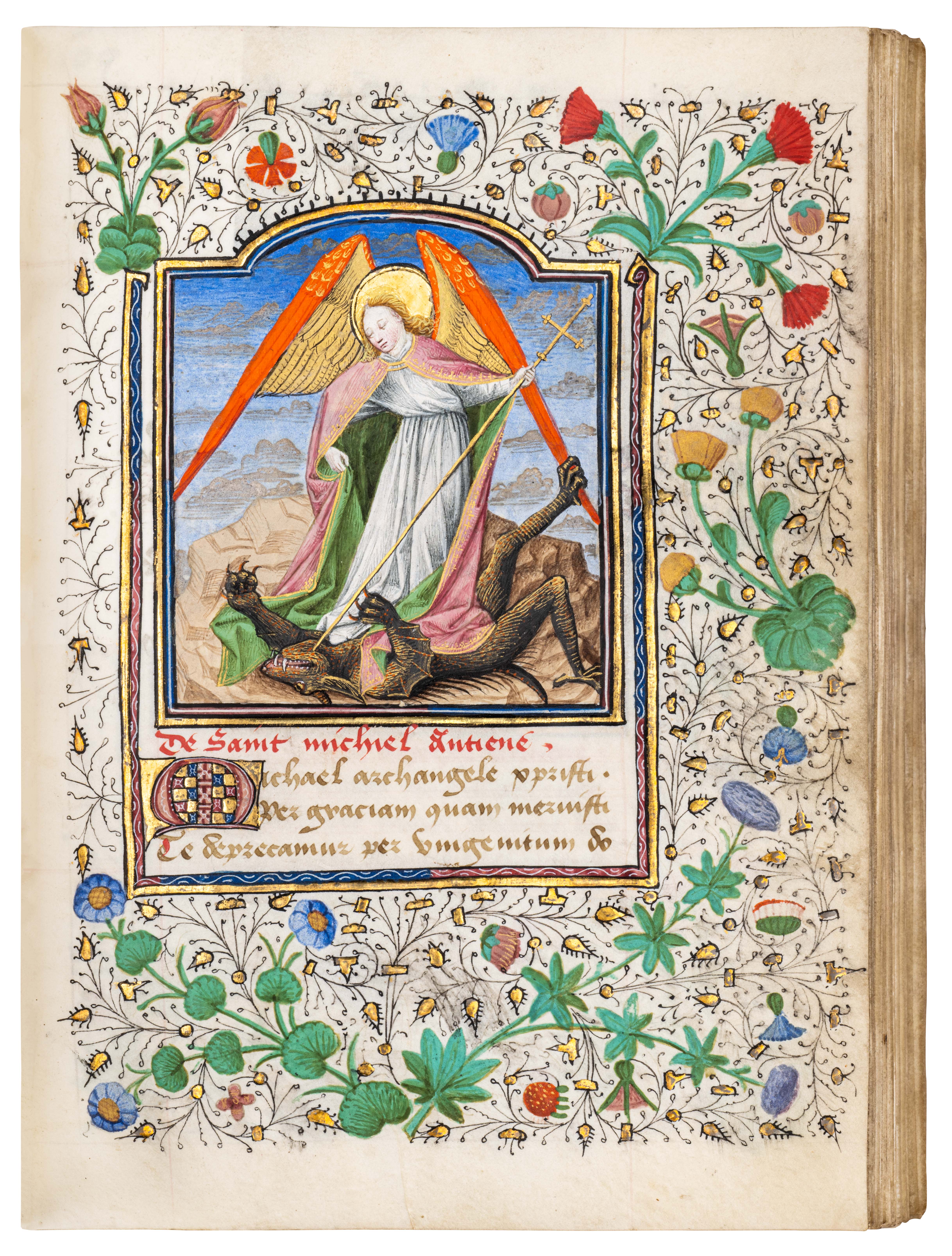
Fig. 1 Saint Michael, detail from: The Dartmouth Hours. Manuscript in Latin and French on vellum, illuminated by the Mansel Master. France, Amiens?, c. 1440-1450, fol. 108r.
He is first and foremost a painter of atmosphere. His miniatures are bathed in subtle light, achieved through delicate modulations of blue that give depth and luminosity to skies, enhanced by subtle clouds, and interiors alike. In the scenes, landscapes are equally carefully constructed, grounding the scenes in believable environments by depicting only what is essential, without overwhelming the image with detail.
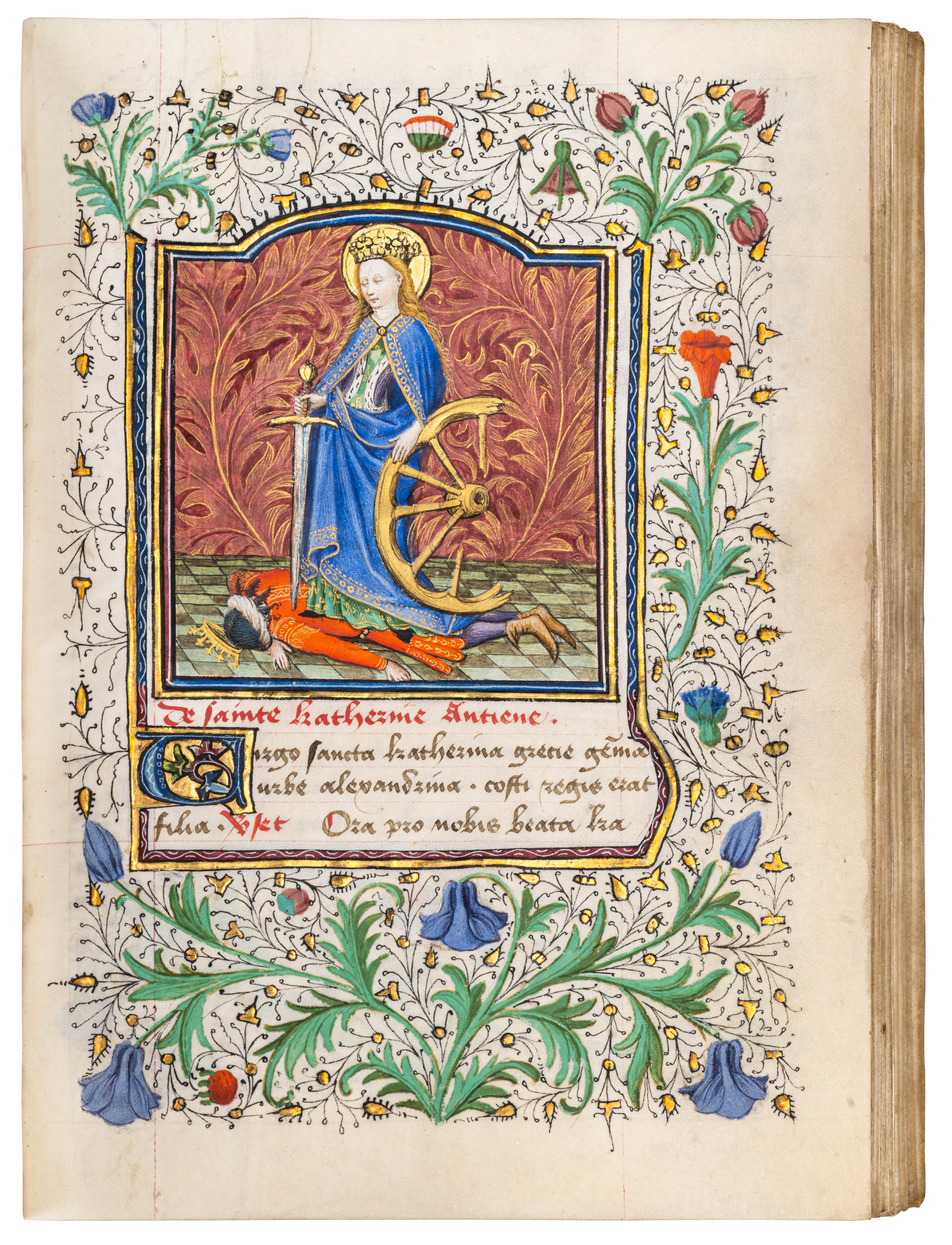
Fig. 2 Saint Catherine, detail from: The Dartmouth Hours. Manuscript in Latin and French on vellum, illuminated by the Mansel Master. France, Amiens?, c. 1440-1450, fol. 119r.
As one can observe in the depiction of Saint Catherine, his figures are instantly recognisable (fig. 2). They are short in proportion, with rounded heads and gentle expressions. They do not seek drama or emotional excess. Instead, they convey calm, intimacy and devotional focus. Draperies are a particular strength — deeply folded, angular, and richly coloured, lending a quiet monumentality to even the smallest scenes. Aesthetic unity and harmony are also achieved by the borders, delicately ornated by the painter with naturalistic flowers rendered in cool yet saturated tones. This mastery can also be found in the prestigious book La Fleur des Histoires by Jean Mansel offered to Philippe the Good (Fig. 3), which gave the painter his convention name.
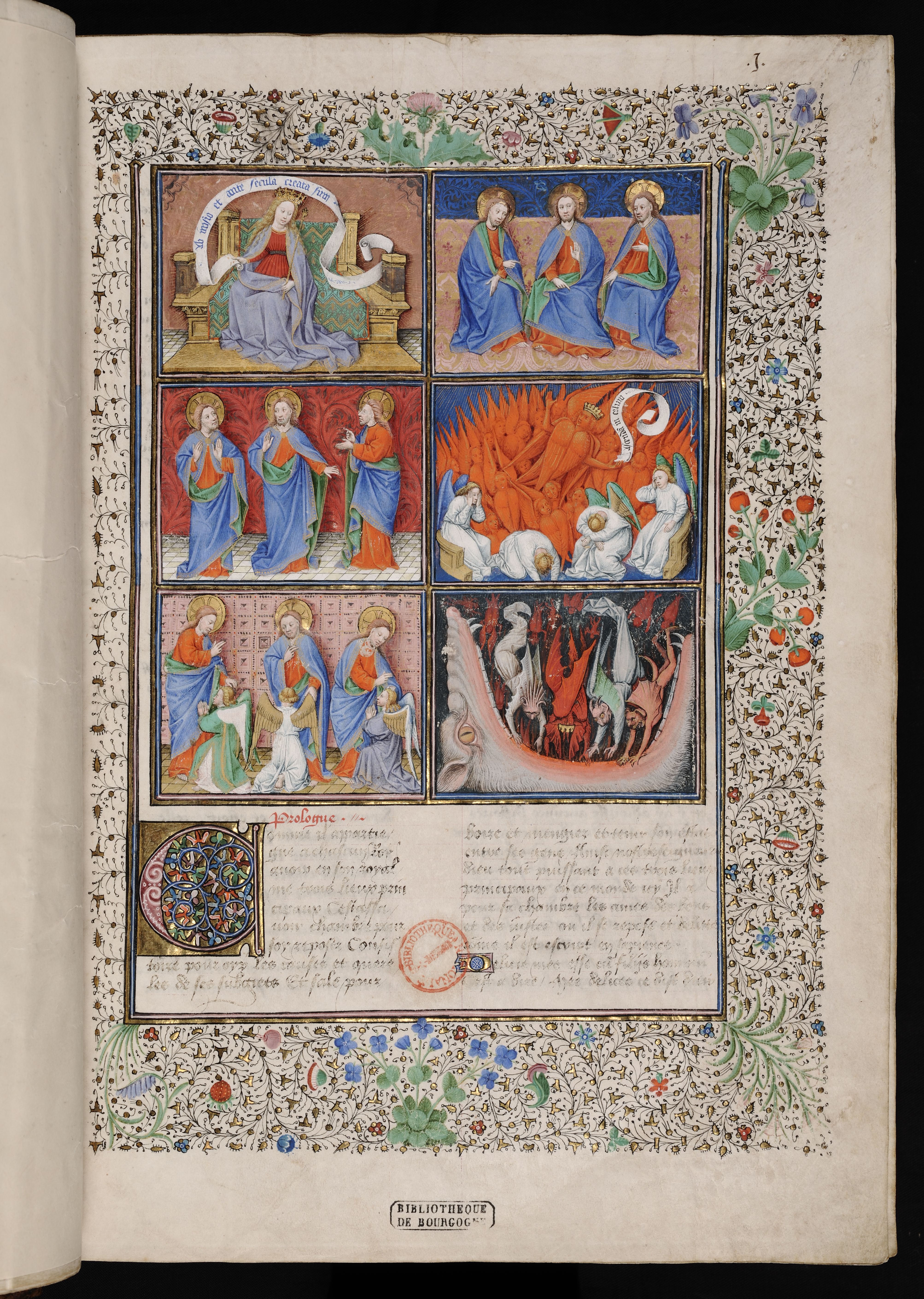
Fig. 3 La Fleur des histoires. Manuscript in Latin and French on vellum, illuminated by the Mansel Master. Flanders, c. 1450-1460, Brussels, Bibliothèque royale, ms. 9231-9232; fol. 9r. © Courtesy of The Royal Library of Belgium (KBR).
Not only is the quality of the paintings striking in the Darmouth Hours, but the refinement of the scribal hand is immediately apparent. Described as “very small and very French,” this hand has been identified in five manuscripts [1].
Isidore de Ny wrote these works for members of the ducal court, probably in Flanders and northern France.
If the Dartmouth Hours speak of refinement, the Book of Hours for the use of Paris illuminated by the Master of Jean Rolin speaks of confidence and invention (fig. 4). Created around 1450–1460, this manuscript is a rich example of its type, boasting an abundant cycle of large miniatures.
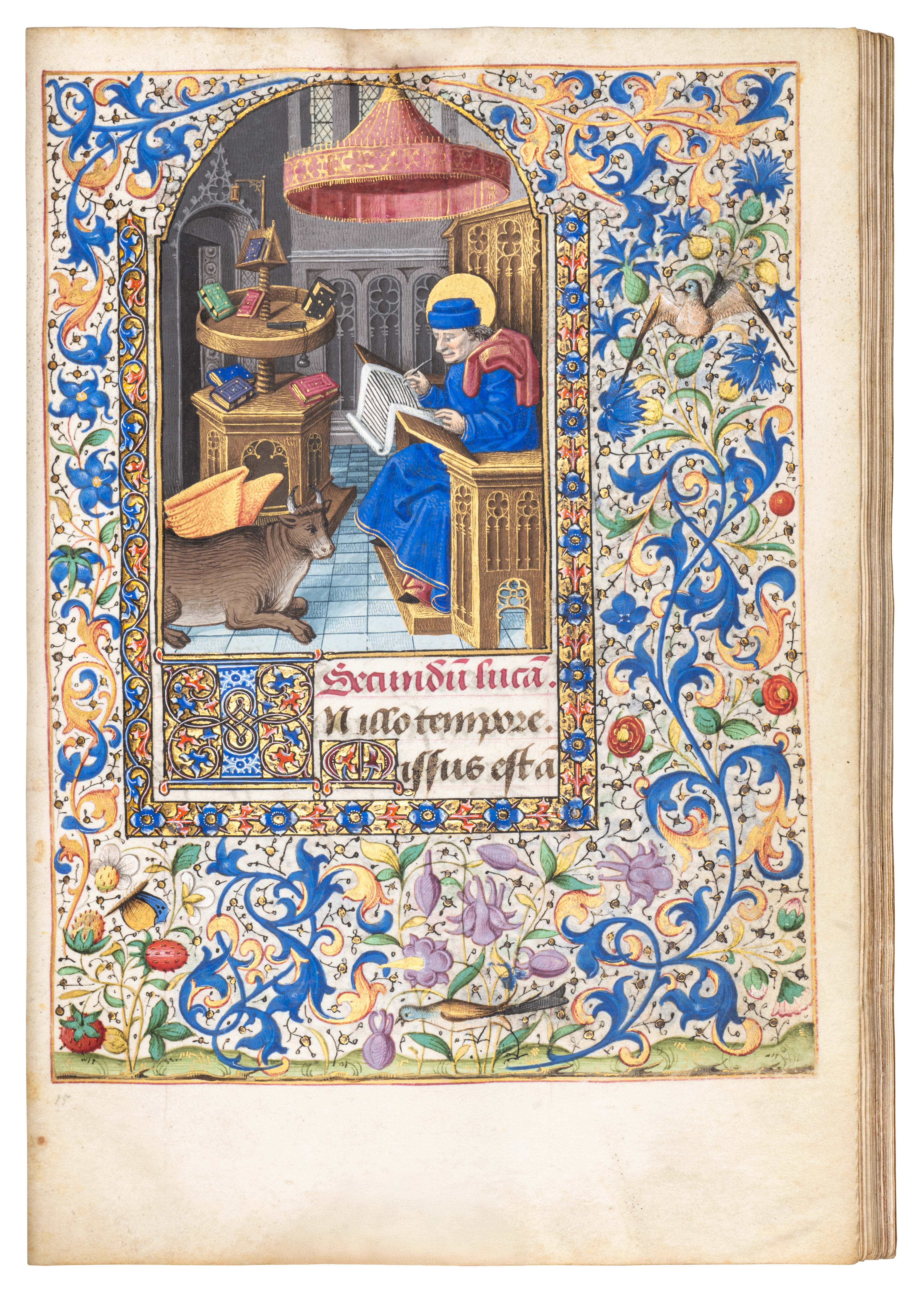
Fig. 4 Saint Luke, detail from : Book of Hours for the use of Paris. Manuscript in French on vellum, illuminated by the Master of Jean Rolin. France, Paris, c. 1450-1460, fol. 15r.
The Master of Jean Rolin was one of the most innovative illuminators active in Paris in the mid-fifteenth century. His figures are agile and animated, his compositions spacious and carefully staged. He delights in interiors as one can observe in the representation of Saint Luke. The domestic setting offers a glimpse into contemporary material culture.
Colour plays a central role in his visual impact (fig. 5). His palette is filled with blues, red, purple and gold, with subtle tonal modelling and a selective use of gold hatching to heighten depth and texture. Faces are recognisable: they are delicately drawn, soft and round and appear alert and alive. The hair repeatedly sits high on the forehead and is delicately brushed.
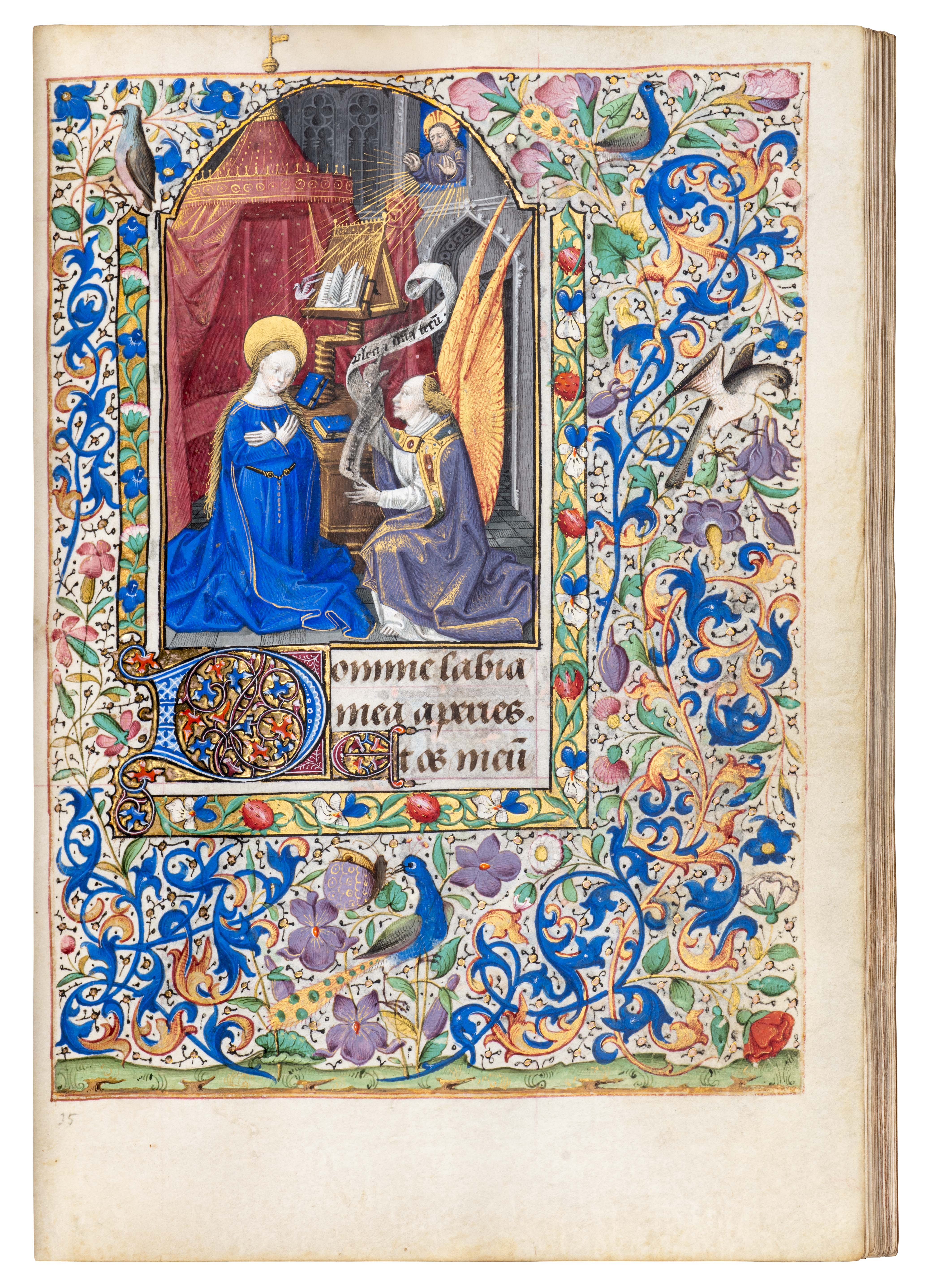
Fig. 5 Annunciation, detail from : Book of Hours for the use of Paris. Manuscript in French on vellum, illuminated by the Master of Jean Rolin. France, Paris, c. 1450-1460, fol. 35r.
The Master of Jean Rolin is an important painter who stands between two generations of artists in Paris in the mid-fifteenth century. At that time lifelike intensity and animated scenes came to influence painting all the way from the North through a style called ars nova generated by Jan van Eyck and Rober Campin. This innovation can similarly be admired in the works the Master of Jean Rolin made for his main patron, Jean Rolin (fig. 6).
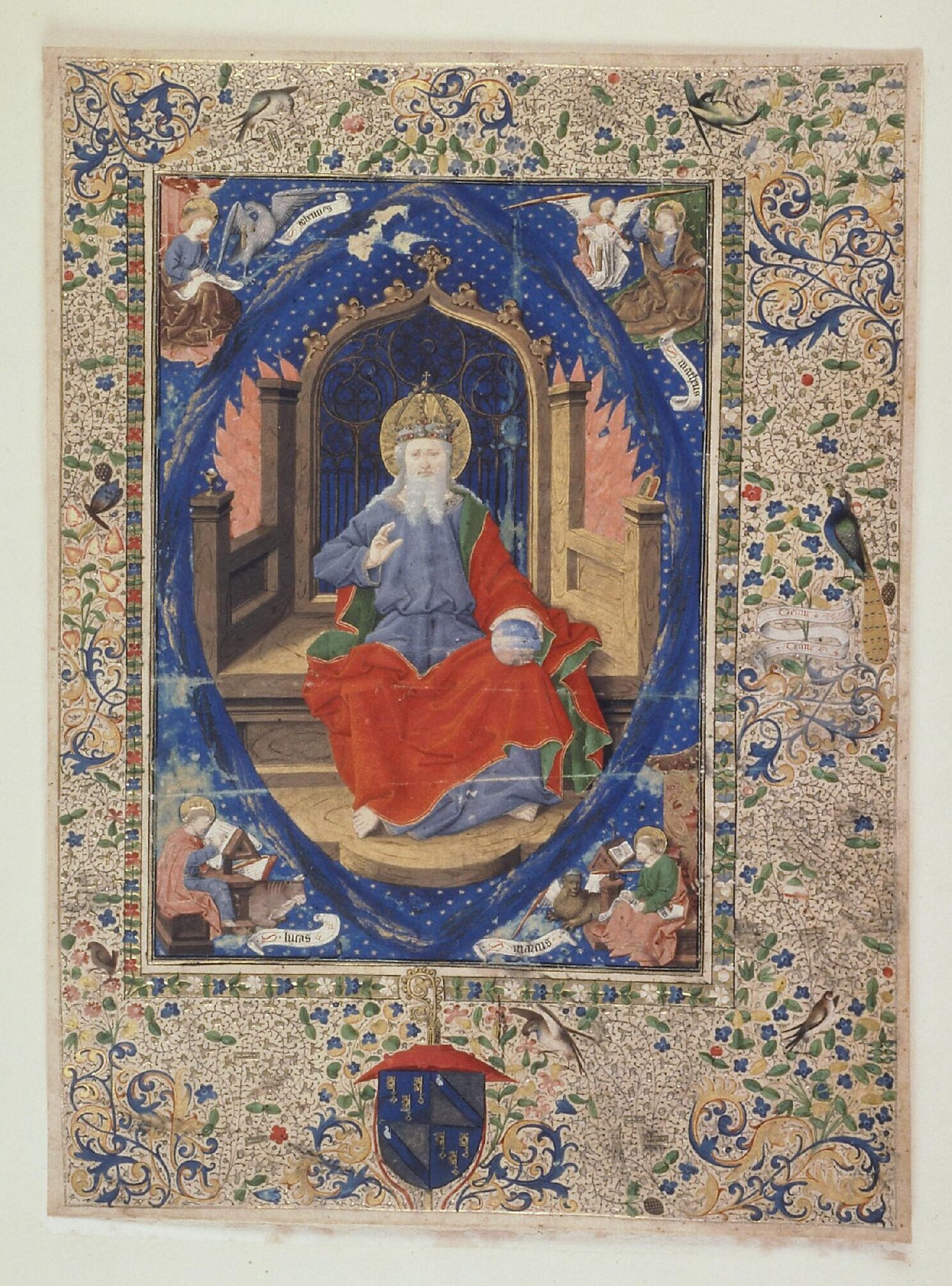
Fig. 6 Majestas Domini, detail from : Book of Hours for the use of Paris. On vellum, illuminated by the Master of Jean Rolin. France, Paris?, c. 1450. Autun, Société éduenne des letter, Album Buillot, n° 1 (Source: Initiale).
Placed side by side, the Darmouth Hours and the Book of Hours for the use of Paris demonstrate that quality does not imply sameness. In each case, the illuminator’s hand is assured. There is no hesitation, no awkward solution. Every miniature feels necessary, considered, and fully resolved. This is the difference between competent production and true excellence. The Master of Mansel favours calm harmony and atmospheric unity; the Master of Jean Rolin privileges narrative energy and visual richness.
Such quality would have been immediately recognisable to fifteenth-century members of the Burgundian and Parisian elites who demanded the very best. It is no coincidence that both masters worked within circles close to the court and to the highest artistic standards of one’s time. For medieval owners, a Book of Hours was a companion for life. Its quality reflected not only devotion, but identity and status.
Today, these manuscripts continue to speak because their quality endures. They reward slow looking. They reveal new details with each encounter. To recognise quality is to learn how to look — and these two Books of Hours offer an exceptional lesson in doing so.
Notes
[1] Avril, François, and Nicole Reynaud, eds. Les manuscrits à peintures en France, 1440-1520. Paris: Flammarion, 1993, p. 74.