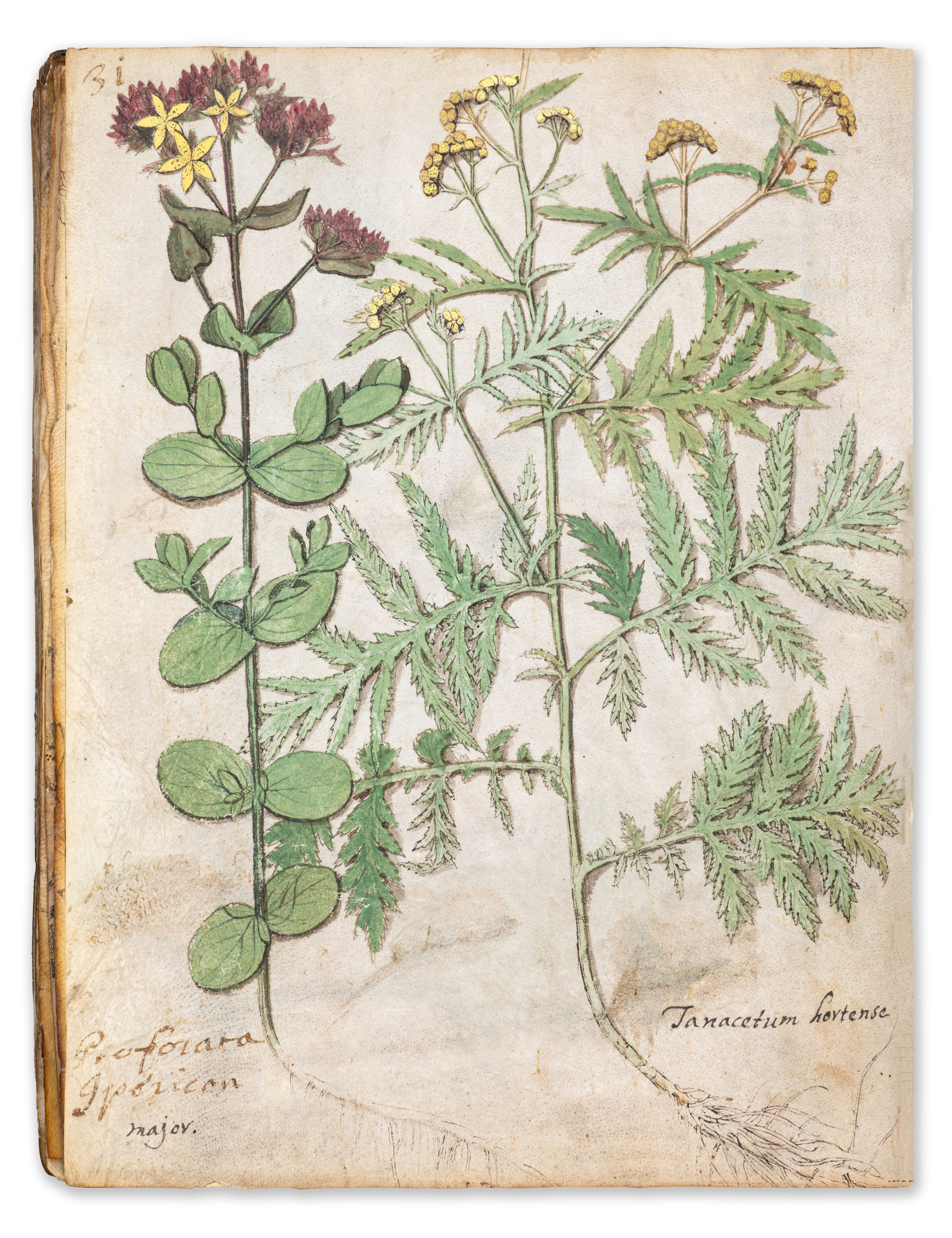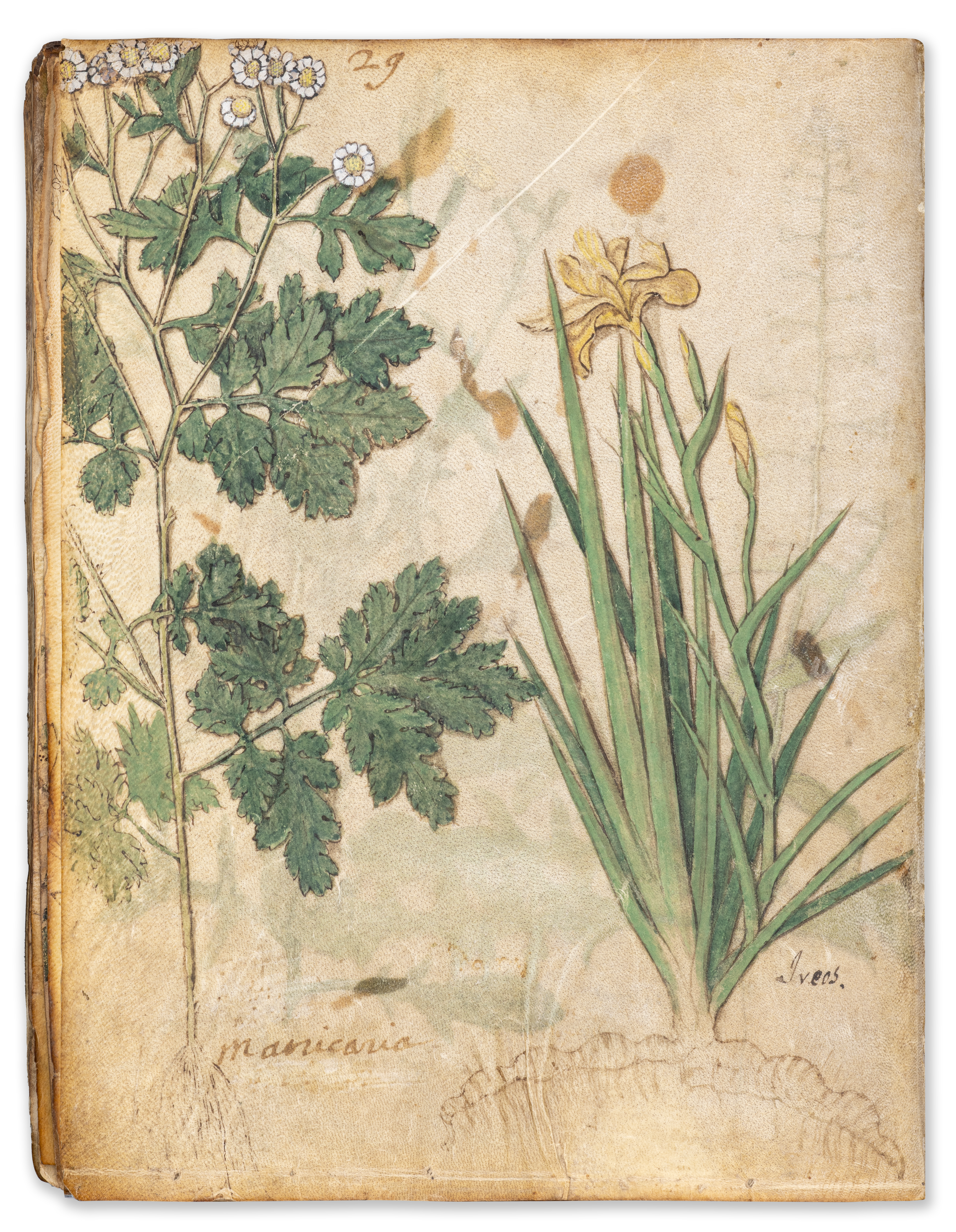


Botanical Herbal
Illustrated manuscript on vellum
Northern Italy, Veneto, perhaps Padua, 1500-1520
225 x 170 mm
This work has been sold.
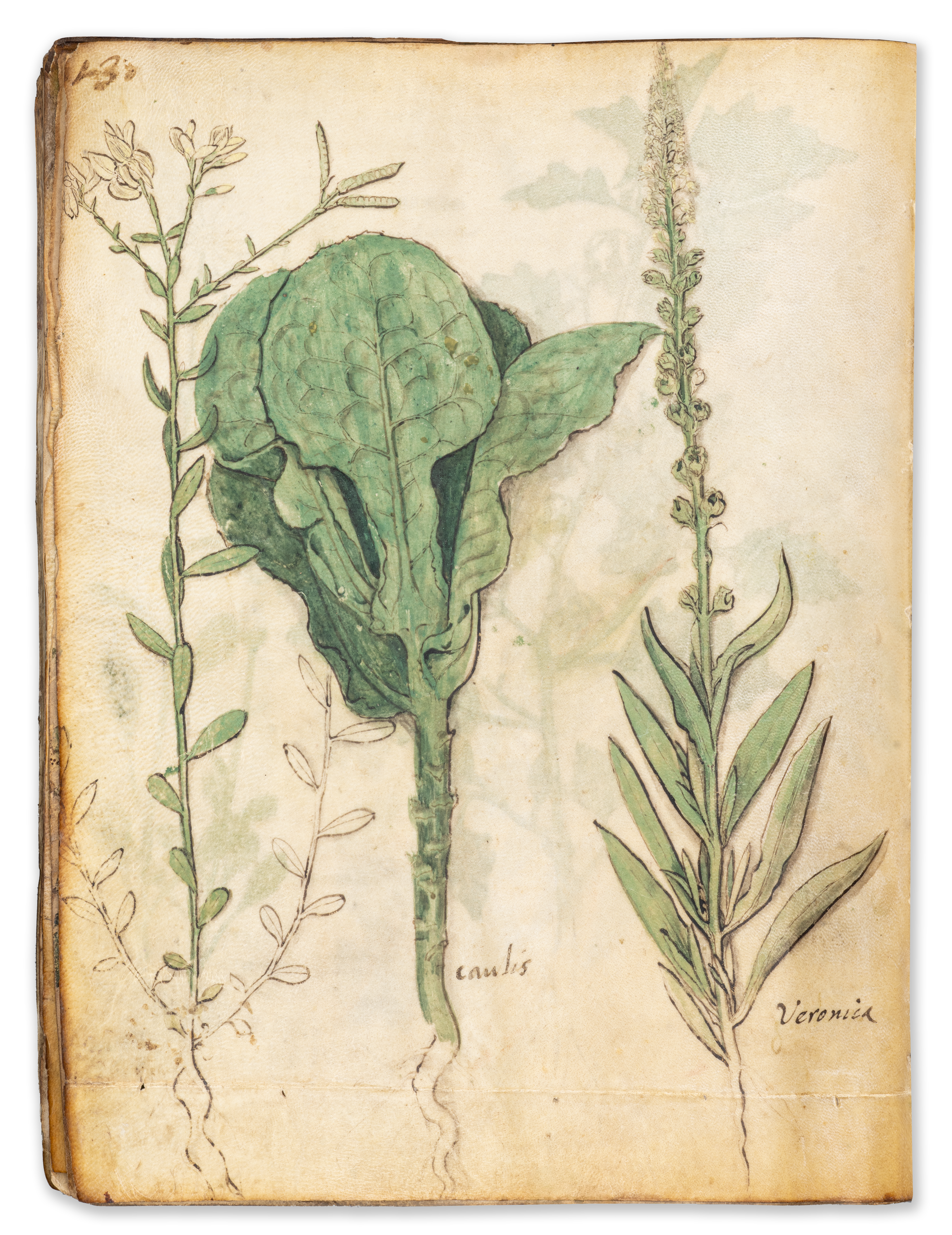
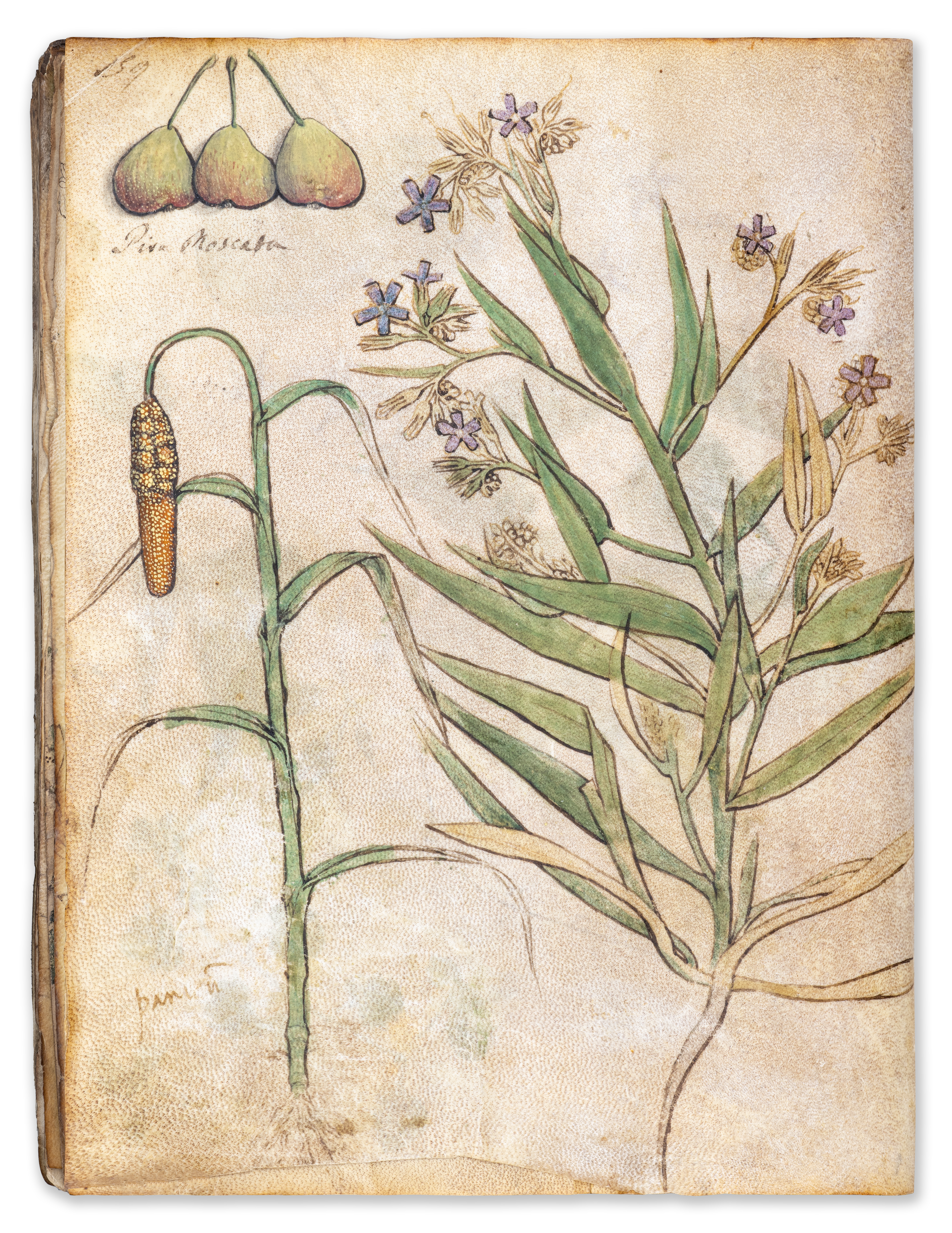
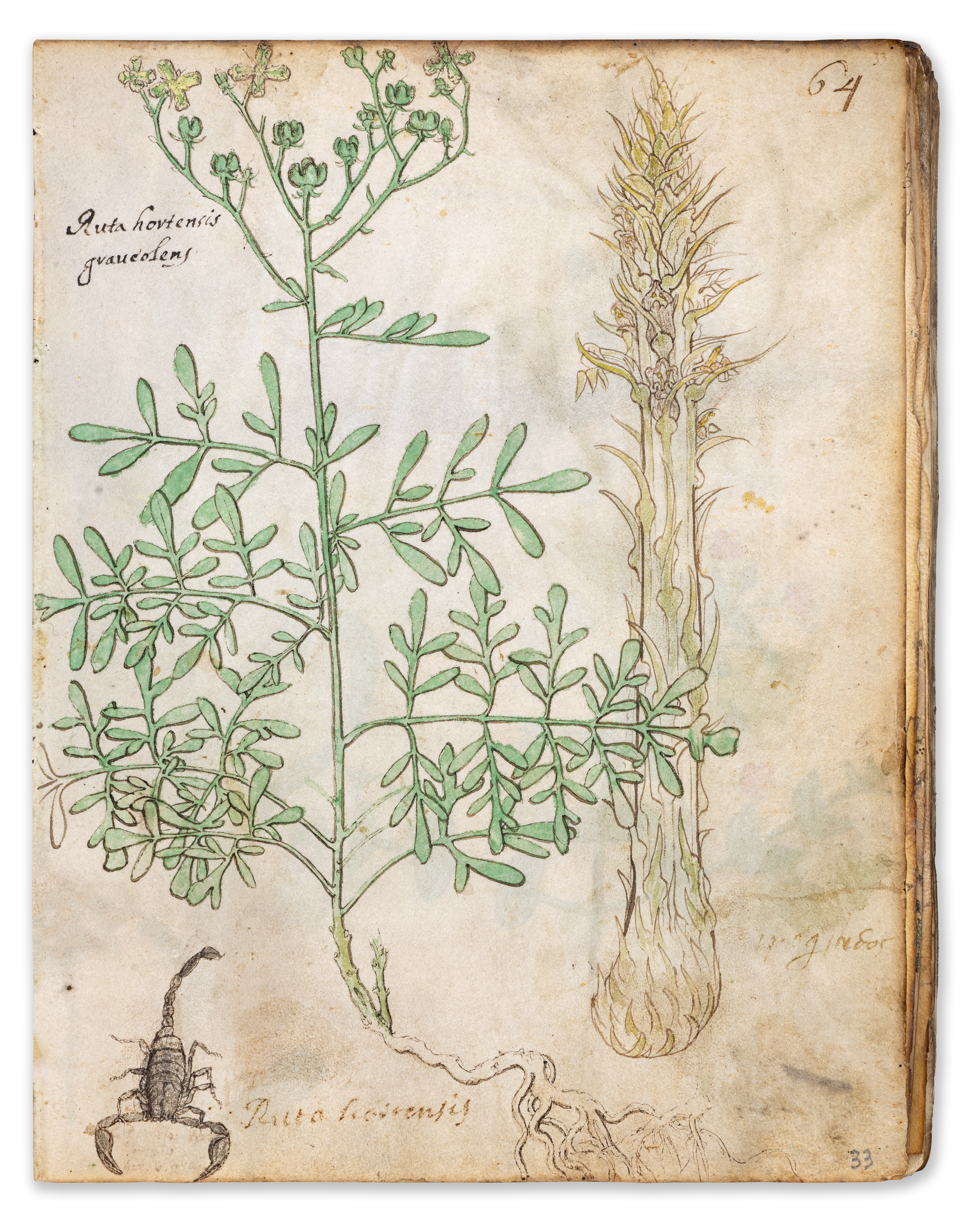
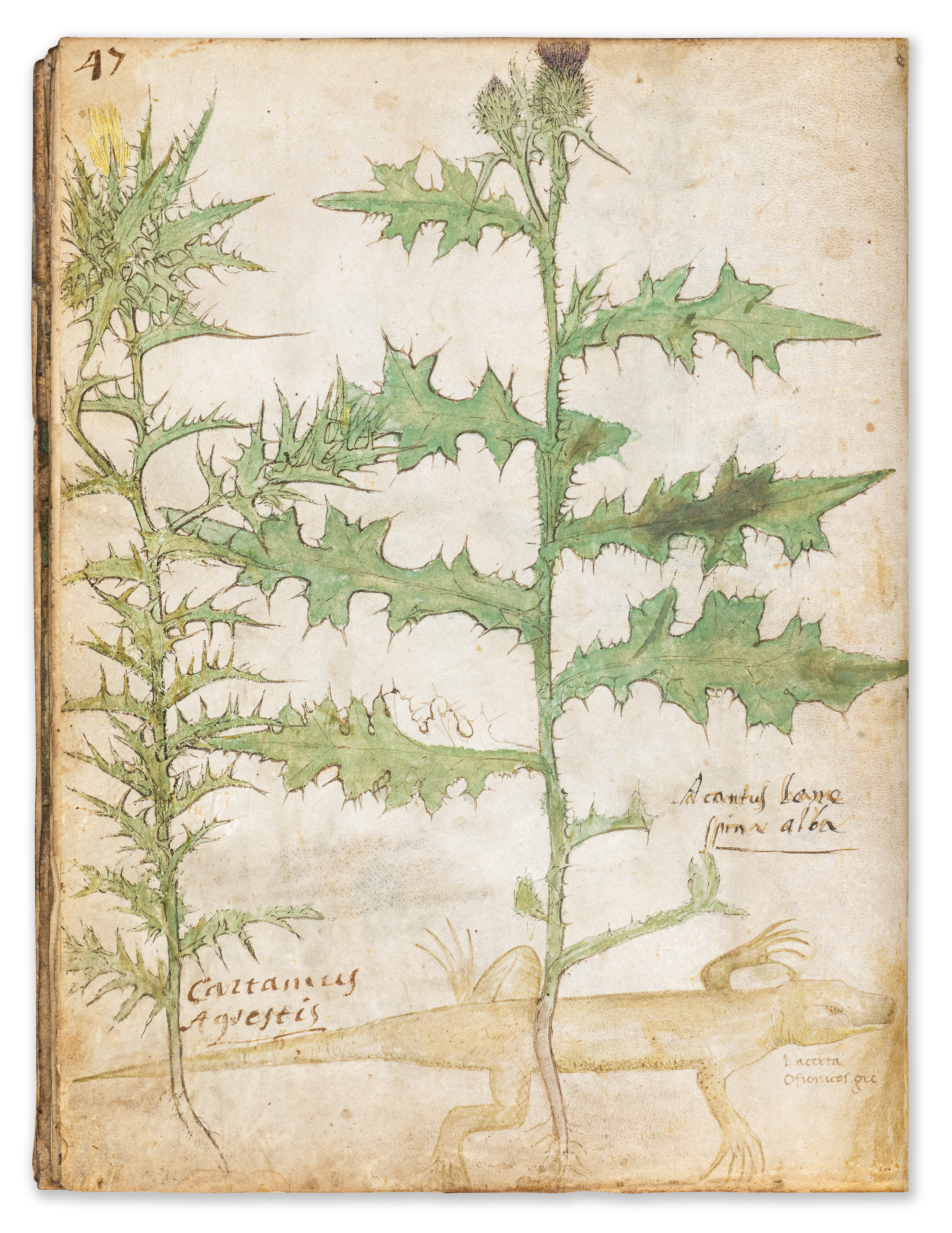
91 leaves Almost 400 drawings of plants executed to varying degrees of detail, most with contemporary coloured washes, three drawings of insects (a wasp p. 12; a bee p. 35; a fly p. 51), one large drawing of a lizard (p. 47) and one of a scorpion (p. 64) accompanied by their Latin, Greek or Arabic names in a small, well-formed 15th -century humanistic hand. Good condition.
This is a unique Italian herbal. The plant illustrations are solely accompanied by captions, with no apparent intention of adding more explanatory text. Alas, we do not know any more details about the circumstances of its creation or its purpose.
It was most likely produced in northern Italy, probably after 1500, because it already demonstrates a keen interest in botanical accuracy that became the centre of scientific interest in the 16th century. However, our manuscript was obviously not intended to be a book of medical or pharmaceutical instructions. It seems that this volume was intended more as a model book, either for a highly skilled Italian illuminator’s workshop, which used it as a reference work for their projects, or for scientists, who were particularly interested in the details and exact appearance of plants. Compared to other herbals created around the same time in Italy, this work is notable for the stunning precision and authenticity of its illustrations, which are seldom found in comparable works. The book has only been mentioned once in a footnote in an essay by Otto Pächt, as he never studied the manuscript himself. It is therefore an exciting new discovery in the field of medieval botanical manuscripts.
This manuscript is not just a treat for the eyes. The variety of illustrations and, above all, the incredible detail in the master drawings suggest that it’s a sketchbook or workbook used by a high-end workshop as a pattern book and exercise book for apprentices. However, we should also think about the possibility that a scientist who was really into science teamed up with a top-notch illustration studio to make a reference book on plants for themselves.