

Roots and Remedies
When we think of medieval medicine, our imagination tends to wander toward superstition, bloodletting, leeches, and strange concoctions simmering in shadowy caves—somewhere between a surgeon-barber’s shop and Dr Faust’s witch’s kitchen. Yet the reality handed down to us through medieval manuscripts is far more nuanced, curious, and, in some respects, surprisingly familiar.
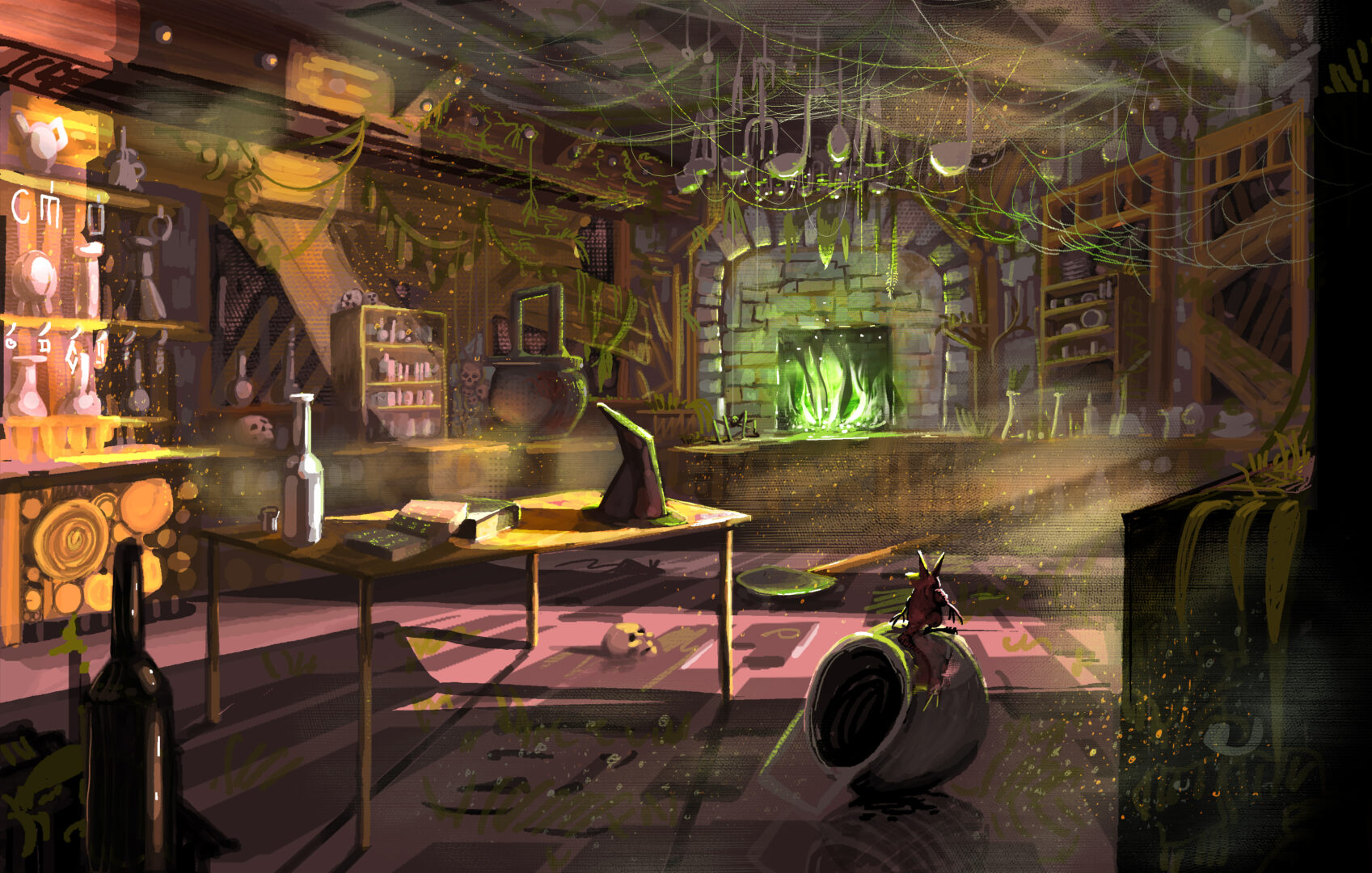
How one would imagine an alchemist’s laboratory. Image by RVH Creations.
Four remarkable manuscripts, created between the late fifteenth and early sixteenth centuries in Nijmegen on the Lower Rhine, in the Cologne region and northern Italy invite us to look again. They reveal how people once understood plants and minerals, how they observed their effects on body and mind, and how illness was explained through close attention to the natural world. Taken together, these books tell more than a story of medieval medicine: they speak of careful observation, practical experience, and a persistent human desire to read meaning—and healing—into nature itself.
Two medical manuscripts from differen Parts of the Rhine
A compilation of medical texts in Ripuarian Dialect, made in Cologne around 1475.
This manuscript was produced in or near Cologne by an anonymous scribe. From the outset, it announces itself as a working book: large in format, densely written, and firmly grounded in practical use. With the exception of its Latin headings, the text is written entirely in the local Ripuarian dialect—known today by the same name as Cologne’s most famous beer: Kölsch.
The book was clearly made for someone, who dealt with real patients on a daily basis: perhaps a city physician, a surgeon, or an apothecary. Its pages are crowded with prescriptions, instructions, tables, and diagrams, many of them consulted repeatedly. Traces of use remain visible—wax stains suggest that some passages were read by candlelight, late into the evening.
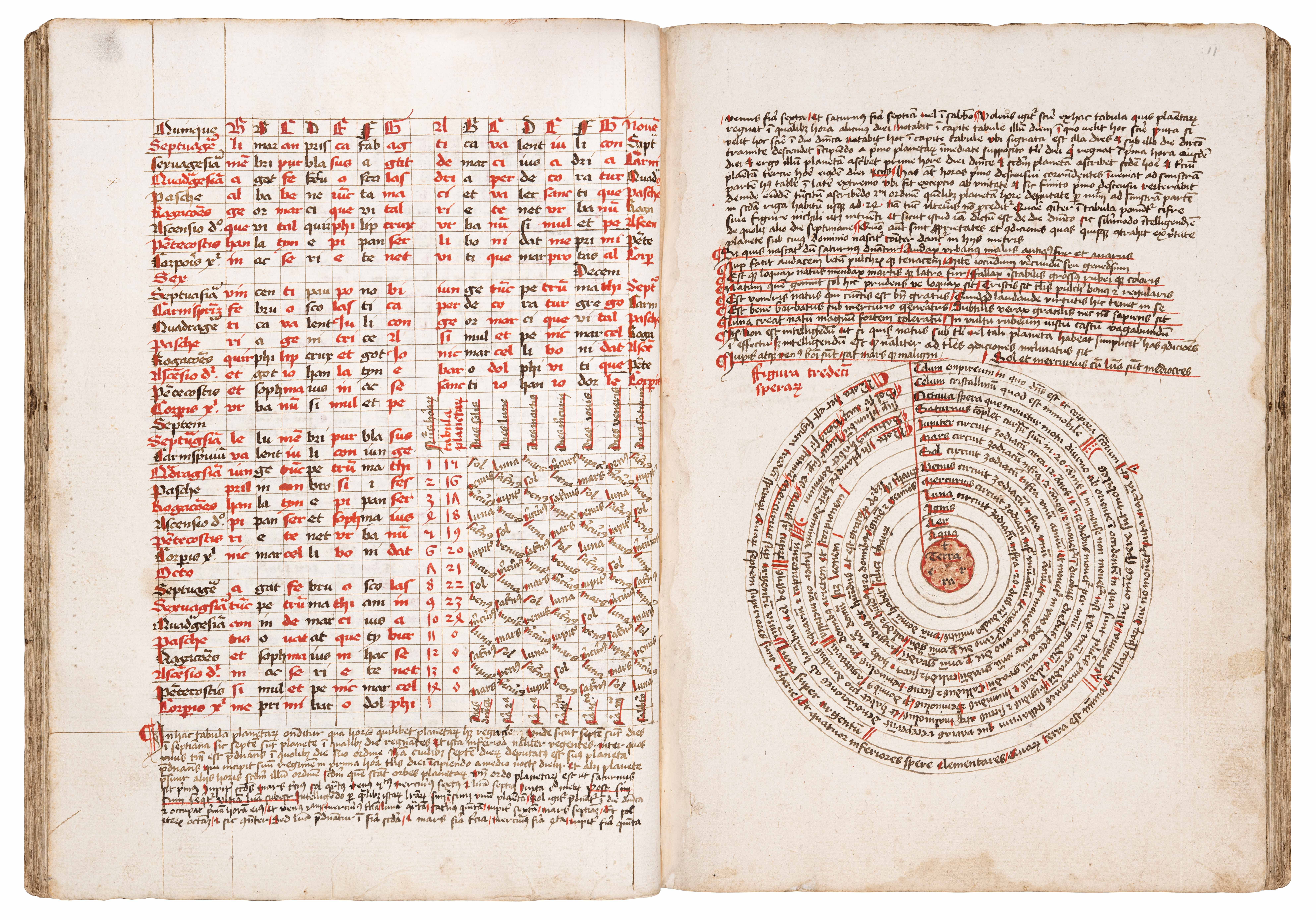
Arzneibuch. Compilation of medical texts, Cologne or vicinity, around 1475, f. 10v-11r Diagram of the celestial spheres
And yet, despite this intensive use, the manuscript has survived in remarkably good condition. It was obviously more than a working tool: it was a trusted companion and a valued possession, carefully preserved by someone who depended on it for their work.
What is striking is the manuscript’s determination. It tries to encompass the whole of human health as it was understood in the late Middle Ages. The book opens with calendars and astronomical tables that explain how to calculate feast days, moon phases, and the best moments for bloodletting—because medicine, at the time, was inseparable from cosmic rhythms. Thunder prognostics, “Egyptian days” (considered unlucky for medical treatment), and zodiac signs all play their part.
From there, the manuscript moves into hundreds of treatments: for headaches, coughs, wounds, digestive problems, women’s health, urinary stones, and even terminal illness and death. Also, veterinary and horticultural concerns were discussed. This compendium reveals a world of comprehensive medical knowledge. It is conveyed through the written word, lists, and diagrams. Plants appear above all as names and ingredients—components in remedies rather than objects to be studied in their own right. But this is only one way in which medieval medicine engaged with nature.
Medieval medicine’s key voices are all represented here, sometimes only in excerpt. You’ll find references to Bartholomew’s Practica, Ortolf von Baierland’s Arzneibuch and the so‑called German Macer, alongside passages from Gottfried of Franconia’s Pelzbuch, a treatise on arboriculture and horticulture, and observations on the effects of gemstones and distilled waters. Even an old depilatory recipe by Master Johannes Furia makes an appearance.
Who among us has never suffered from aching eyebrows? Medieval medicine, ever attentive to the smallest of bodily discomforts, offers a remedy even for this surprisingly specific complaint:
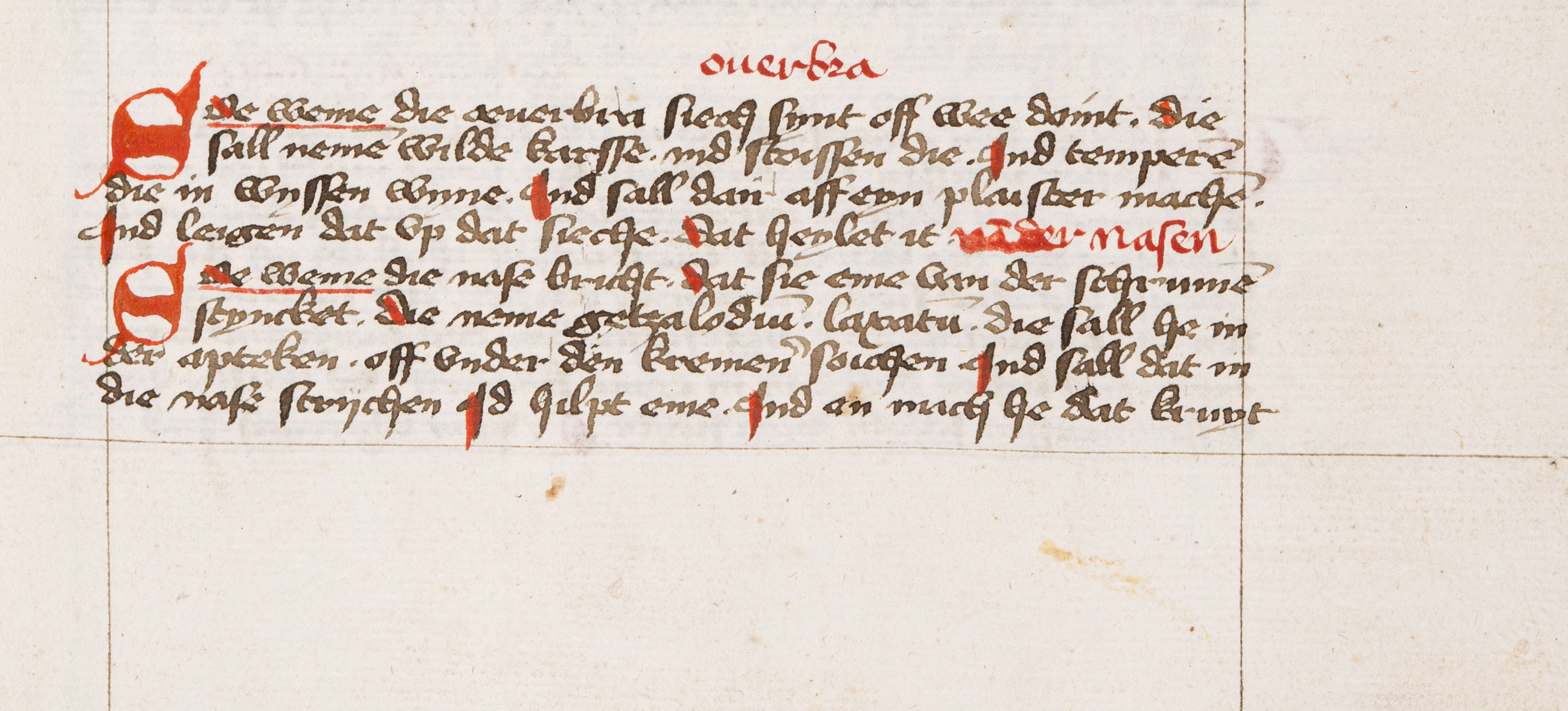
Soe weme die ouvebra siech synt off wee doint die soll nemen wilde barsse ind stoissen die ind tempere in wyssen wyne. Ind sall dan aff eyn plaster machen ind leigen dat opd dat sieche. Dat heylet it.
(If someone suffers from aching eyebrows, they should take wild bertram(?), crush it and mix it with white wine. Make a plaster from it and apply it to the painful area. This heals it.)
Meanwhile, on the Waal (Rhine) near Nijmegen…
The Physician as Author and Illustrator:
Magister Henricus Spijker’s Liber Virtutum: a personal document in European context, made in Nijmegen between 1475 and 1493

Magister Henricus Spijker canonicus: Herbal, Guelders, Nijmegen, finished after 1475 and before 1493.
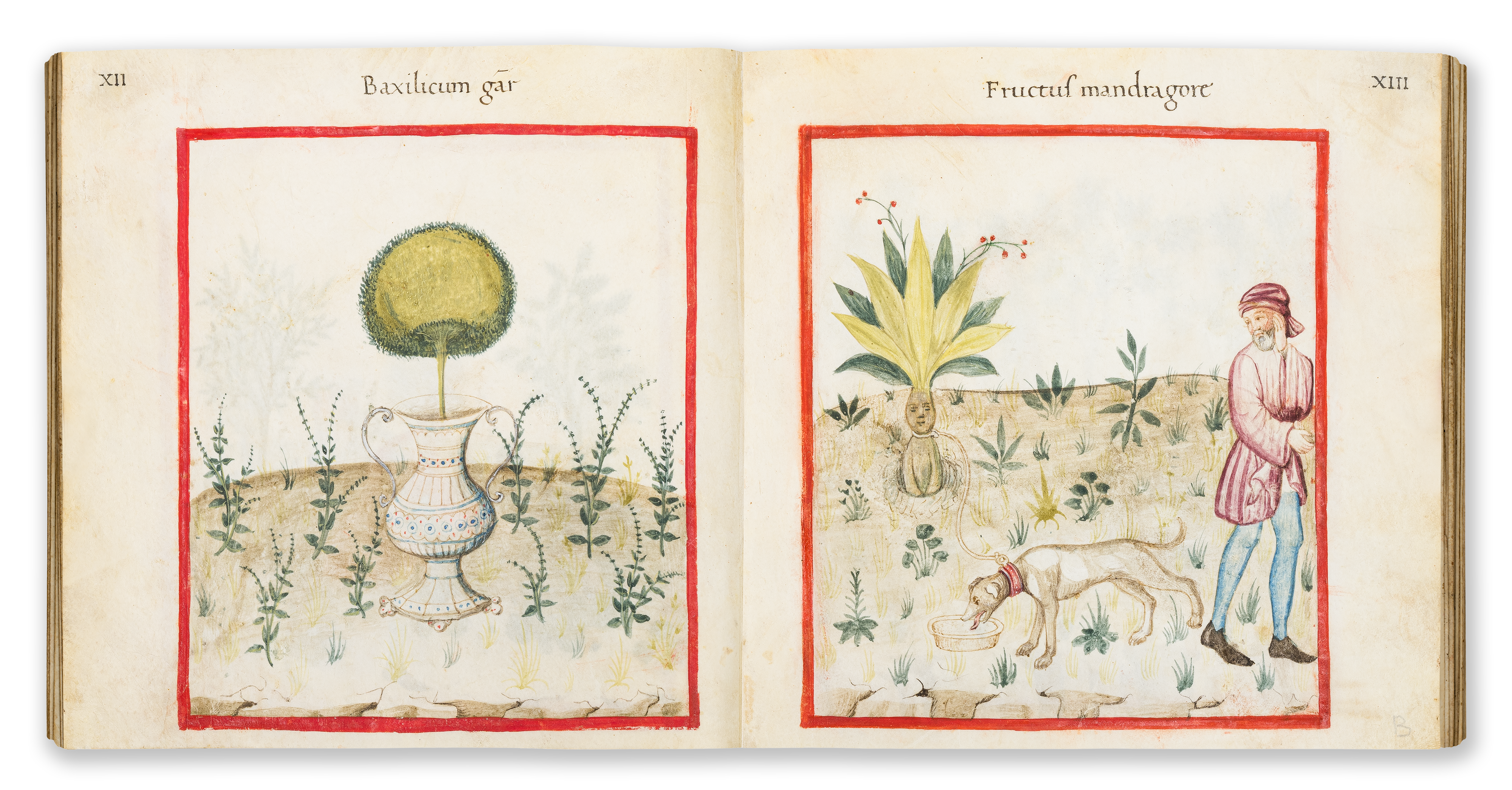
A compact medical manuscript in its original binding was offered by Jörn Günther in 2018. It made a dazzling impression through its many texts in concise, cursive script. With some thirty medical treatises, the anonymous, undated book offered a fascinating puzzle as to its origin. Most striking in content was the illustrated herbal, which formed a coherent unit with the preceding and following lists of medicines, both simplicia and composita. Such a herbal may be considered a practical handbook for use in the learned art of medicine. Its contents derive from ancient traditions that travelled from classical Greece across regions and centuries, continually enriched with new medical insights. Since the remedies of classical herbalists were highly valued and sought after, there was every reason to preserve recipes and extensive galleries of plant portraits, known since the herbal of Dioscorides and its Latin translations (1st–6th century CE). Meticulously copied by hand, such manuscripts acquired great authority within the medical community. A leaf from Dioscorides’ De Materia Medica is currently available in our inventory.
This manuscript, presented in Jörn Günther’s catalogue 14 (Celebrating the Past, no. 36, 2018), is proved to have been compiled by the Dutch physician and canon Henricus Spijker (d. 1493). Born in Tiel on the Rhine (in fact here called the Waal), he studied and received his degrees in the Artes in Cologne (1432–1434) and medicine in Padua (1440–1443) before settling as a physician in the imperial free city of Nijmegen in the Duchy of Guelders. In Padua he may have acquired botanical knowledge in the fine gardens of the Monastery of St Justina, precursor of the university botanical gardens that still flourish today. Likely, he also collected notes from early on, which he may later have used for his compendium. However, we have no actual knowledge of any model texts he had at his disposal.
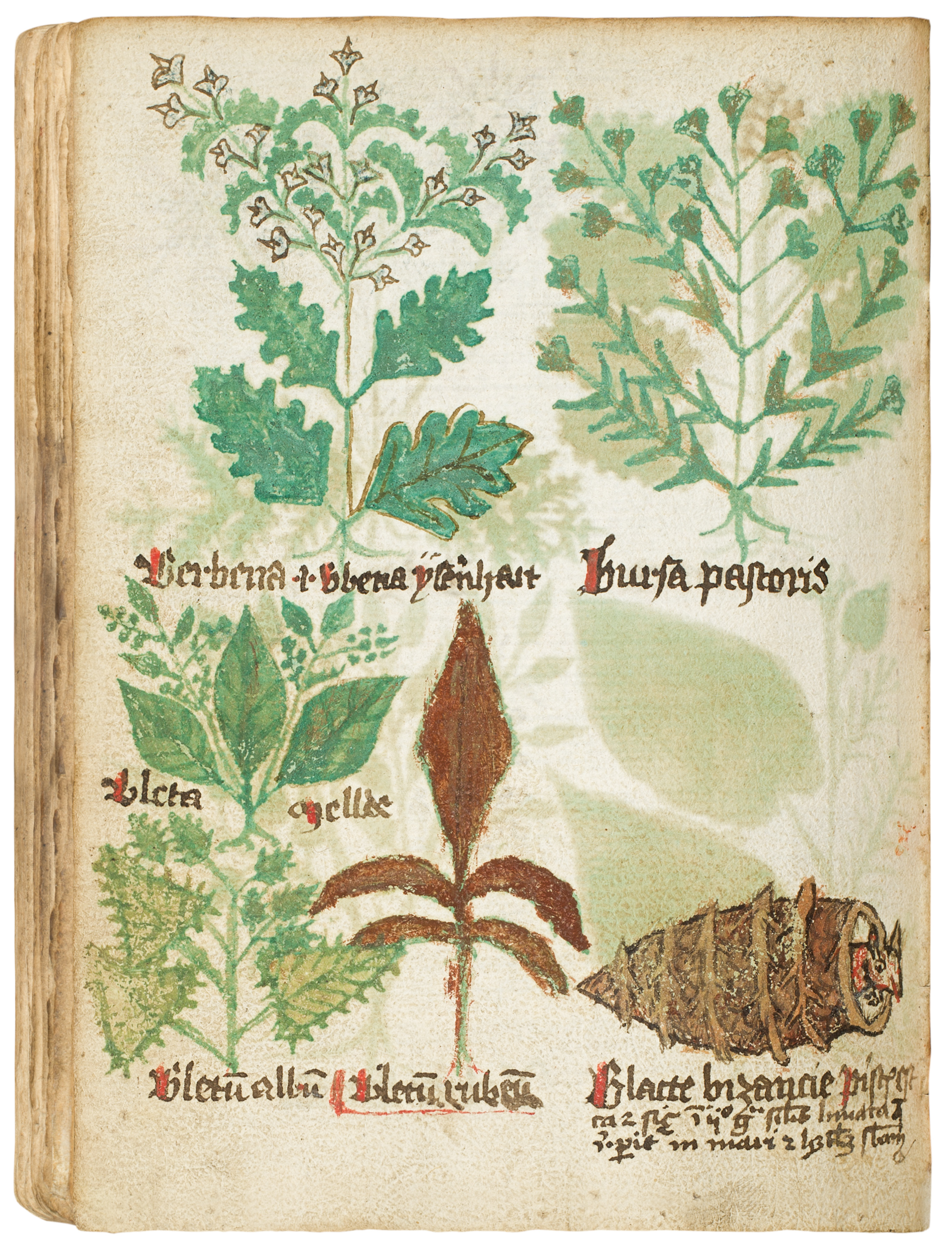
f. 199v Verbena, shepherd’s purse and other herbs. In the lower right corner a remarkable shell: “Blacte bizancie: pisce est … reperit in mare”
The absence of identifiable exemplars does not preclude the influence of earlier and widely disseminated medical traditions. In thirteenth-century Southern Italy a new herbal emerged that became known as the Tractatus de herbis. Two finely illustrated manuscripts now in the British Library (Egerton MS 747 and Sloane MS 4016) are among its earliest witnesses. Research has shown that some of its innovations stem from Arabic medical traditions, especially from Muslim physicians, both male and female. Since the Tractatus became compulsory study material for students in Naples and Salerno, it quickly spread through the emerging medical schools of medieval Europe. The manuscripts present plant illuminations with names, origins, and medicinal recipes, sometimes complemented with details on dosage, weights, measures, synonyms, and additional preparations. Their preservation served scientific aims in the field of pharmacopoeia: to identify plants, locate their habitats, and instruct on cultivation. While the Tractatus distinguished itself by its practical orientation and specific use, the other medical texts and even poems in this compendium conveyed medical knowledge in varied forms.
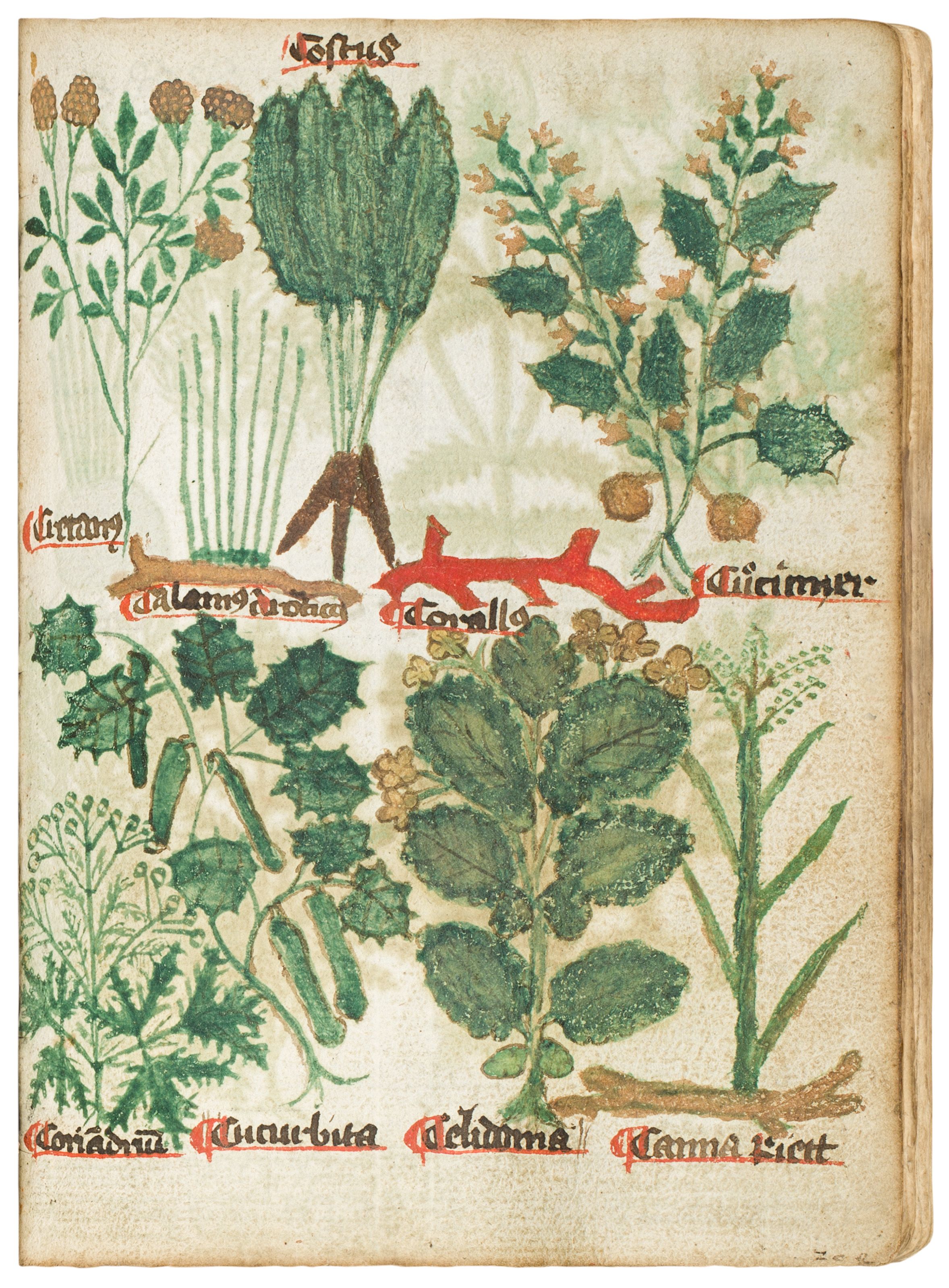
f. 205r Including coral, coriander, and cucumber
Unlike purely botanical reference works, the Tractatus therefore was primarily medical in purpose. Images are paired with names and recipes. Properties, instructions, and lists of remedies are carefully recorded. The medicaments discussed are composed of a single constituent, the simplicia — mostly plant-based. This pharmacopeia was intended for physicians, apothecaries, masters and professors of medicine, and their students. By the late fourteenth century such manuscripts were commissioned in Lombardy and subsequently circulated to France, England, and other regions north of the Alps. Their realistic plant depictions attracted not only medical professionals but also noble patrons and wealthy bibliophiles, sometimes even without accompanying texts. Among the finest examples is the late fourteenth-century Carrara Herbal, made at considerable expense for the Duke of Padua (British Library, Egerton MS 2020).
For the Tractatus de herbis, accurate depiction of plants was essential: they had to be rendered with sufficient veracity to ensure correct identification in the preparation of medicines. Errors in hand-copying posed real dangers and could have dire consequences, as mismatched images and texts might mislead those unfamiliar with certain species. It is therefore understandable that, already in the thirteenth century, Emperor Frederick II decreed (Edict of Salerno, ca. 1231–1240) that the preparation of medicines should rest with professional apothecaries rather than with physicians (or others). The Tractatus de herbis reached a diverse readership, offering a working memory of medical mastery. Its illustrations are invaluable not only to botanical historians but also to art historians, for they reveal a sophisticated visual language that unites image and text in the service of healing body and soul. In Spijker’s manuscript many of the Latin plant names were also accompanied by terms in the vernacular Middle Dutch, making it an even more interesting document.
Spijker likely first learned of the Tractatus de herbis in Padua, where he obtained his doctorate in 1443. In his medical compendium (and also in a printed almanac he issued in ca.1479/1485), he demonstrated himself to be a versatile physician who embraced both pen and press. External evidence suggests the manuscript was completed between 1480 and 19 June 1493, the day of his death. Although he identifies himself as the compiler, many of the texts were copied by his own hand, with occasional personal notes — for instance, that he personally tested some of the prescriptions. The use of numerous abbreviations attests to his command of Latin and to his expertise. Variations in handwriting throughout the volume may reflect different stages of copying — the work of a busy physician intent on completeness despite limited time. Altogether, the manuscript constitutes an important and previously unknown source of medical knowledge and practice in late fifteenth-century Nijmegen, brought to light only through its rediscovery at Jörn Günther’s.
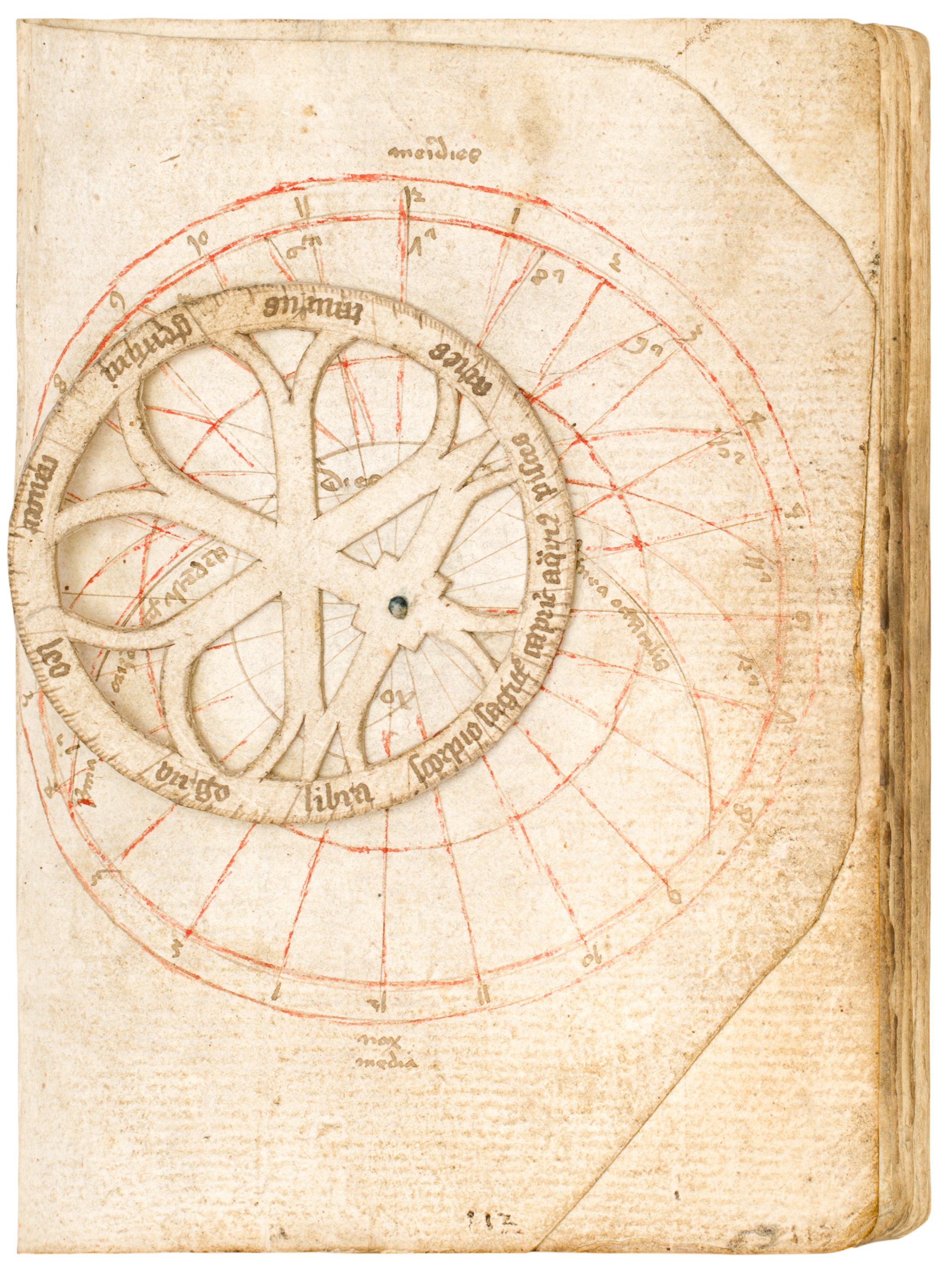
f. 112r Astrological texts with a model astrolabe with movable volvelle attached to the centre.
Later annotations indicate that the manuscript travelled southward along the Rhine — among other places to Basel and even to Steyr in Austria. Since the nineteenth century the book has passed through the hands of notable bibliophiles and garden enthusiasts in England, America, and again in Basel. Today the manuscript forms part of a privately owned Dutch botanical collection. Henricus Spijker’s medical herbal and handbook has found a new destiny in an old doctor’s house with an apothecary. As the owners devote much of their time to the preservation of certain specific plants and cultural heritage in general, Spijker’s herbal has found a fitting new home.
Crossing the Alps into northern Italy, we encounter a different approach. Here, the written word retreats into the background, and images take centre stage.
Plants as Symbols: An Alchemical Herbal on Paper
The earliest of our two here presented Italian manuscripts takes us into a very different visual and intellectual world. Created in northern Italy in the late fifteenth century, this herbal is painted on paper and presents plants in a highly schematic, almost surreal manner. Roots swell into exaggerated shapes, leaves curl unnaturally, and some plants seem to sprout faces or animal forms. At first glance, these images appear puzzling—even humorous—but they were anything but naive.
This manuscript was almost certainly not intended to help its user find and identify plants in nature. Instead, the images function as symbols: visual cues for substances used in recipes, possibly alchemical ones. Short captions name the plants and often describe the extreme environments in which they grow—high alpine meadows, cold mountain slopes, dark forests—places that already carried an aura of mystery. One surviving recipe combines roots with substances such as quicksilver and verdigris, hinting at processes of transformation or a beauty product rather than straightforward healing.

Alchemical herbal on paper. Northern Italy, end of 15th century, f. 93v
This plant looks more like taken from a bestiary than from a herbal book. It is labelled “Luccia longo la marina” and has been given a fantastical life of its own. In other alchemical herbal books, this plant is referred to as Erba Lucea and was valued for the treatment of eye complaints. The instructions were simple: take the leaves, prepare a water from them and drip it into the affected eyes – the healer promised instant relief. It was even touted as helpful against cataracts. Modern researchers tend to recognise Erba Lucea as buckthorn (Rhamnus saxatilis), a shrub that medieval authors occasionally recommended for eye ailments, sometimes claiming that its roots resembled a pike, which is vividly illustrated here.
In this manuscript, plants are not observed for their outward appearance, but for their hidden power and potential. It belongs to a tradition in which nature was read as a coded language, and knowledge emerged through experiment, combination, and change.

f. 101v Garbilis nascie nelle grandi montagnie asprissimi et fredde nelli prati (grows in the meadows of the high mountains in cold and harsh climates)
Learning to See: A Botanical Turning Point on Parchment
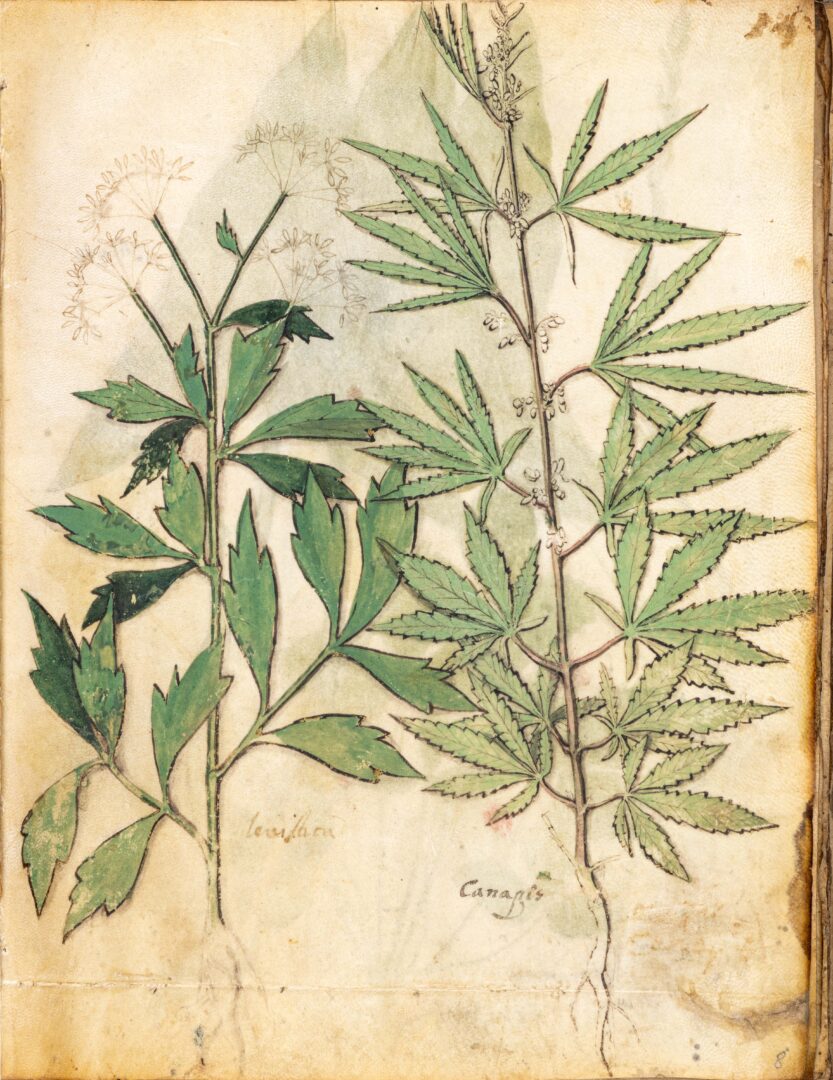
The second Italian manuscript, produced slightly later, between 1500 and 1520, could hardly be more different. Written on parchment and filled with nearly 400 plant images, it reflects a renewed fascination with direct observation. Many of the plants are rendered with striking realism: leaves veined with care, roots branching naturally, fruits casting subtle shadows.

Herbal, illustrated manuscript on vellum. Veneto, perhaps Padua, 1500-1520, p. 4 Lupoli, Fenum Grecum (hops, fenugreek)
Text also plays a minor role here. The emphasis lies firmly on seeing. Some plants are fully coloured, others only partially, and some remain as confident pen drawings. The roots are often left uncoloured altogether, drawing attention to structure rather than surface. On several pages, faint earlier sketches can still be seen beneath the finished drawings, suggesting a learning process—perhaps a workshop in which apprentices trained their eye and hand under expert guidance.
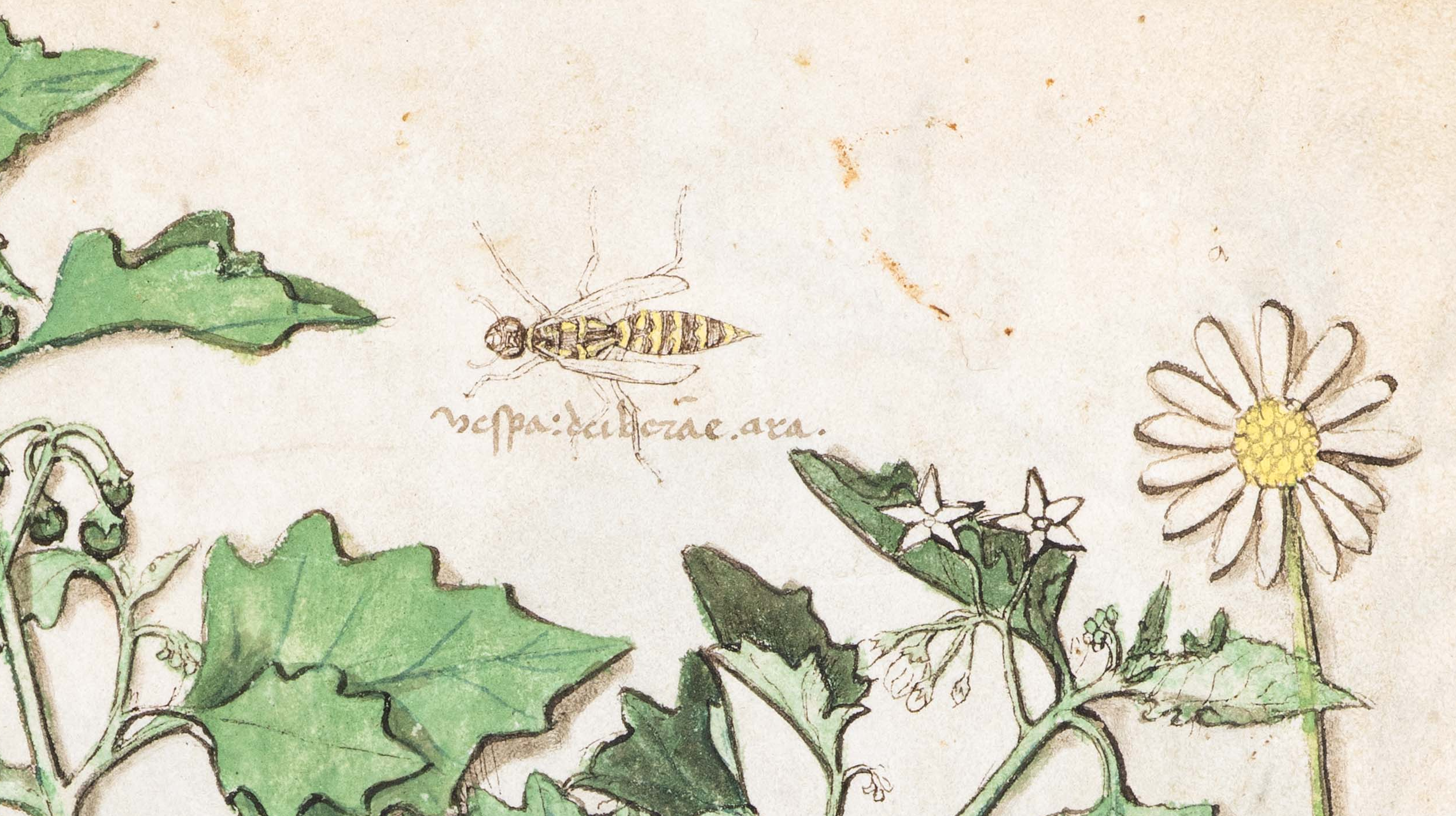
p. 12 detail Vespa (wasp)
This manuscript seems to stand at a crossroads. It still belongs to the medieval world of herbals, yet it anticipates the Renaissance turn toward nature study and scientific illustration. Whether it served as a model book for artists, a reference for botanists, or both, it reveals a moment when plants were no longer just symbols or remedies, but objects of sustained, curious attention.

p. 30 detail Eryngium (flat sea holly)
Three Books, One World
Seen together, these four manuscripts reveal the extraordinary diversity of medieval approaches to plants and healing. The reference and textbook written and illustrated by the doctor from Nijmegen as well as the Cologne medical compendium show medicine as lived practice—rooted in experience, tradition, and daily need. The first Italian manuscript demonstrates that symbolism, imagination, and experiment were part of the medieval understanding of the natural world, whereas the second Italian herbal captures a moment when artists and scholars began to look at plants with fresh eyes, rediscovering nature through observation.

Doctor treating a plague patient, Fasciculus medicinae f. 17r, printed in Venice 1500, formerly Dr. Jörn Günther Rare Books, cf. Brochure 20, no. 44
Far from being crude or irrational, these books show medieval medicine as complex, adaptive, and deeply engaged with nature. They are not relics of ignorance, but witnesses to curiosity—pressed into paper and parchment, leaf by leaf.
Further reading
Vera Segre Rutz. Il giardino magico degli alchimisti: un erbario illustrato trecentesco della Biblioteca Universitaria di Pavia e la sua tradizione. Milan 2000.